This website uses cookies to ensure you get the best experience on our website.


- Table of Contents
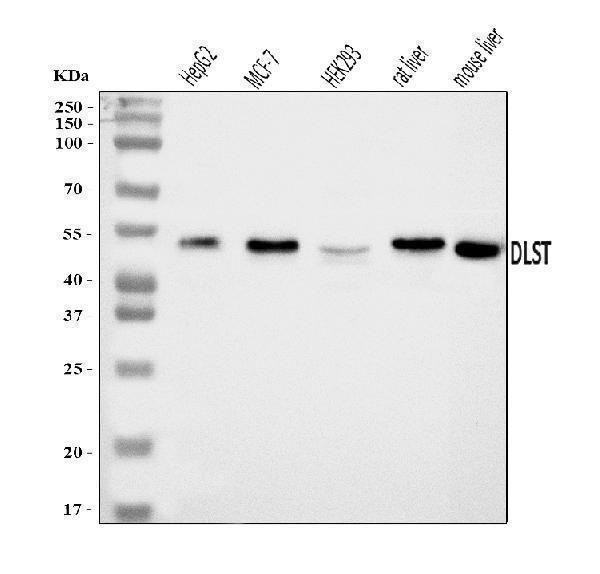
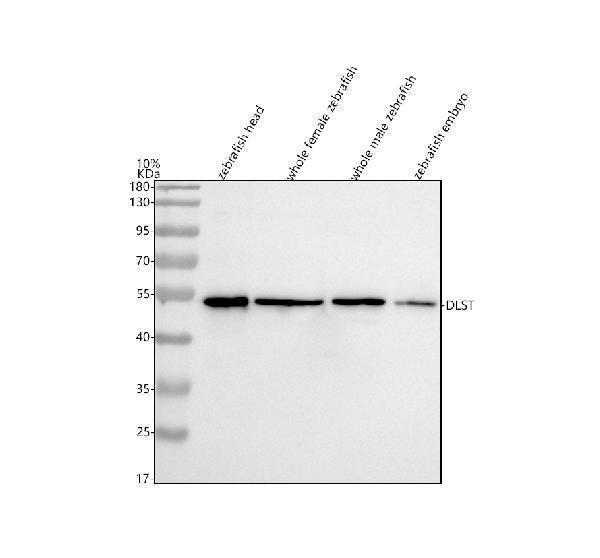
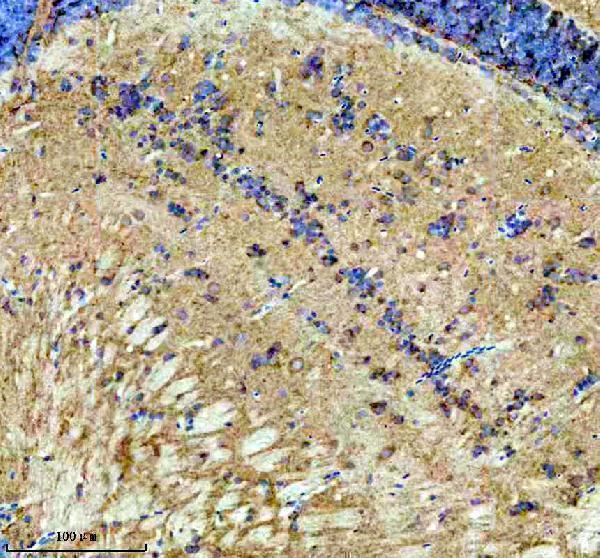
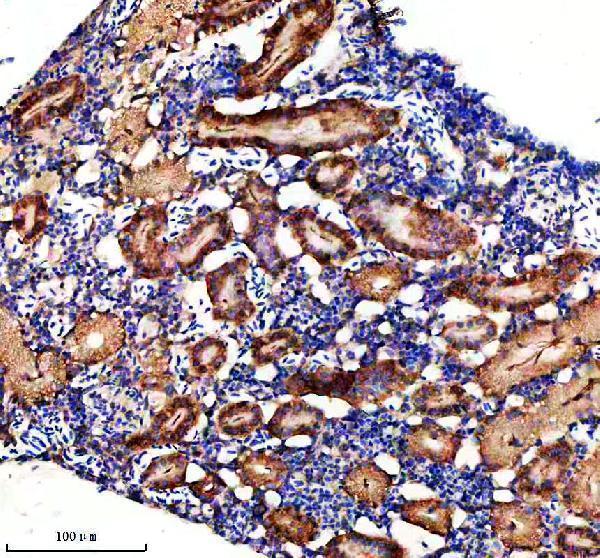
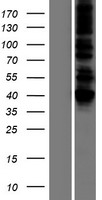
Designing a Western blot for DLST? The guide has the expected band size, antibodies backed by real blot images, the controls to run alongside, and protocols taken from published papers.
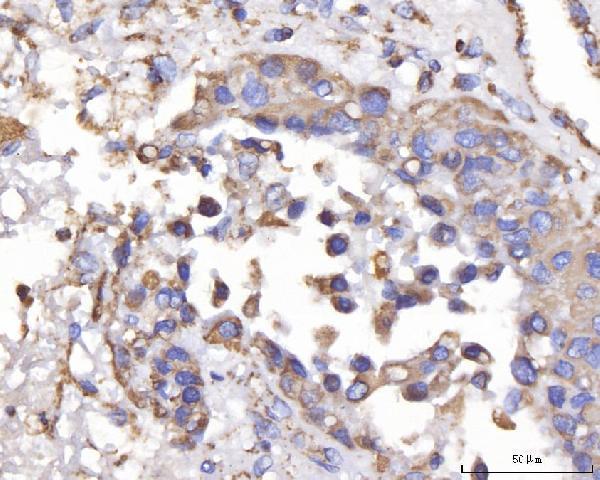
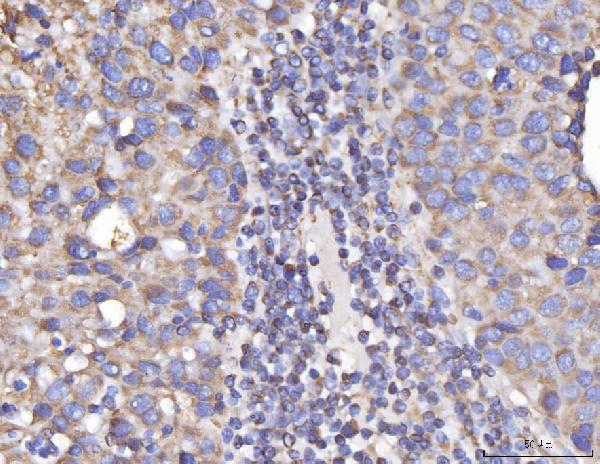
Open the DLST Western Blot GuideDesigning an IHC experiment for DLST? The guide has the expected staining pattern, antigen retrieval and fixation, antibodies backed by real IHC images, the tissue controls to run alongside, and protocols taken from published papers.
Open the DLST IHC Guide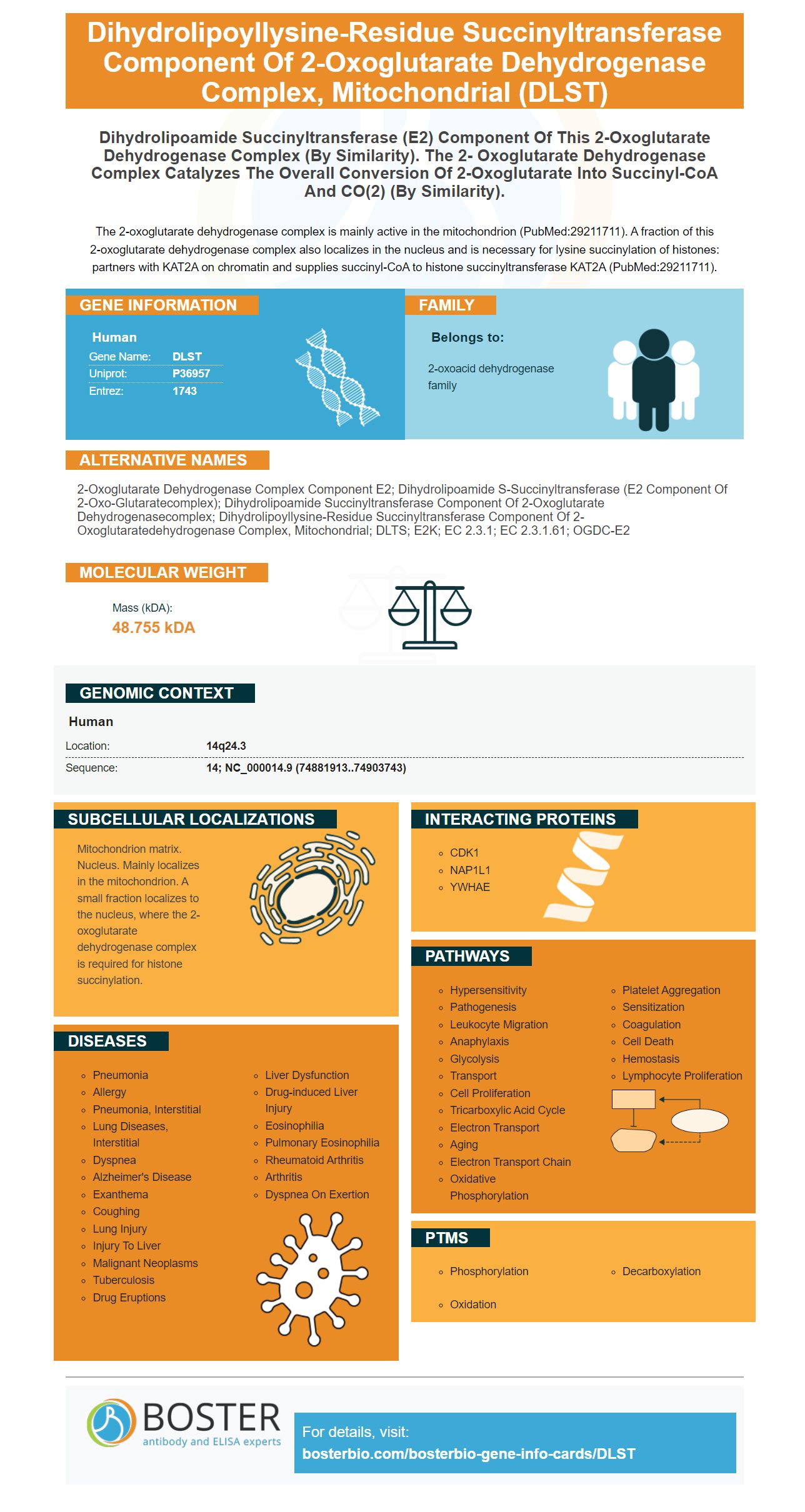
1 Citations
Facts about Dihydrolipoyllysine-residue succinyltransferase component of 2-oxoglutarate dehydrogenase complex, mitochondrial.
The 2-oxoglutarate dehydrogenase complex is mainly active in the mitochondrion (PubMed:29211711). A fraction of this 2-oxoglutarate dehydrogenase complex also localizes in the nucleus and is necessary for lysine succinylation of histones: partners with KAT2A on chromatin and supplies succinyl-CoA to histone succinyltransferase KAT2A (PubMed:29211711).
| Human | |
|---|---|
| Gene Name: | DLST |
| Uniprot: | P36957 |
| Entrez: | 1743 |
| Belongs to: |
|---|
| 2-oxoacid dehydrogenase family |

2-oxoglutarate dehydrogenase complex component E2; dihydrolipoamide S-succinyltransferase (E2 component of 2-oxo-glutaratecomplex); Dihydrolipoamide succinyltransferase component of 2-oxoglutarate dehydrogenasecomplex; dihydrolipoyllysine-residue succinyltransferase component of 2-oxoglutaratedehydrogenase complex, mitochondrial; DLTS; E2K; EC 2.3.1; EC 2.3.1.61; OGDC-E2
Mass (kDA):
48.755 kDA

| Human | |
|---|---|
| Location: | 14q24.3 |
| Sequence: | 14; NC_000014.9 (74881913..74903743) |
Mitochondrion matrix. Nucleus. Mainly localizes in the mitochondrion. A small fraction localizes to the nucleus, where the 2-oxoglutarate dehydrogenase complex is required for histone succinylation.




PMID: 8268217 by Nakano K., et al. Human dihydrolipoamide succinyltransferase: cDNA cloning and localization on chromosome 14q24.2-q24.3.
PMID: 8076640 by Nakano K., et al. Isolation, characterization and structural organization of the gene and pseudogene for the dihydrolipoamide succinyltransferase component of the human 2-oxoglutarate dehydrogenase complex.