This website uses cookies to ensure you get the best experience on our website.


- Table of Contents
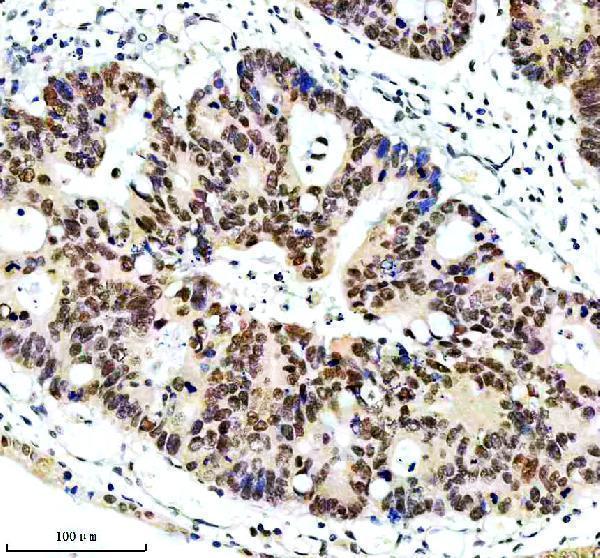
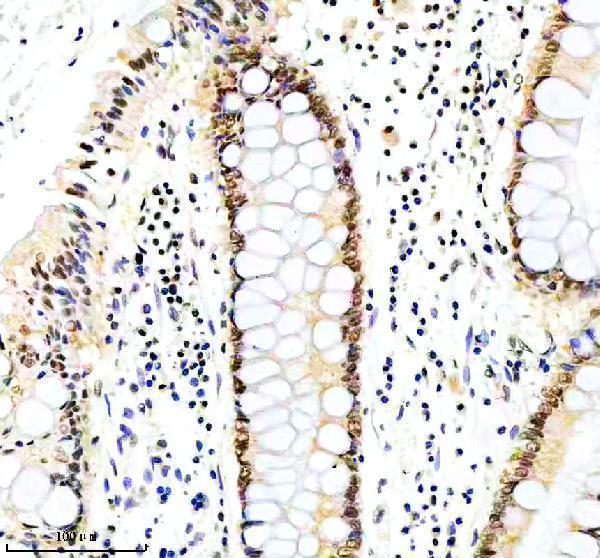
Designing an IHC experiment for ERCC5? The guide has the expected staining pattern, antigen retrieval and fixation, antibodies backed by real IHC images, the tissue controls to run alongside, and protocols taken from published papers.
Open the ERCC5 IHC Guide

Facts about DNA repair protein complementing XP-G cells.

Acts as a cofactor for a DNA glycosylase that removes oxidized pyrimidines from DNA. May also be involved in transcription-coupled fix of this kind of damage, in transcription by RNA polymerase II, and perhaps in other processes too.
| Human | |
|---|---|
| Gene Name: | ERCC5 |
| Uniprot: | P28715 |
| Entrez: | 2073 |

| Belongs to: |
|---|
| XPG/RAD2 endonuclease family |

COFS3; DNA excision repair protein ERCC-5; DNA repair protein complementing XP-G cells; EC 3.1; ERCM2; excision repair cross-complementing rodent repair deficiency, complementationgroup 5; excision repair protein; xeroderma pigmentosum complementation group G protein; Xeroderma pigmentosum group G-complementing protein; xeroderma pigmentosum, complementation group G; XPGC; XPG-complementing protein; XPGUVDR
Mass (kDA):
133.108 kDA

| Human | |
|---|---|
| Location: | 13q33.1 |
| Sequence: | 13; NC_000013.11 (102846032..102875995) |
Nucleus.


PMID: 8483504 by Scherly D., et al. Complementation of the DNA repair defect in Xeroderma pigmentosum group G cells by a human cDNA related to yeast RAD2.
PMID: 7510366 by Shiomi T., et al. An ERCC5 gene with homology to yeast RAD2 is involved in group G Xeroderma pigmentosum.