This website uses cookies to ensure you get the best experience on our website.


- Table of Contents

Facts about Protein TALPID3.
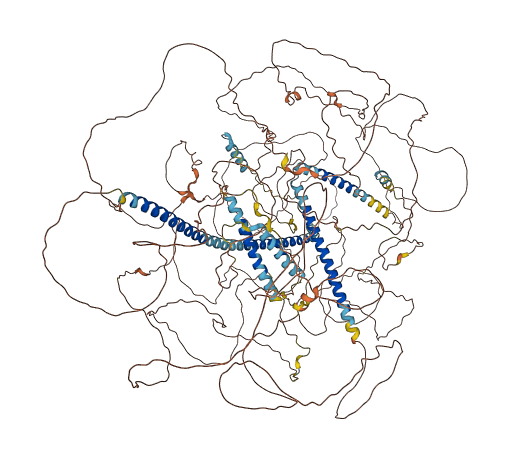
May play a role in ancient ciliogenesis in the disappearance of centriolar satellites which preceeds ciliary vesicle formation (PubMed:24421332). Involved in regulation of cell intracellular organization.
| Human | |
|---|---|
| Gene Name: | KIAA0586 |
| Uniprot: | Q9BVV6 |
| Entrez: | 9786 |
| Belongs to: |
|---|
| TALPID3 family |

Protein TALPID3
Mass (kDA):
169.307 kDA

| Human | |
|---|---|
| Location: | 14q23.1 |
| Sequence: | 14; NC_000014.9 (58427385..58551297) |
Ubiquitously expressed (PubMed:26386044). Expressed in photoreceptor cells (at protein level) (PubMed:26386247).
Cytoplasm, cytoskeleton, microtubule organizing center, centrosome. Photoreceptor inner segment. Cytoplasm, cytoskeleton, microtubule organizing center, centrosome, centriole. Cytoplasm, cytoskeleton, cilium basal body. Forms a ring-like structure at the extreme distal end of both mother and daughter centrioles (PubMed:24421332). In photoreceptor cells localized to the joint between the inner and outer segments, specifically localized at the mother centriole (basal body) and the adjacent centriole as well as between the two centrioles but not in the connecting cilium (PubMed:26386247).

PMID: 19144723 by Yin Y., et al. The Talpid3 gene (KIAA0586) encodes a centrosomal protein that is essential for primary cilia formation.
PMID: 24421332 by Kobayashi T., et al. The CP110-interacting proteins Talpid3 and Cep290 play overlapping and distinct roles in cilia assembly.