This website uses cookies to ensure you get the best experience on our website.


- Table of Contents
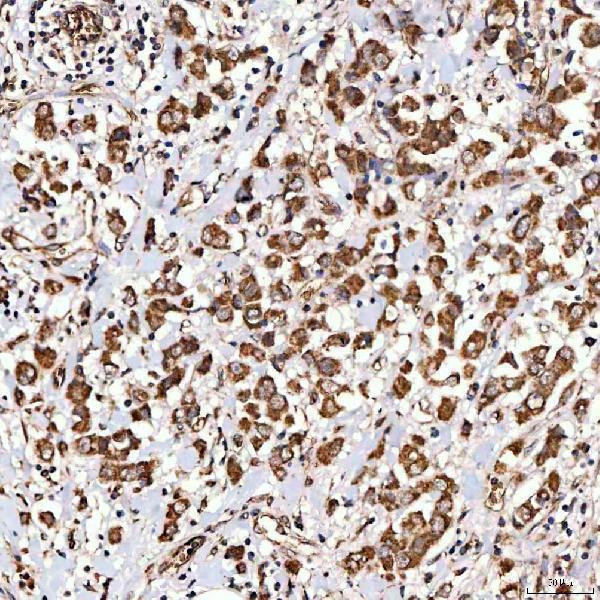
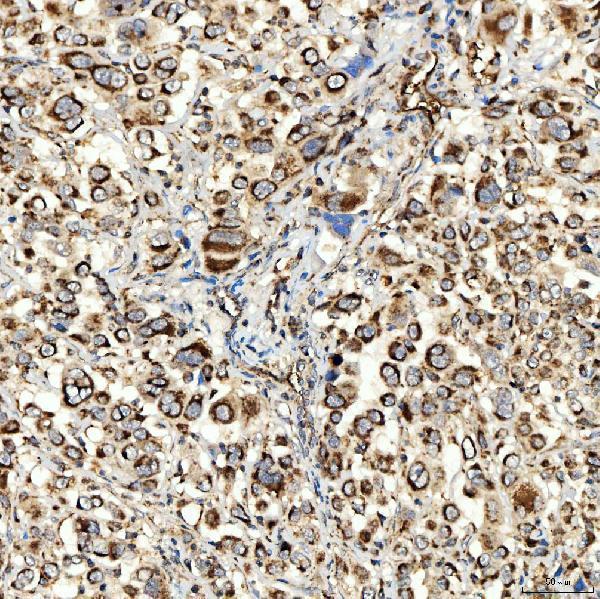
Designing an IHC experiment for NLR family member X1? The guide has the expected staining pattern, antigen retrieval and fixation, antibodies backed by real IHC images, the tissue controls to run alongside, and protocols taken from published papers.
Open the NLRX1 IHC Guide
Facts about NLR family member X1.

Instead, promotes autophagy by interacting with TUFM and then recruiting the autophagy- related proteins ATG5 and ATG12 (PubMed:22749352). Regulates also MAVS-dependent NLRP3 inflammasome activation to attenuate apoptosis (PubMed:27393910).
| Human | |
|---|---|
| Gene Name: | NLRX1 |
| Uniprot: | Q86UT6 |
| Entrez: | 79671 |

| Belongs to: |
|---|
| NLRP family |

Caterpiller protein 11.3; CLR11.3DLNB26; MGC131937; MGC21025; NLR family member X1; NLR family, X1; NOD26; NOD5; NOD9FLJ21478; NOD-like receptor X1; Nucleotide-binding oligomerization domain protein 26; Nucleotide-binding oligomerization domain protein 5; Nucleotide-binding oligomerization domain protein 9; nucleotide-binding oligomerization domain, leucine rich repeat containing X1
Mass (kDA):
107.616 kDA

| Human | |
|---|---|
| Location: | 11q23.3 |
| Sequence: | 11; NC_000011.10 (119168334..119184016) |
Ubiquitously expressed. Strongest expression in mammary gland, heart and muscle. Detected in HeLa, HEK293T, THP-1, HL-60, Raji and Jurkat cell lines (at protein level).
Mitochondrion outer membrane.


PMID: 12766759 by Inohara N., et al. NODs: intracellular proteins involved in inflammation and apoptosis.
PMID: 15952891 by Inohara N., et al. NOD-LRR proteins: role in host-microbial interactions and inflammatory disease.