This website uses cookies to ensure you get the best experience on our website.


- Table of Contents
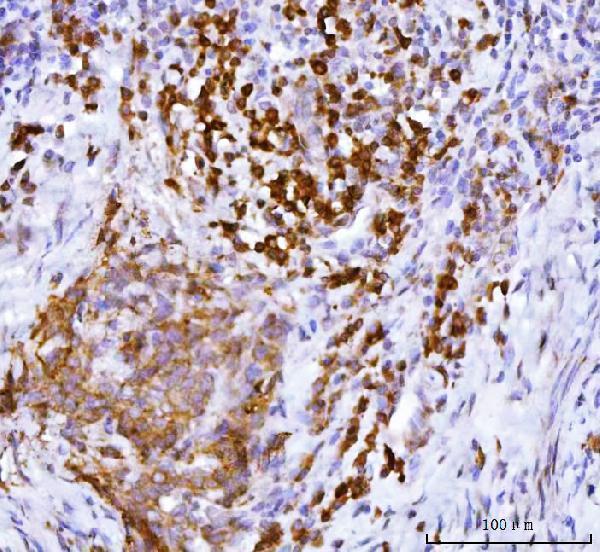
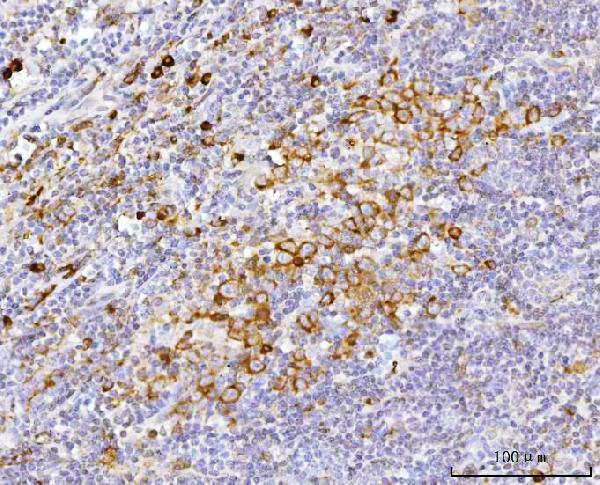
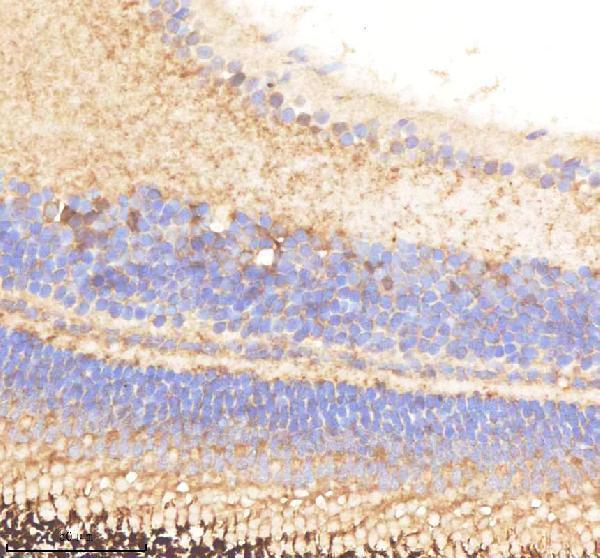
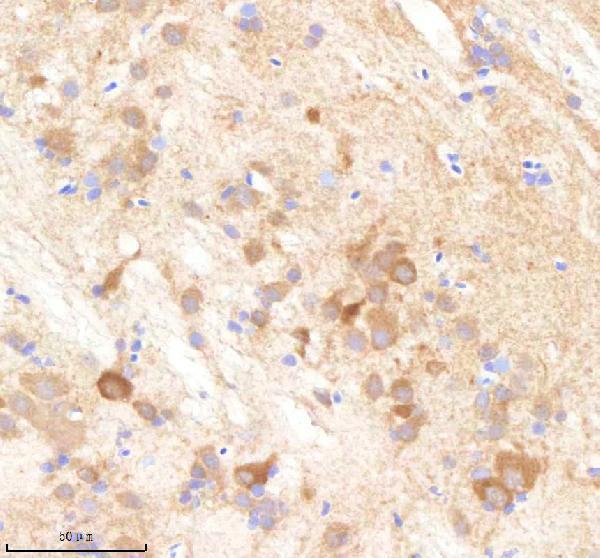
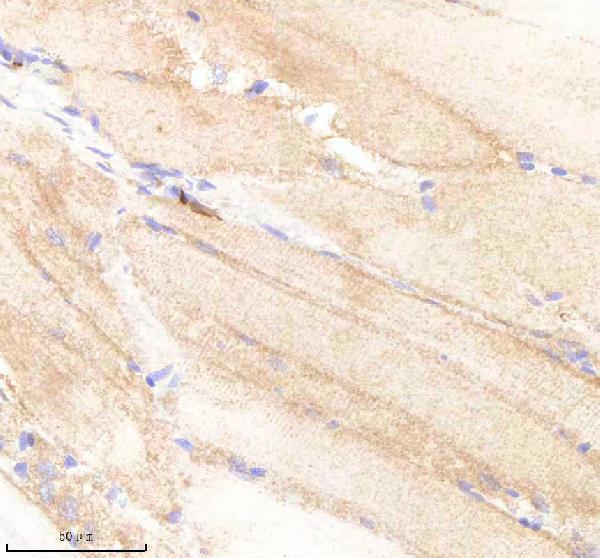
Designing an IHC experiment for PABPC4? The guide has the expected staining pattern, antigen retrieval and fixation, antibodies backed by real IHC images, the tissue controls to run alongside, and protocols taken from published papers.
Open the PABPC4 IHC Guide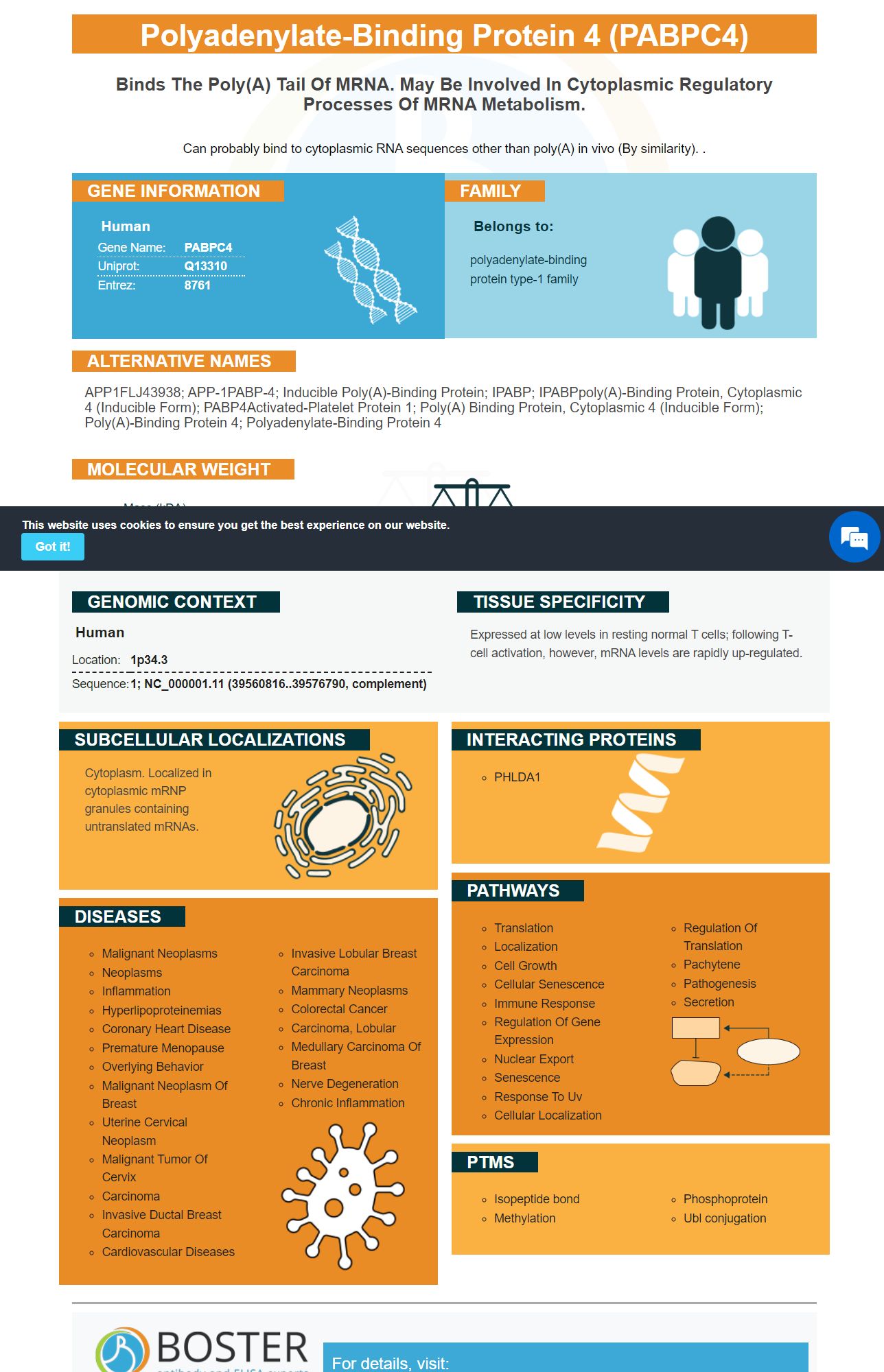
Facts about Polyadenylate-binding protein 4.
Can probably bind to cytoplasmic RNA sequences other than poly(A) in vivo (By similarity). .
| Human | |
|---|---|
| Gene Name: | PABPC4 |
| Uniprot: | Q13310 |
| Entrez: | 8761 |

| Belongs to: |
|---|
| polyadenylate-binding protein type-1 family |

APP1FLJ43938; APP-1PABP-4; Inducible poly(A)-binding protein; IPABP; iPABPpoly(A)-binding protein, cytoplasmic 4 (inducible form); PABP4Activated-platelet protein 1; poly(A) binding protein, cytoplasmic 4 (inducible form); Poly(A)-binding protein 4; polyadenylate-binding protein 4
Mass (kDA):
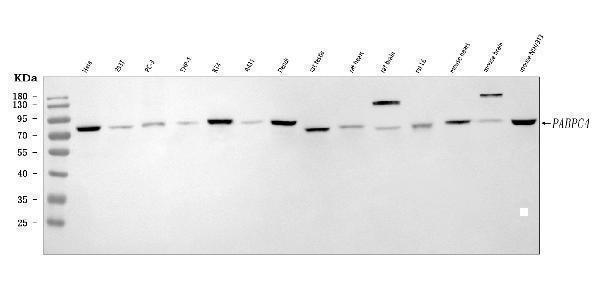
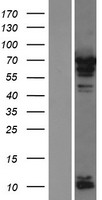
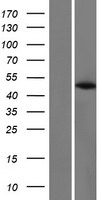
70.783 kDA

| Human | |
|---|---|
| Location: | 1p34.3 |
| Sequence: | 1; NC_000001.11 (39560816..39576790, complement) |
Expressed at low levels in resting normal T cells; following T-cell activation, however, mRNA levels are rapidly up-regulated.
Cytoplasm. Localized in cytoplasmic mRNP granules containing untranslated mRNAs.





PMID: 8524242 by Yang H., et al. iPABP, an inducible poly(A)-binding protein detected in activated human T cells.
PMID: 9030741 by Houng A.K., et al. Identification and structure of activated-platelet protein-1, a protein with RNA-binding domain motifs that is expressed by activated platelets.