This website uses cookies to ensure you get the best experience on our website.


- Table of Contents
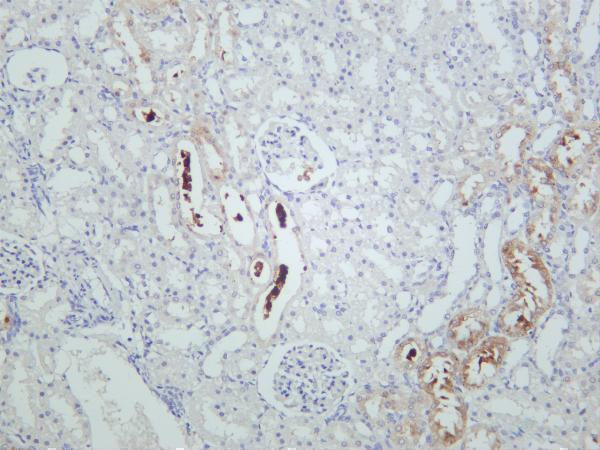
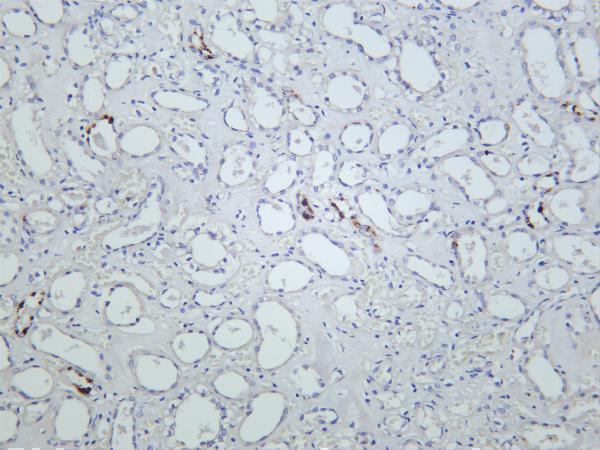
Designing an IHC experiment for Peroxiredoxin-1? The guide has the expected staining pattern, antigen retrieval and fixation, antibodies backed by real IHC images, the tissue controls to run alongside, and protocols taken from published papers.
Open the PRDX1 IHC Guide
3 Citations


Facts about Peroxiredoxin-1.

Might take part in the signaling cascades of growth factors and tumor necrosis factor-alpha by regulating the intracellular concentrations of H(2)O(2) (PubMed:9497357). Reduces an intramolecular disulfide bond in GDPD5 that gates the capability to GDPD5 to induce postmitotic motor neuron differentiation (By similarity).
| Human | |
|---|---|
| Gene Name: | PRDX1 |
| Uniprot: | Q06830 |
| Entrez: | 5052 |

| Belongs to: |
|---|
| peroxiredoxin family |

EC 1.11.1; EC 1.11.1.15; Natural killer cell-enhancing factor A; natural killer-enhancing factor A; NKEFA; NKEF-A; PAG; PAGAMSP23; PAGB; Peroxiredoxin 1; peroxiredoxin-1; PRDX1; proliferation-associated gene A; Proliferation-associated gene protein; PRX1; PRXI; TDPX2; Thioredoxin peroxidase 2; Thioredoxin-dependent peroxide reductase 2
Mass (kDA):
22.11 kDA

| Human | |
|---|---|
| Location: | 1p34.1 |
| Sequence: | 1; NC_000001.11 (45511035..45522890, complement) |
Cytoplasm. Melanosome. Identified by mass spectrometry in melanosome fractions from stage I to stage IV.



PMID: 8496166 by Prosperi M.T., et al. A human cDNA corresponding to a gene overexpressed during cell proliferation encodes a product sharing homology with amoebic and bacterial proteins.
PMID: 8026862 by Shau H., et al. Cloning and sequence analysis of candidate human natural killer- enhancing factor genes.
*More publications can be found for each product on its corresponding product page