This website uses cookies to ensure you get the best experience on our website.


- Table of Contents
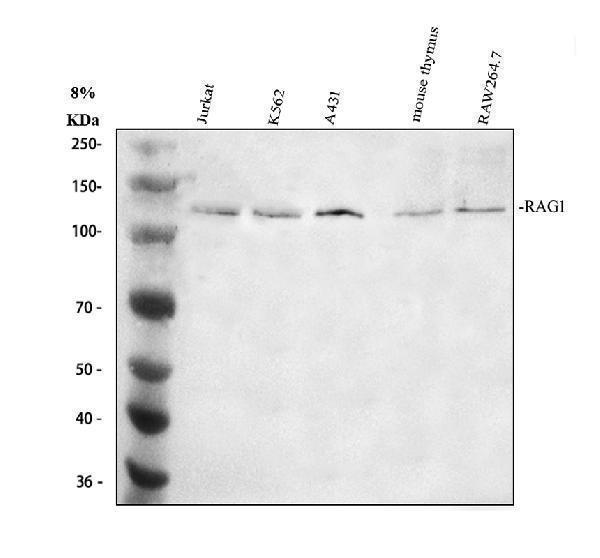
Designing a Western blot for RAG1? The guide has the expected band size, antibodies backed by real blot images, the controls to run alongside, and protocols taken from published papers.
Open the RAG1 Western Blot Guide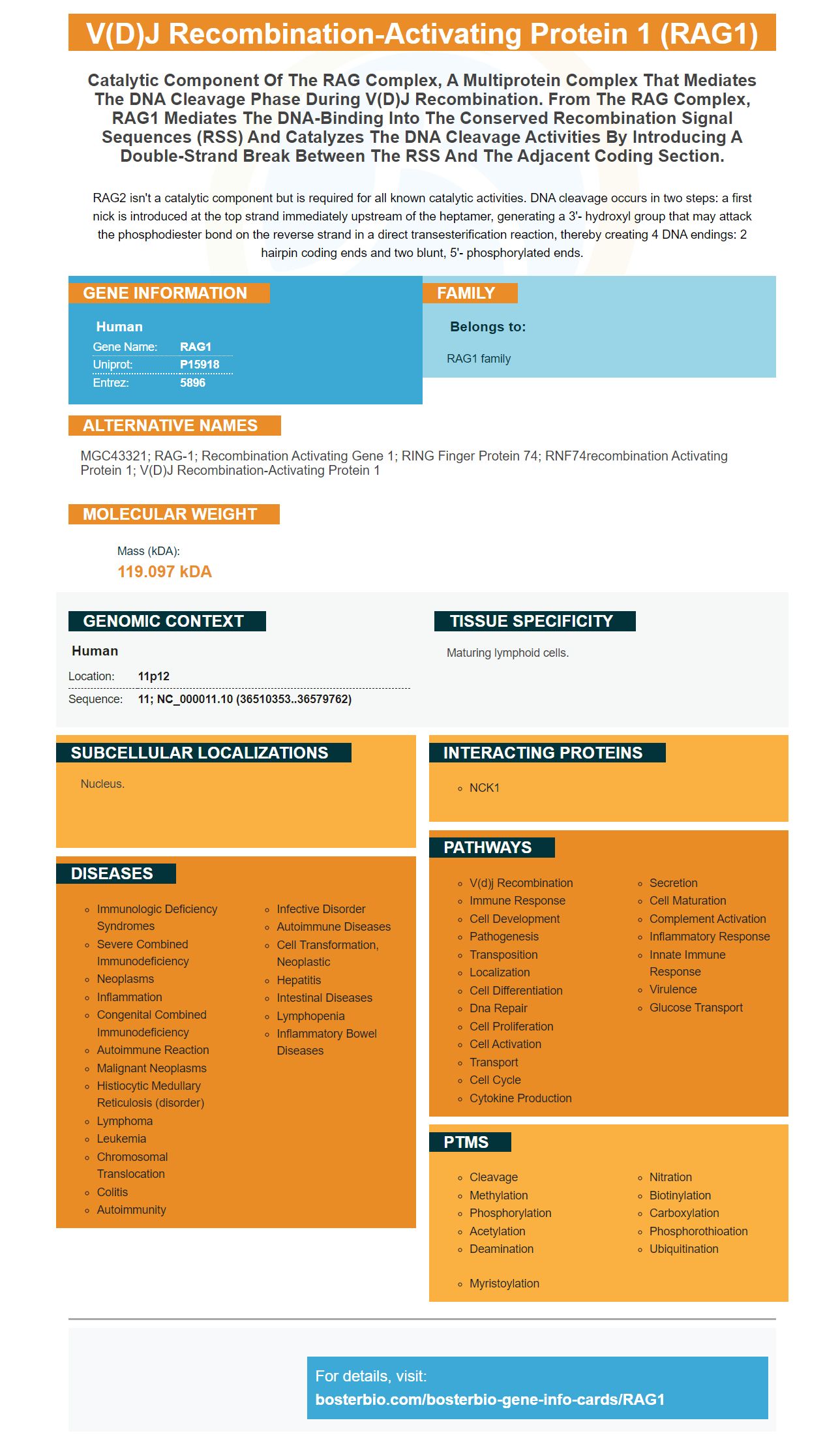
Facts about V(D)J recombination-activating protein 1.
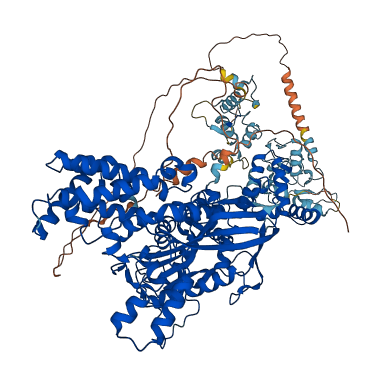
RAG2 isn't a catalytic component but is required for all known catalytic activities. DNA cleavage occurs in two steps: a first nick is introduced at the top strand immediately upstream of the heptamer, generating a 3'- hydroxyl group that may attack the phosphodiester bond on the reverse strand in a direct transesterification reaction, thereby creating 4 DNA endings: 2 hairpin coding ends and two blunt, 5'- phosphorylated ends.
| Human | |
|---|---|
| Gene Name: | RAG1 |
| Uniprot: | P15918 |
| Entrez: | 5896 |
| Belongs to: |
|---|
| RAG1 family |

MGC43321; RAG-1; recombination activating gene 1; RING finger protein 74; RNF74recombination activating protein 1; V(D)J recombination-activating protein 1
Mass (kDA):
119.097 kDA

| Human | |
|---|---|
| Location: | 11p12 |
| Sequence: | 11; NC_000011.10 (36510353..36579762) |
Maturing lymphoid cells.
Nucleus.

PMID: 2598259 by Schatz D.G., et al. The V(D)J recombination activating gene, RAG-1.
PMID: 8052633 by Cortes P., et al. RAG-1 interacts with the repeated amino acid motif of the human homologue of the yeast protein SRP1.