This website uses cookies to ensure you get the best experience on our website.


- Table of Contents
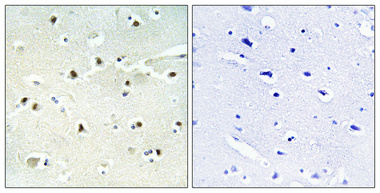
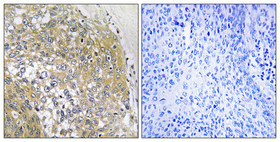
Designing an IHC experiment for Protein S100-A16? The guide has the expected staining pattern, antigen retrieval and fixation, antibodies backed by real IHC images, the tissue controls to run alongside, and protocols taken from published papers.
Open the S100A16 IHC Guide
Facts about Protein S100-A16.
Can promote differentiation of adipocytes (in vitro). Overexpression in 3T3-L1 preadipocytes increases their proliferation, enhances adipogenesis and reduces insulin-stimulated glucose uptake (PubMed:21266506, PubMed:23526364).
| Mouse | |
|---|---|
| Gene Name: | S100a16 |
| Uniprot: | Q9D708 |
| Entrez: | 67860 |

| Belongs to: |
|---|
| S-100 family |

AAG13; Aging-associated gene 13 protein; aging-associated protein 13; DT1P1A7; MGC17528; protein S100-A16; Protein S100-F; S100 calcium binding protein A16; S100A16; S100F; S100FS100 calcium-binding protein A16
Mass (kDA):
14.324 kDA

| Mouse | |
|---|---|
| Location: | 3|3 F1 |
| Sequence: | 3; |
Ubiquitous (PubMed:17030513). Widely distributed throughout the adult brain and predominantly expressed within specific astrocyte populations (PubMed:17030513). Expressed at high level in adipose tissues of obese animals (PubMed:21266506).

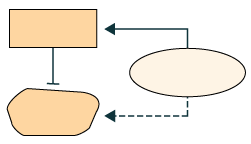

PMID: 14684152 by Marenholz I., et al. S100A16, a ubiquitously expressed EF-hand protein which is up- regulated in tumors.
PMID: 17030513 by Sturchler E., et al. S100A16, a novel calcium-binding protein of the EF-hand superfamily.