This website uses cookies to ensure you get the best experience on our website.


- Table of Contents
Designing an IHC experiment for SMYD3? The guide has the expected staining pattern, antigen retrieval and fixation, antibodies backed by real IHC images, the tissue controls to run alongside, and protocols taken from published papers.
Open the SMYD3 IHC Guide
Facts about Histone-lysine N-methyltransferase SMYD3.
Additionally methylates'Lys-5' of histone H4 (PubMed:22419068). Plays an important role in transcriptional activation as a member of an RNA polymerase complex (PubMed:15235609).
| Human | |
|---|---|
| Gene Name: | SMYD3 |
| Uniprot: | Q9H7B4 |
| Entrez: | 64754 |

| Belongs to: |
|---|
| class V-like SAM-binding methyltransferase superfamily |

bA74P14.1 (novel protein); bA74P14.1; EC 2.1.1; EC 2.1.1.43; FLJ21080; KMT3E; MGC104324; MYND domain containing 1; SET and MYND domain containing 3; SET and MYND domain-containing protein 3; Zinc finger MYND domain-containing protein 1; zinc finger protein, subfamily 3A (MYND domain containing), 1; ZMYND1; ZNFN3A1
Mass (kDA):
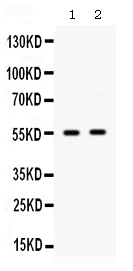
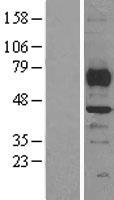
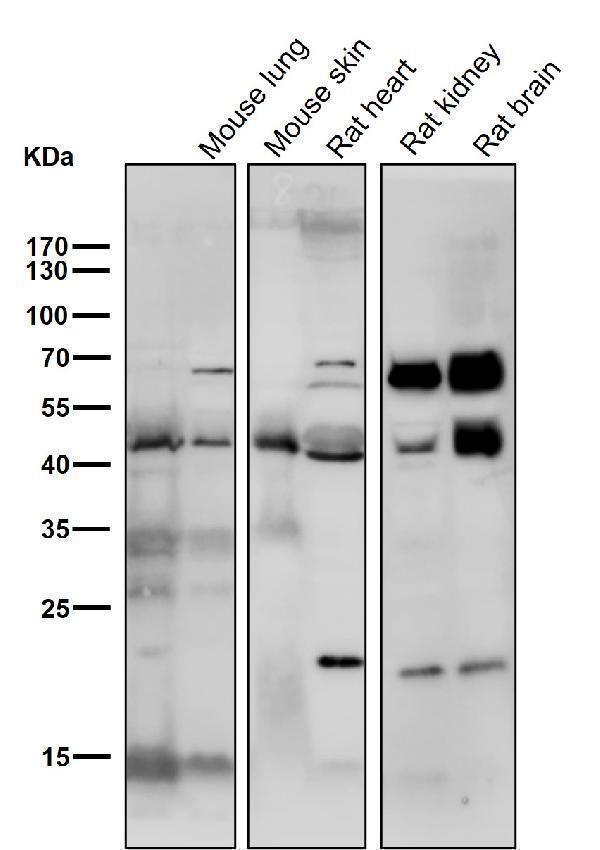
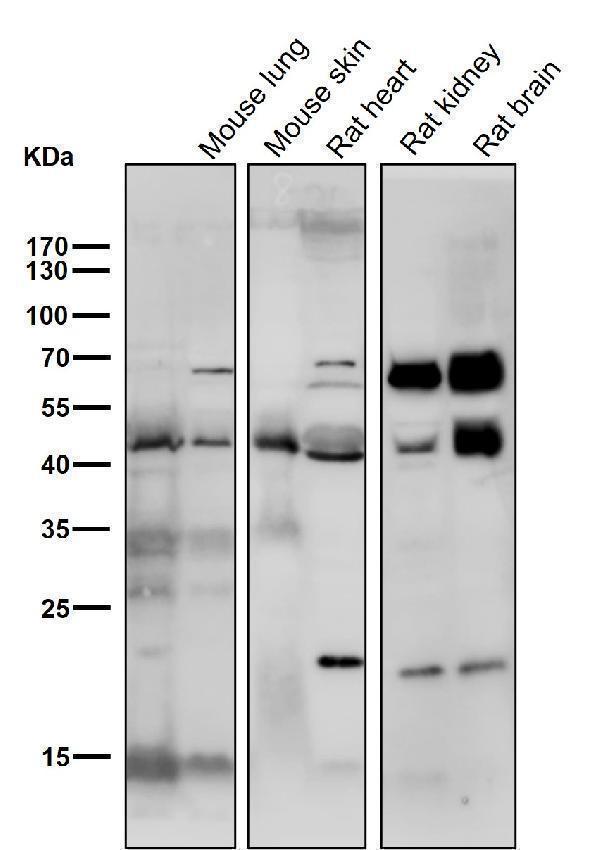
49.097 kDA

| Human | |
|---|---|
| Location: | 1q44 |
| Sequence: | 1; NC_000001.11 (245749340..246507279, complement) |
Expressed in skeletal muscles and testis. Overexpressed in a majority of colorectal and hepatocellular carcinomas.
Cytoplasm. Nucleus. Mainly cytoplasmic when cells are arrested at G0/G1. Accumulates in the nucleus at S phase and G2/M.





PMID: 15235609 by Hamamoto R., et al. SMYD3 encodes a histone methyltransferase involved in the proliferation of cancer cells.
PMID: 22419068 by Van Aller G.S., et al. Smyd3 regulates cancer cell phenotypes and catalyzes histone H4 lysine 5 methylation.