This website uses cookies to ensure you get the best experience on our website.


- Table of Contents
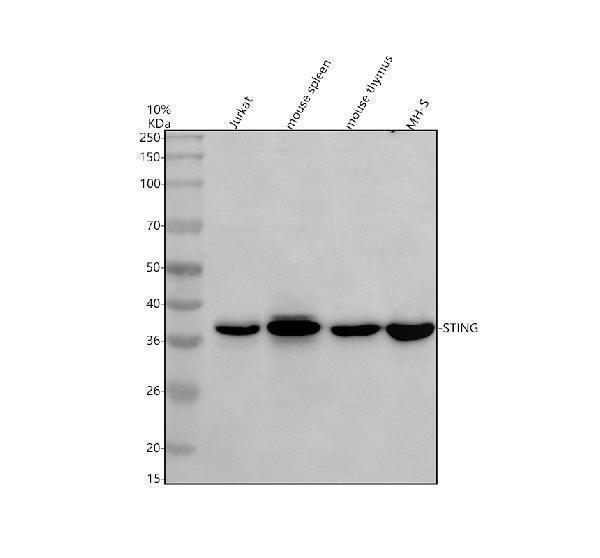
Designing a Western blot for Sting1? The guide has the expected band size, antibodies backed by real blot images, the controls to run alongside, and protocols taken from published papers.
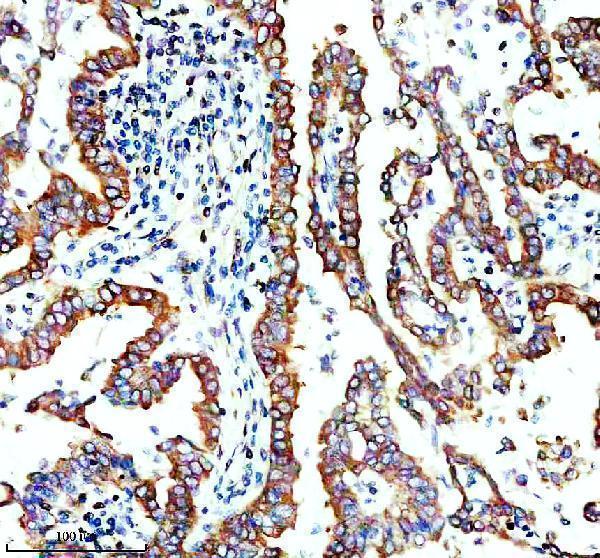
Open the STING1 Western Blot GuideDesigning an IHC experiment for Sting1? The guide has the expected staining pattern, antigen retrieval and fixation, antibodies backed by real IHC images, the tissue controls to run alongside, and protocols taken from published papers.
Open the STING1 IHC Guide
Facts about Stimulator of interferon genes protein.
Acts by recognizing and binding cyclic di-GMP (c-di-GMP), a second messenger produced by bacteria, and cyclic GMP-AMP (cGAMP), a messenger produced in response to DNA virus from the cytosol: upon binding of c-di-GMP or cGAMP, autoinhibition is relieved and TMEM173/STING can activate both NF-kappa-B and IRF3 transcription pathways to induce expression of type I interferon and employ a potent antifungal state. May be involved in translocon feature, the translocon maybe being able to influence the induction of type I interferons.
| Mouse | |
|---|---|
| Gene Name: | Sting1 |
| Uniprot: | Q3TBT3 |
| Entrez: | 72512 |

| Belongs to: |
|---|
| STING family |

Stimulator of interferon genes protein
Mass (kDA):
42.83 kDA

| Mouse | |
|---|---|
| Location: | 18 B2|18 |
| Sequence: | 18; |
Present in spleen and thymus tissue. Also present in dendritic cells (at protein level).

PMID: 18818105 by Zhong B., et al. The adaptor protein MITA links virus-sensing receptors to IRF3 transcription factor activation.
PMID: 18559423 by Jin L., et al. MPYS, a novel membrane tetraspanner, is associated with major histocompatibility complex class II and mediates transduction of apoptotic signals.