This website uses cookies to ensure you get the best experience on our website.


- Table of Contents
and ELISA kits, proteins related to Fibroblasts.
Fibroblasts are essential cells within the connective tissue, playing a pivotal role in maintaining the structural integrity of our organs and tissues. These versatile cells are primarily responsible for producing and remodeling the extracellular matrix, which provides support and facilitates cell communication. Beyond their structural functions, fibroblasts are key players in wound healing and tissue repair, responding to injury by generating collagen and other vital proteins. In the realm of biomedical research, understanding fibroblasts is crucial for developing targeted therapies, particularly involving antibodies that can modulate their activity. By harnessing the potential of fibroblast-related antibodies, scientists aim to advance treatments for a variety of conditions, including fibrosis, cancer, and autoimmune diseases. Our landing page is dedicated to exploring the latest breakthroughs in fibroblast research, offering valuable insights and resources for researchers and healthcare professionals alike.
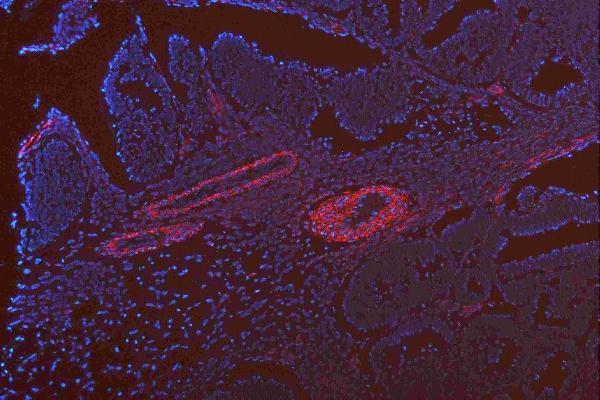
Anti-Alpha-Smooth Muscle Actin ACTA2 Antibody (Monoclonal, 1A4), Figure 29. IF analysis of Alpha-Smooth Muscle Actin using anti-Alpha-Smooth Muscle Actin antibody (M...
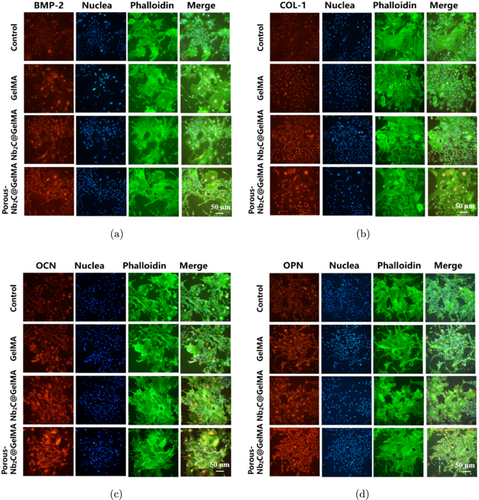
Anti-Collagen I/COL1A1 Antibody Picoband®, Figure 5. IF staining images of (a) BMP-2, (b) COL-1, (c) OCN, and (d) OPN in BMSCs (red: osteogenic proteins and genes; green: cytoskeleton; blue: nucleus). Index in PubMed under a CC BY license. PMID: 10.1142/S1793545824420021
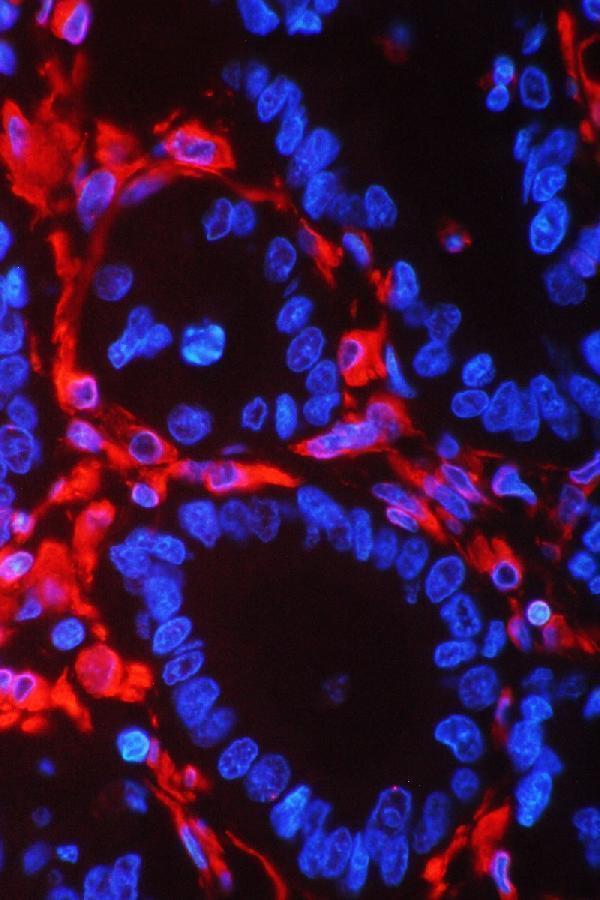
Anti-Vimentin Antibody (Monoclonal, V9), Figure 11. IF analysis of Vimentin using anti-Vimentin antibody (MA1102).
Vimentin was detected in paraffin-embedded section of human i...
| Protein Name | Gene Name | Function |
|---|---|---|
| α-Smooth Muscle Actin | ACTA2 | Involved in contraction and myofibroblast differentiation |
| Fibroblast Activation Protein | FAP | Facilitates tissue remodeling and ECM degradation |
| Vimentin | VIM | Maintains cell integrity and supports cytoskeletal structure |
| Collagen I | COL1A1 | Primary structural component of the extracellular matrix |
| Fibronectin | FN1 | Organizes extracellular matrix and facilitates cell adhesion |
| Platelet-Derived Growth Factor Receptor Beta | PDGFRB | Regulates cell proliferation and migration |
| S100A4 (FSP1) | S100A4 | Promotes cell motility and has roles in fibrosis |
| Podoplanin | PDPN | Regulates cell migration and lymphangiogenesis |
| CD90 (Thy-1) | THY1 | Mediates cell adhesion and signaling |
| Periostin | POSTN | Involved in extracellular matrix organization and fibrosis |
| DDR2 | DDR2 | Receptor tyrosine kinase involved in collagen interaction |
| Matrix Metalloproteinase-2 | MMP2 | Degrades components of the extracellular matrix |
| Lysyl Oxidase | LOX | Crosslinks collagen and elastin in the extracellular matrix |
| Desmin | DES | Intermediate filament important for cellular structure |
| CD34 | CD34 | Stem cell marker and involved in cell adhesion |
| N-cadherin | CDH2 | Mediates cell-cell adhesion |
| Transforming Growth Factor Beta 1 | TGFB1 | Regulates cell growth and differentiation |
| Insulin-like Growth Factor 1 | IGF1 | Promotes cell growth and survival |
| Notch3 | NOTCH3 | Involved in cell differentiation and development |
| Transcription Factor 21 | TCF21 | Regulates gene expression during development |
Fibroblasts play a pivotal role in the synthesis and maintenance of the extracellular matrix (ECM), which provides structural support to tissues and regulates various cellular functions. This sub-area focuses on understanding how fibroblasts produce key ECM components such as collagen, elastin, fibronectin, and proteoglycans. Through a tightly regulated process, fibroblasts secrete these proteins, which assemble into a complex network that maintains tissue integrity and elasticity. Additionally, fibroblasts are instrumental in ECM remodeling, a dynamic process essential for wound healing, tissue repair, and adaptation to mechanical stress. Enzymes like matrix metalloproteinases (MMPs) and their inhibitors (TIMPs) orchestrate the degradation and reorganization of ECM components, ensuring that tissue structure adapts to physiological demands. Dysregulation in ECM production and remodeling by fibroblasts can lead to various pathological conditions, including fibrosis, chronic wounds, and impaired tissue regeneration. Thus, exploring the mechanisms governing ECM dynamics offers valuable insights into maintaining tissue homeostasis and developing therapeutic strategies for related disorders.
The activation of fibroblasts and their transition to myofibroblasts is a critical mechanism underlying fibrosis, a pathological condition characterized by excessive ECM deposition and tissue scarring. This sub-area investigates the signaling pathways and molecular triggers that convert quiescent fibroblasts into activated myofibroblasts, which exhibit enhanced synthetic and contractile capabilities. Key factors involved in this process include transforming growth factor-beta (TGF-β), which induces the expression of alpha-smooth muscle actin (α-SMA) and promotes ECM production. Additionally, inflammatory cytokines, mechanical stress, and oxidative stress contribute to fibroblast activation. Understanding the cellular and molecular events that drive fibroblast activation is essential for elucidating the progression of fibrotic diseases in organs such as the liver, lungs, heart, and kidneys. Research in this area aims to identify potential therapeutic targets to inhibit or reverse fibroblast activation, thereby preventing or reducing fibrosis. By unraveling the complexities of fibroblast behavior in fibrotic conditions, scientists hope to develop interventions that can effectively manage or cure fibrotic diseases, improving patient outcomes and quality of life.