This website uses cookies to ensure you get the best experience on our website.


- Table of Contents
and ELISA kits, proteins related to Osteoblasts.
Osteoblasts are specialized cells essential for bone formation and remodeling, playing a pivotal role in maintaining skeletal health and integrity. Originating from mesenchymal stem cells, osteoblasts synthesize and secrete the organic components of the bone matrix, primarily collagen, and facilitate its mineralization by depositing calcium and phosphate ions. Beyond building bone, these cells regulate calcium homeostasis, influencing various physiological processes. Understanding osteoblast function is crucial for addressing bone-related disorders such as osteoporosis, fractures, and metabolic bone diseases. Advances in osteoblast research, particularly the development and use of specific antibodies, have enabled scientists to unravel the complex signaling pathways and molecular mechanisms that govern bone formation and maintenance. These antibodies serve as invaluable tools for both basic research and the development of targeted therapies, driving progress in bone health and regenerative medicine.
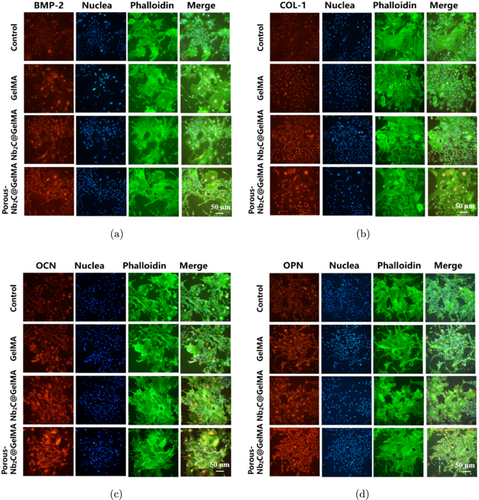
Anti-Collagen I/COL1A1 Antibody Picoband®, Figure 5. IF staining images of (a) BMP-2, (b) COL-1, (c) OCN, and (d) OPN in BMSCs (red: osteogenic proteins and genes; green: cytoskeleton; blue: nucleus). Index in PubMed under a CC BY license. PMID: 10.1142/S1793545824420021
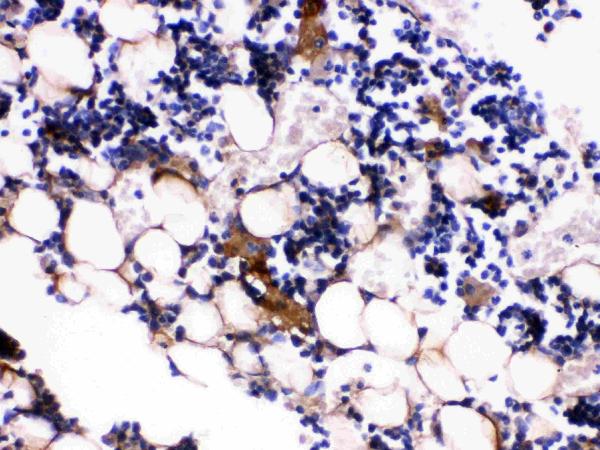
Anti-Osteocalcin/BGLAP Antibody, Figure 1. IHC analysis of Osteocalcin using anti-Osteocalcin antibody (PB9919).
Osteocalcin was detected in the paraffin-embedded section of mouse tibia tissues...
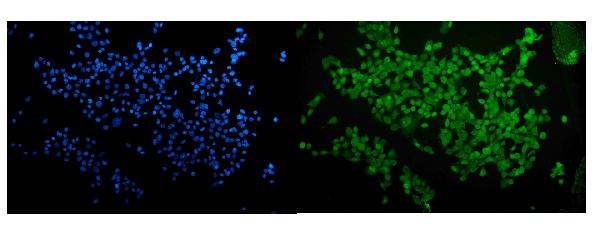
Anti-RUNX2 Antibody Picoband®, Figure 3. IF analysis of RUNX2 using anti-RUNX2 antibody (PB9158).
RUNX2 was detected in immunocytochemical section of A431 cells. ...
| Protein Name | Gene Name | Function |
|---|---|---|
| RUNX2 | RUNX2 | Essential transcription factor for osteoblast differentiation and bone formation. |
| Alkaline Phosphatase | ALPL | Enzyme involved in bone mineralization by hydrolyzing phosphate esters. |
| Osteocalcin | BGLAP | Regulates bone mineralization and calcium ion homeostasis. |
| Collagen Type I Alpha 1 | COL1A1 | Major structural protein of the bone matrix, providing tensile strength. |
| Osteopontin | SPP1 | Mediates cell adhesion and bone remodeling. |
| Bone Morphogenetic Protein 2 | BMP2 | Promotes osteoblast differentiation and bone formation. |
| Osterix | SP7 | Transcription factor critical for osteoblast differentiation. |
| Sclerostin | SOST | Inhibits bone formation by antagonizing Wnt signaling. |
| Integrin Binding Sialoprotein | IBSP | Facilitates bone mineralization and cell adhesion. |
| Low Density Lipoprotein Receptor Related Protein 5 | LRP5 | Regulates bone mass through Wnt signaling pathway. |
| Vascular Endothelial Growth Factor A | VEGFA | Promotes angiogenesis associated with bone growth and healing. |
| Dickkopf WNT Signaling Pathway Inhibitor 1 | DKK1 | Regulates osteoblast activity by modulating Wnt signaling. |
| Fibroblast Growth Factor 2 | FGF2 | Stimulates osteoblast proliferation and differentiation. |
| Phosphate Regulating Endopeptidase | PHEX | Involved in bone mineralization and phosphate homeostasis. |
| Matrix Metallopeptidase 13 | MMP13 | Degrades extracellular matrix components during bone remodeling. |
| Cathepsin K | CTSK | Breaks down collagen in bone matrix, important for bone resorption. |
| Matrix Extracellular Phosphoglycoprotein | MEPE | Regulates bone mineralization and phosphate metabolism. |
| Sox9 | SOX9 | Transcription factor involved in early osteoblast differentiation. |
| Dentin Matrix Protein 1 | DMP1 | Regulates mineralization and phosphate homeostasis in bone. |
| Osteonectin | SPARC | Binds calcium and collagen, facilitating bone mineralization. |
The Wnt signaling pathway plays a pivotal role in regulating osteoblast differentiation and function. This complex network of proteins facilitates communication between cells, influencing the proliferation and maturation of precursor cells into fully functional osteoblasts—the bone-forming cells. Activation of the Wnt pathway triggers a cascade of intracellular events that promote the expression of genes essential for bone formation and mineralization. Dysregulation of Wnt signaling has been implicated in various bone-related disorders, including osteoporosis and osteopetrosis, highlighting its significance in maintaining bone homeostasis. Current research focuses on elucidating the precise mechanisms of Wnt signaling in osteoblasts and exploring therapeutic targets within this pathway to enhance bone regeneration and treat skeletal diseases.
Osteoblast-mediated bone mineralization is a fundamental process essential for the formation and maintenance of healthy bone tissue. Osteoblasts synthesize and secrete the organic matrix, primarily composed of type I collagen, which serves as a scaffold for mineral deposition. This process involves the regulation of calcium and phosphate ions, leading to the formation of hydroxyapatite crystals that provide bones with their rigidity and strength. Key enzymes, such as alkaline phosphatase, play a crucial role in facilitating mineralization by hydrolyzing organic phosphate esters, thereby increasing local phosphate concentrations necessary for crystal formation. Disruptions in the mineralization process can result in skeletal abnormalities and conditions like osteomalacia and rickets. Research in this area aims to better understand the molecular mechanisms governing bone mineralization and to develop strategies to enhance bone density and integrity in various clinical settings.