This website uses cookies to ensure you get the best experience on our website.


- Table of Contents
and ELISA kits, proteins related to Lymphoma.
Lymphoma is a type of cancer that originates in the lymphatic system, a crucial component of the body's immune defense against infections and diseases. This cancer primarily affects lymphocytes, a type of white blood cell that plays an integral role in immune response. Lymphoma is broadly categorized into two main types: Hodgkin lymphoma and non-Hodgkin lymphoma, each characterized by various biological behaviors and treatment responses. The etiology of lymphoma remains largely unclear, but factors such as genetic predispositions, environmental triggers, and viral infections are known to contribute to its development. This complex disease presents heterogeneously, ranging from indolent to highly aggressive forms, affecting patient prognosis and treatment strategies. Recent advancements in research, particularly in the realm of monoclonal antibodies, have revolutionized the therapeutic landscape, offering hope for more efficient and targeted approaches in the management of lymphoma. As lymphoma continues to be a focal point of medical research, understanding its underlying mechanisms and refining therapeutic interventions remain critical for enhancing patient outcomes.
Anti-Bcl-2/BCL2 Antibody Picoband®, RTECs-specific knockout of PGK1 protected against I/R-induced AKI. After adaptation for one week, eight-week-old PGK1 flox/flox and PGK1 CK...

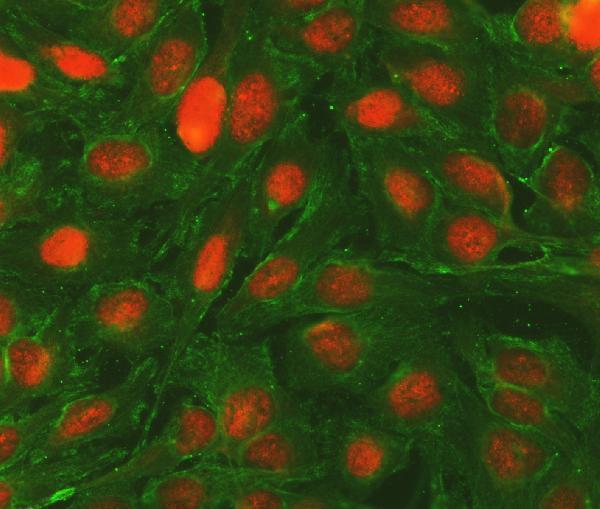
Anti-Ki67/MKI67 Antibody Picoband®, IF analysis of Ki67 using anti-Ki67 antibody (PB9026).
Ki67 was detected in paraffin-embedded section of human colon organoid tissue. He...

Anti-c-Myc Monoclonal Antibody, Immunofluorescent analysis using the Antibody at 1:50 dilution....
| Protein Name | Gene Name | Function |
|---|---|---|
| CD20 | MS4A1 | Marker for B cell identity, target for monoclonal antibody therapies. |
| CD30 | TNFRSF8 | Expressed in Hodgkin Lymphoma, involved in cell proliferation. |
| CD15 | FUT4 | Commonly associated with Reed-Sternberg cells in Hodgkin Lymphoma. |
| CD5 | CD5 | Expressed on T cells and a subset of B cells, associated with chronic lymphocytic leukemia. |
| CD10 | MME | Marker for germinal center B cells, involved in B-cell development. |
| BCL-2 | BCL2 | Anti-apoptotic molecule, commonly overexpressed in lymphomas. |
| BCL-6 | BCL6 | Transcriptional repressor, plays a role in germinal center formation. |
| ALK | ALK | Abnormal expression linked to anaplastic large cell lymphoma. |
| PAX5 | PAX5 | B-cell lineage specific activator protein, crucial for B cell development. |
| c-MYC | MYC | Regulates cell cycle progression, apoptosis, and cellular transformation. |
| CD23 | FCER2 | Low-affinity receptor for IgE, associated with B-cell activation. |
| CD45 | PTPRC | Common leukocyte antigen, important for signaling through the cell membrane. |
| CD19 | CD19 | Regulates B lymphocyte development, activation, and differentiation. |
| Ki-67 | MKI67 | Nuclear protein associated with cellular proliferation. |
| CD79a | CD79A | Signal transduction element of the B-cell antigen receptor. |
| CD22 | CD22 | Regulates B cell function and survival, involved in B cell receptor signaling. |
| MUM1/IRF4 | IRF4 | Involved in the differentiation of plasma cells. |
| CD38 | CD38 | Marker of plasma cells; involved in cell adhesion, signal transduction, and calcium signaling. |
| SYK | SYK | Tyrosine kinase that plays a crucial role in coupling activated immunoreceptors to downstream signaling events. |
Understanding the molecular pathogenesis of lymphoma is crucial for developing targeted therapies and improving patient outcomes. Lymphomas, which are cancers of the lymphatic system, typically arise from mutations in lymphocytes, leading to uncontrolled cell growth and immune evasion. Researchers focus on identifying genetic alterations and signaling pathways that are dysregulated in different subtypes of lymphoma. For example, mutations in oncogenes such as MYC, BCL2, and BCL6 and tumor suppressor genes like TP53 play significant roles in the pathophysiology of various lymphoma subtypes. Additionally, epigenetic modifications also contribute to lymphomagenesis by affecting gene expression without altering the DNA sequence. By dissecting these intricate molecular mechanisms, scientists aim to develop precision medicines that specifically target malignant cells without harming normal tissues.
The interplay between lymphoma cells and the immune system is a pivotal area of research, providing insights into how cancer cells evade immune detection and destruction. Lymphoma cells often develop mechanisms to suppress the immune response, thereby escaping surveillance and promoting tumor growth and survival. Key focus areas include the role of immune checkpoints, which are regulatory pathways in T cells that if manipulated, can lead cancer cells to avoid immune attack. Therapies targeting these checkpoints, such as PD-1/PD-L1 inhibitors, have shown considerable promise in treating certain types of lymphoma. Researchers are also exploring the role of other immune cells such as natural killer cells and macrophages in the context of lymphoma. Understanding these dynamics not only aids in the development of immunotherapies but also helps in predicting response to treatment and disease prognosis.