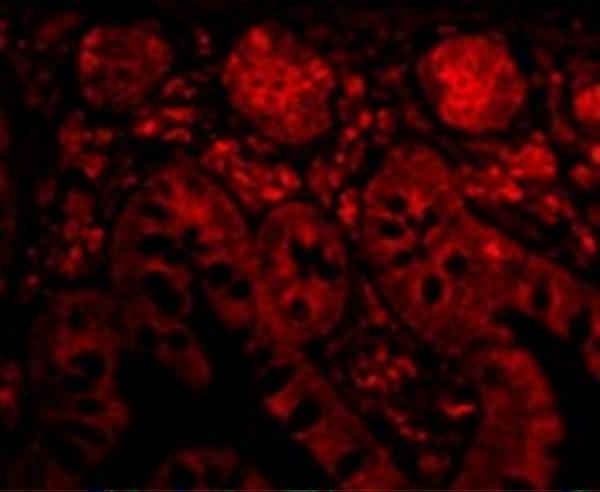
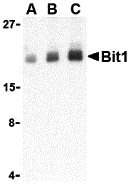
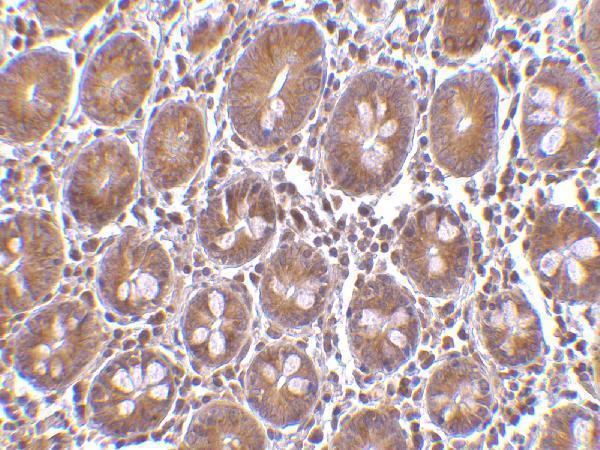
PTRH2 antibody (A02459-1) performs well in ELISA, IF, IHC-P, WB and shows reactivity with Human, Mouse.
  • Validated for inter-lot consistency, specificity, and reproducibility
  • Committed to quality since 1993
Filter:
a02459 1 ptrh2 primary antibodies wb testing 1a02459 1 ptrh2 primary antibodies ihc testing 2a02459 1 ptrh2 primary antibodies if testing 3

Anti-Bit1 PTRH2 Antibody

PTRH2 antibody

Reactive SpeciesHostApplication
Human, MouseRabbitELISA, IF, IHC-P, WB

SKU: A02459-1

Size: 0.1 mg

Bundle to save: I do not want free secondary ab
Price:
$481/0.1 mg

In stock. Ships Next Business Day.

Quantity: 1

1
Get A Quote
Guarantee / Product Promise

Recommend Dilution

Application
Dilution
Species
Bit1 antibody can be used for the detection of Bit1 by Western blot at 1 - 4 μg/mL. Antibody can also be used for immunohistochemistry starting at 10 μg/mL. For immunofluorescence start at 20 μg/mL.
Antibody validated: Western Blot in human samples; Immunohistochemistry in human samples and Immunofluorescence in human samples. All other applications and species not yet tested. Optimal dilutions for each application should be determined by the researcher.

* It is recommended to optimize the amount of this reagent in each experimental system to achieve the best results.

Product Information

Product Name
Anti-Bit1 PTRH2 Antibody
View all PTRH2 Antibodies
Form
Liquid
Uniprot
Gene ID
Storage & Handling
Bit1 antibody can be stored at 4°C, stable for up to one year. Avoid repeated freeze-thaw cycles. Antibodies should not be exposed to prolonged high temperatures.
Host
Rabbit
Contents
Bit1 Antibody is supplied in PBS containing ≤0.09% sodium azide.
Clonality
Polyclonal
Isotype
IgG
Immunogen
Bit1 antibody was raised against a 16 amino acid synthetic peptide from near the center of human Bit1. The immunogen is located within amino acids 80 - 130 of Bit1.
Observed Molecular Weight
68 kDa
Calculated Molecular Weight

19.2 kDa

Background of PTRH2
Adhesion to extracellular matrix regulates cell survival through both integrin engagement and appropriate cell spreading. Anoikis is the molecular mechanism of apop-tosis induced by integrin detachment. Bit1 (Bcl-2 inhibitor of transcription 1) was recently identified as being involved in this process. Bit1 is a mitochondrial protein that is released into the cytoplasm upon onset of apoptosis where it forms a complex with AES, a small Groucho/transducin-like enhancer of split (TLE) protein and induces caspase-independent apoptosis. Both AES and TLE proteins are transcriptional co-repressors that play important roles in neurogenesis, segmentation, and sex determination. It has been suggested that Bit1-AES complexes turn off a survival-promoting gene transcription program controlled by TLE. Interestingly, apoptosis of cells transfected with Bit1 and AES could be inhibited if the cells were allowed to attach to fibronectin through the alpha5beta1 integrin suggesting that the Bit1-AES pathway contributing to anoikis is regulated by integrins, and in particular, the alpha5beta1 integrin.
Cite This Product
Anti-Bit1 PTRH2 Antibody (Boster Biological Technology, Pleasanton CA, USA, Catalog # A02459-1)

Review

Have you used Anti-Bit1 PTRH2 Antibody?

Submit a review and receive $370 in product credits, a $185 Amazon gift card, or our carefully curated gift bundles.

Product Promise

We promise Anti-Bit1 PTRH2 Antibody performs excellently in relevant applications for ELISA, IF, IHC-P, WB. If it doesn't perform as promised, we will refund the product. Learn more


In stock
Order Product
A02459-1
Buy one primary antibody get one 0.5ml HRP or Biotin secondary antibody for free.
*Sample sizes are prepared on demand and will take extra lead time. (cannot be conjugated)
$481.00

Troubleshooting

troubleshooting-box-image

Download troubleshooting handbooks for IHC, Western blot and ELISA for FREE.

Download Free PDFs Now

Boster Guarantee

Guaranteed product quality

Guaranteed product quality

We promise all of our products perform as described in datasheets.

This product is for Research Use Only. Not for use in diagnostic procedures.

Update date: Oct 13, 2026