This website uses cookies to ensure you get the best experience on our website.


- Table of Contents
KLK3 antibody (A01505-3) performs well in ELISA, IHC, WB and shows reactivity with Human.
| Reactive Species | Host | Application |
|---|---|---|
| Human | Rabbit | ELISA, IHC, WB |
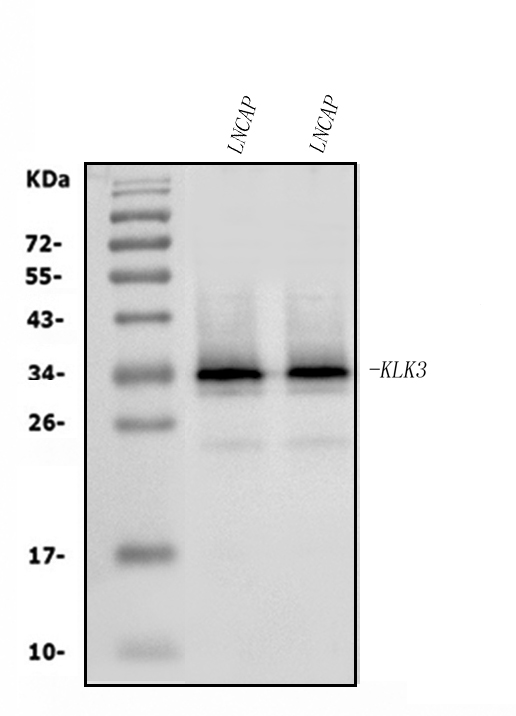
KLK3 antibody was positively detected by WB in:
human LNCAP whole cell, human LNCAP whole cell
Suggested blocking solution with 5% non-fat milk or BSA; (*)Recommended protein loading: 20-40 ug per lane
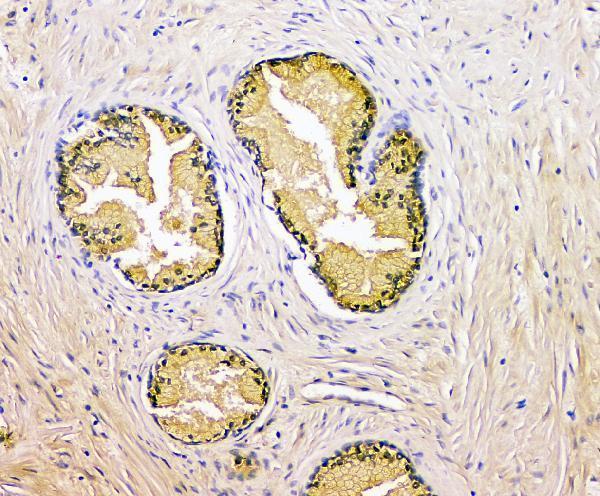
KLK3 antibody was positively detected by IHC in:
human prostatic cancer tissue
Use TE buffer pH 9.0 for antigen retrieval; (*) citrate buffer pH 6.0 is an alternative.
* It is recommended to optimize the amount of this reagent in each experimental system to achieve the best results.
28.7 kDa
The results generated by this homology analysis tool for commonly used animal species are shown below. For unlisted species, please refer to the homology analysis between the immunogen sequence and the corresponding species.
A homology of ≥90% is recommended. Generally, higher homology indicates a greater potential for cross-species reactivity. However, protein expression levels may vary among different species, tissues, and cell types. Therefore, the homology analysis results are for reference only and do not guarantee antibody cross-reactivity or experimental performance.




Submit a review and receive $370 in product credits, a $185 Amazon gift card, or our carefully curated gift bundles.
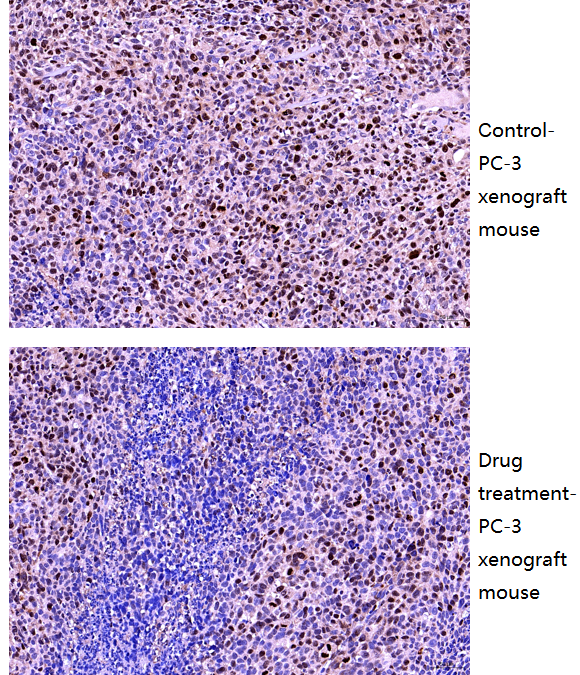
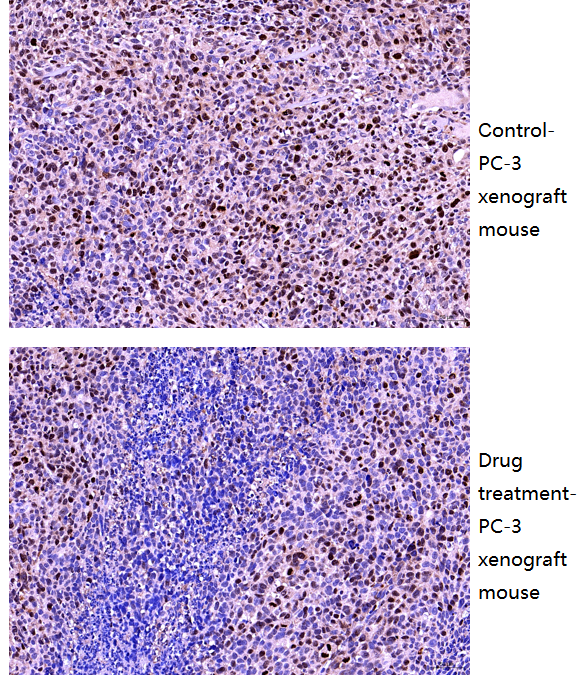
| SKU | A01505-3 |
|---|---|
| Application | Immunohistochemistry |
| Sample | PC-3 xenograft mouse tissue |
| Sample Processing Description | (1) PC-3 cells were implanted in nude mice to form tumors as the control group; (2) tumor-bearing mice were treated with the drug docetaxel. |
| Other Reagents | Goat serum, DAPI, Anti-fade mounting medium |
| Primary Antibody | Prostate Specific Antigen/KLK3 Antibody Picoband® |
| Primary Incubation | 1:500, overnight at 4 ℃ |
| Secondary Antibody | Two-step IHC Detection Kit (Rabbit IgG) |
| Secondary Incubation | 1:500, 45 min at 37℃ |
| Detection | Imaging system:Leica DM2500 |
| Results Summary | Ki67 is a nuclear protein directly associated with cell proliferation and is widely recognized as a marker of proliferating cells due to its importance in evaluating tumor growth rate and patient prognosis. Higher Ki67 indices indicate more actively proliferating tumor cells, usually correlating with faster growth and increased aggressiveness. After treatment with docetaxel, extensive tumor cell death occurred, and proliferative activity was partially suppressed, resulting in fewer Ki67-positive tumor cells. These results clearly reflect the inhibitory effect of the drug on tumor proliferation. |
Dengxiao Zhang, Gansu Provincial People’s Hospital
Verified customer
Submitted 2026-01-30
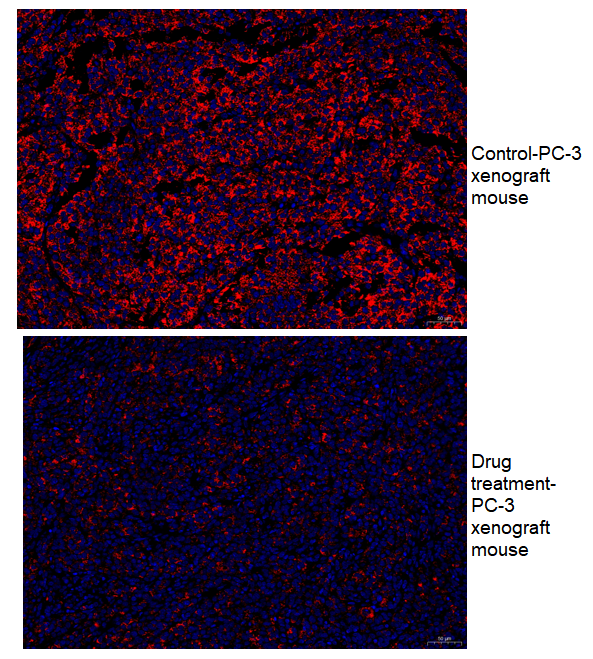
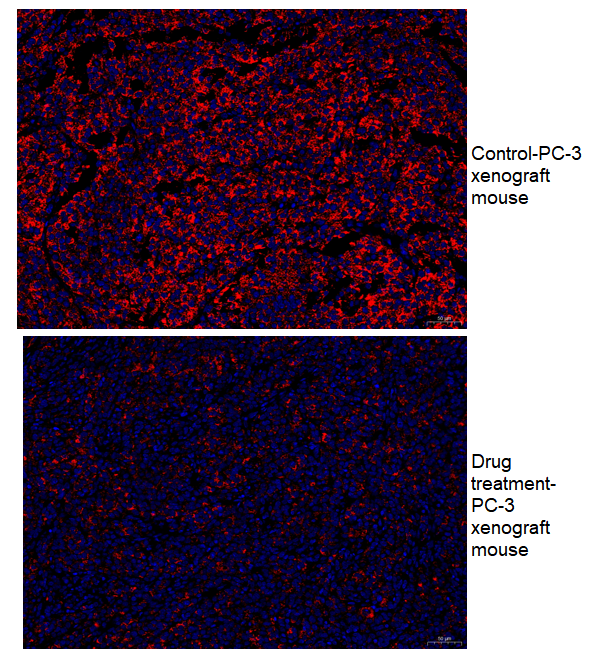
| SKU | A01505-3 |
|---|---|
| Application | Immunofluorescence |
| Sample | PC-3 xenograft mouse tissue |
| Sample Processing Description | (1) PC-3 cells were implanted in nude mice to form tumors as the control group; (2) tumor-bearing mice were treated with the drug docetaxel. |
| Other Reagents | Goat serum, DAPI, Anti-fade mounting medium |
| Primary Antibody | Prostate Specific Antigen/KLK3 Antibody Picoband® |
| Primary Incubation | 1:500, overnight at 4 ℃ |
| Secondary Antibody | DyLight 594–conjugated Goat Anti-Rabbit IgG (H+L)) |
| Secondary Incubation | 1:500, 45 min at 37℃ |
| Detection | Imaging system:Leica DM2500 |
| Results Summary | PSA, or prostate-specific antigen, is a multifaceted tumor marker that can promote the proliferation and migration of prostate cancer cells, driving tumor growth. After treatment with docetaxel, its secretion is expected to decrease, which is confirmed by the experimental results showing markedly reduced PSA expression in the xenograft tumor cells following treatment. |
Dengxiao Zhang, Gansu Provincial People’s Hospital
Verified customer
Submitted 2026-01-26
We promise Anti-Prostate Specific Antigen/KLK3 Antibody Picoband® performs excellently in relevant applications for ELISA, IHC, WB. If it doesn't perform as promised, we will refund the product. Learn more



We promise all of our products perform as described in datasheets.
This product is for Research Use Only. Not for use in diagnostic procedures.