This website uses cookies to ensure you get the best experience on our website.


- Table of Contents

In immunohistochemistry (IHC), using fluorescently labeled antibodies is essential to visualize protein expression and localization. Choosing the right fluorophore determines image quality, signal-to-noise ratio, and experimental reproducibility. This guide outlines key considerations for selecting fluorophores in multiplex IHC based on your experimental needs.
What Are Fluorophores?
Fluorophores are molecules that absorb light at specific wavelengths and emit light at longer wavelengths. They are commonly conjugated to secondary antibodies for target detection in fluorescence microscopy. Fluorophore emissions form peak-shaped
spectra, and overlap between adjacent channels causes bleed-through. To
minimize this:
For co-staining CD3 (high abundance) and CD8 (low abundance), avoid pairing adjacent channels like Dylight 550/594. Instead, assign CD3 to a strong-channel dye (e.g., FITC or Dylight 488) and CD8 to a lower-abundance dye, adjusting antibody concentrations proportionally.
Fluorophore brightness is determined by the product of the molar extinction coefficient (ε) and quantum yield (Φ). High-brightness dyes like PE and FITC are ideal for low-abundance targets but vary in photostability.
Certain dyes are more durable under repeated exposure and longer illumination.
| Requirement | Recommended Fluorophores |
|---|---|
| High photostability | Dylight series, IFluor 647 |
| High brightness | PE, FITC, Dylight 550 |
| Deep tissue penetration | APC, IFluor 647 (far-red dyes) |
Even with well-spaced fluorophores, spectral unmixing software or multispectral imaging systems may be necessary to correct minor overlaps. Channel bleed-through can lead to false positives if high-intensity signals spill into adjacent channels.
Formalin-fixed tissues often exhibit autofluorescence between 350–550 nm. To mitigate this, avoid green-emitting fluorophores in this range, and consider red or far-red fluorophores. Treatments like glycine or sodium borohydride quenching can reduce free aldehyde autofluorescence.
• Prioritize monoclonal over polyclonal antibodies for specificity.
• Use primary antibodies from different species (e.g., rabbit anti-CD3 + mouse anti-CD8) to prevent cross-reactivity.
Follow these principles to reduce
cross-talk:
• Low-abundance targets first, paired with bright dyes (like FITC)
• Membrane → cytoplasm → nucleus sequence
• Weaker signals before stronger ones
• Use 30–50% lower primary antibody concentration in multiplex IHC than in single staining.
• For hard-to-remove proteins, incorporate high-pH EDTA or commercial elution buffers for stripping.
D. Nuclear Counterstains and Mounting Media
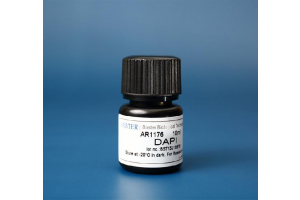
• Use DAPI for fluorescent nuclear staining.
• Choose an antifade mounting medium containing DABCO to reduce fluorophore decay.
• Quench free aldehydes using 0.3 M glycine in blocking solution.
• Avoid green dyes (FITC); switch to orange/red dyes (e.g., Dylight 550 or 594).
• Decrease exposure time on strong channels like PE.
• Acquire non-adjacent channels in separate passes to prevent residual signal interference.
Low or undetectable fluorescence signals can result from various factors:
• Inadequate Antibody Concentration or Degradation: Ensure antibodies are used at the recommended dilution and have not expired or undergone repeated freeze–thaw cycles.
• Insufficient Antigen Retrieval: Formalin fixation and paraffin embedding can mask epitopes. Use appropriate antigen retrieval buffers, such as citrate buffer (pH 6.0) or EDTA buffer (pH 9.0), to restore antigen accessibility.
• Photobleaching: Fluorophores such as FITC are highly sensitive to light. Minimize light exposure during staining and imaging to preserve fluorescence intensity.
Unwanted background signal can obscure true staining patterns:
• Inadequate Blocking: Insufficient blocking can result in secondary antibodies binding non-specifically. Use 5% BSA, normal serum, or commercial blocking reagents, and extend incubation times if needed.
• Antibody Cross-Reactivity: This is particularly common when multiple primary antibodies from the same host species are used. Use cross-adsorbed secondary antibodies or select primary antibodies from different species.
• Excessive Secondary Antibody Concentration: Overly concentrated secondaries can cause non-specific staining. Perform antibody titration experiments to determine optimal dilution.
• Inconsistent staining patterns may arise from sample preparation artifacts:
• Tissue Detachment or Structural Damage: Tissue may detach from the slide if not adequately adhered. Use adhesive slides (e.g., poly-L-lysine coated) and ensure uniform section thickness.
• Improper Washing: Insufficient washing may leave residual antibody, while over-washing can strip away signal. Use gentle buffers such as PBS-T and optimize wash durations.
• Microscope Filter Mismatch: Using filters incompatible with the chosen fluorophores can lead to crosstalk or signal loss. Confirm that excitation and emission filters are appropriate for each dye in your panel.
• Quenching from Mounting Agents: Some solvent-based mounting media contain chemicals that quench specific fluorophores. Use antifade aqueous mounting media containing DABCO (1,4-diazabicyclo[2.2.2]octane) or similar agents to maintain fluorescence integrity.
To select fluorophores effectively in IHC:
Verify filter and excitation compatibility.
Choose fluorophores with minimal spectral overlap.
Use bright and photostable dyes, especially for low-expression targets.
Plan staining order and antibody species carefully.
Use antifade reagents and proper controls to ensure specificity and signal retention.
Fluorophore conjugates are very popular due to their versatility, high sensitivity, and the variety of available dyes that allow multiplexing. When searching for primary antibodies and secondary antibodies at Boster, you’ll be able to select from a range of conjugation options, such as Cy3, DyLight® dyes, FITC, APC, PE, or iFluor® dyes. You can also request custom antibody conjugation with our antibody conjugation service, which offers more conjugate labels.
Cartwright, A. N., et al. "Spectral considerations for multiplex immunofluorescence." J Histochem Cytochem 2020.
Jones, M. L., et al. "Multiplex staining optimization in FFPE tissue sections." Lab Invest 2021.
Wang, Y., et al. "Photostability and brightness comparisons of fluorophores in tissue staining." Sci Rep 2019.
Tan, X., et al. "Design strategies for minimizing signal overlap in mIHC." Cell Reports Methods 2022.
Liu, H., et al. "Managing tissue autofluorescence in formalin-fixed samples." Microscopy Today 2020.