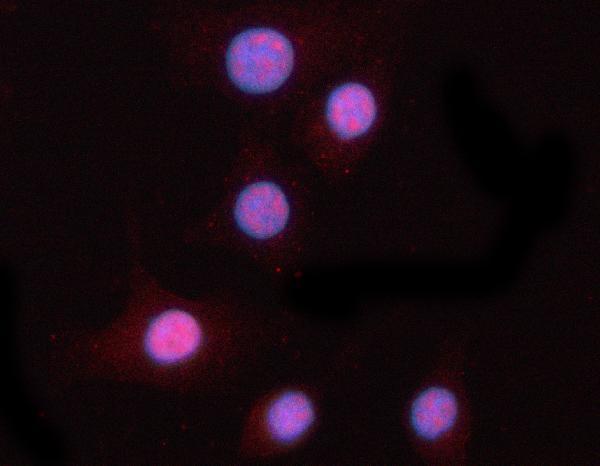
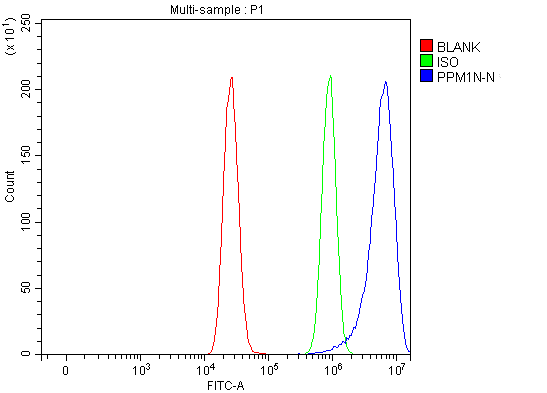
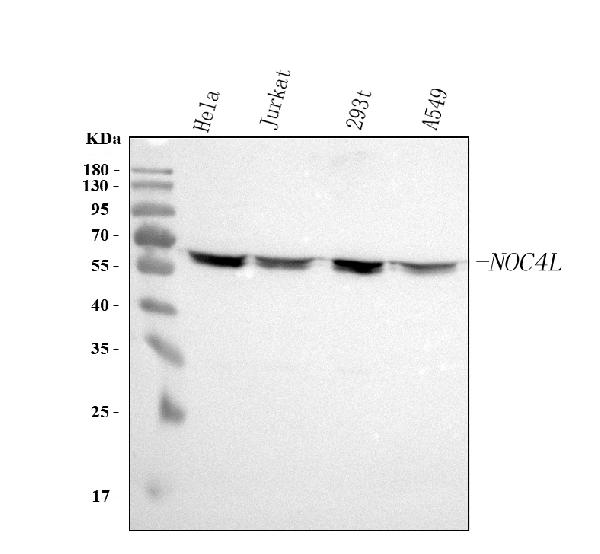
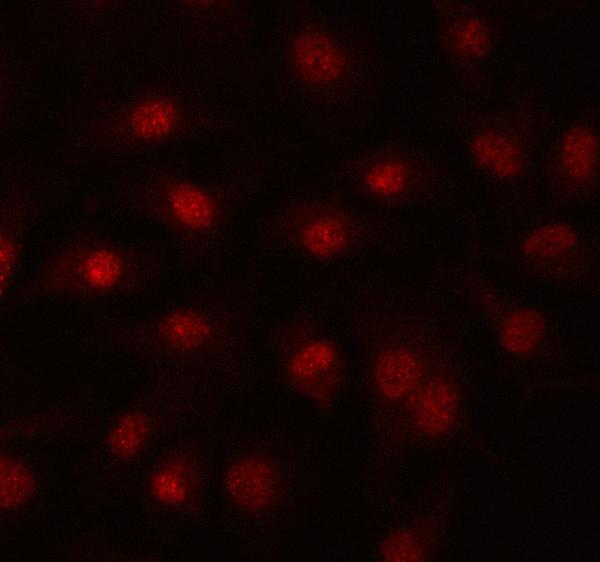
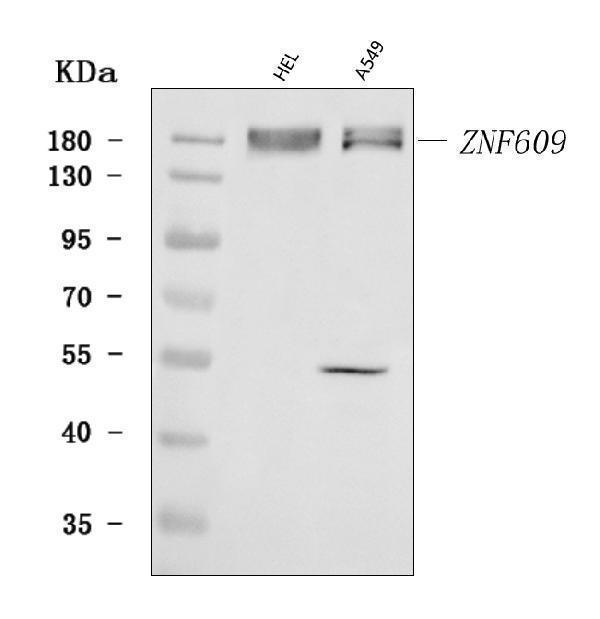
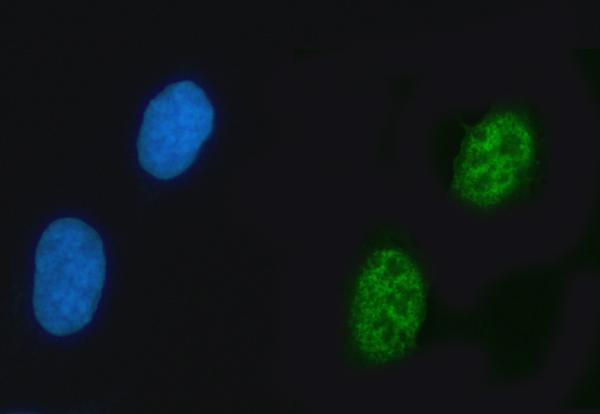
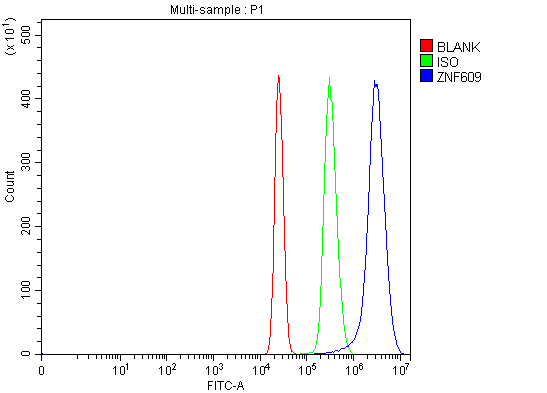
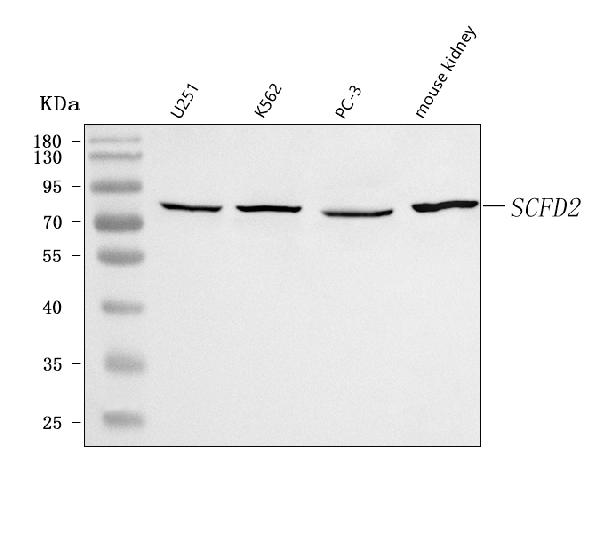
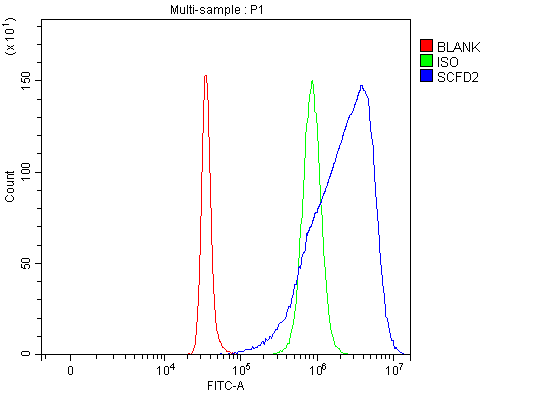
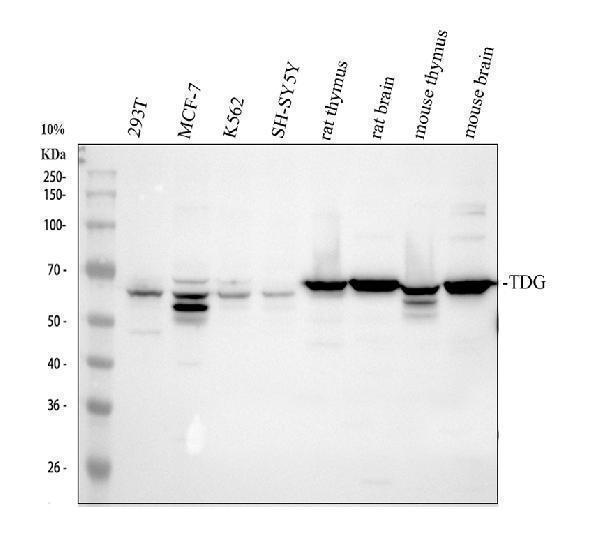
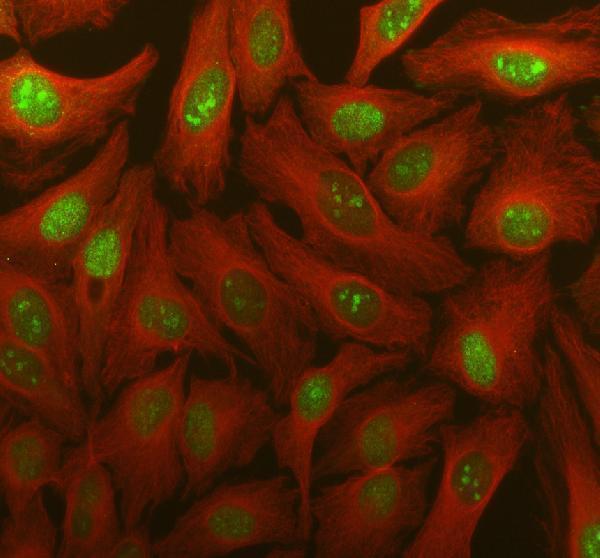
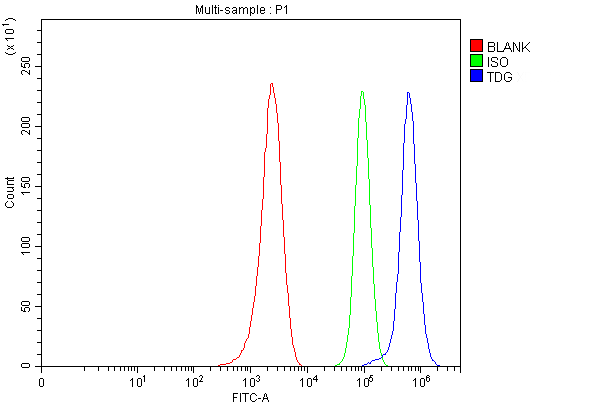
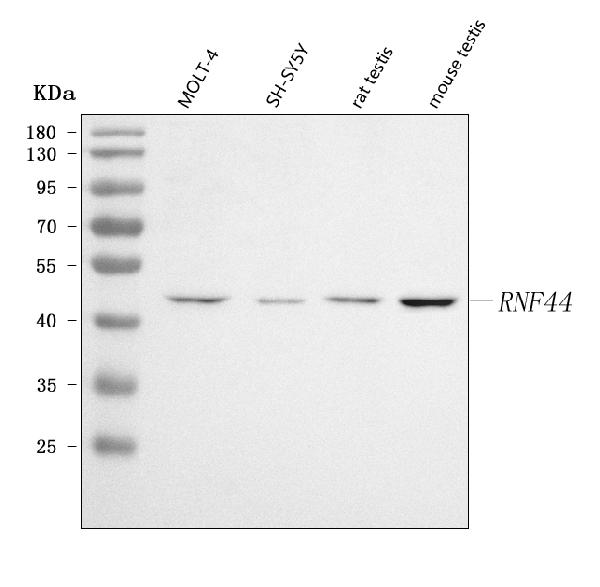
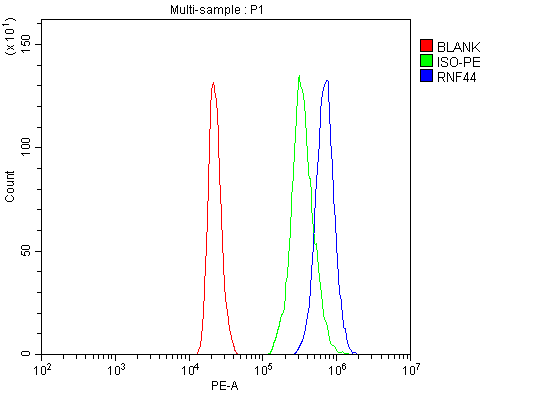
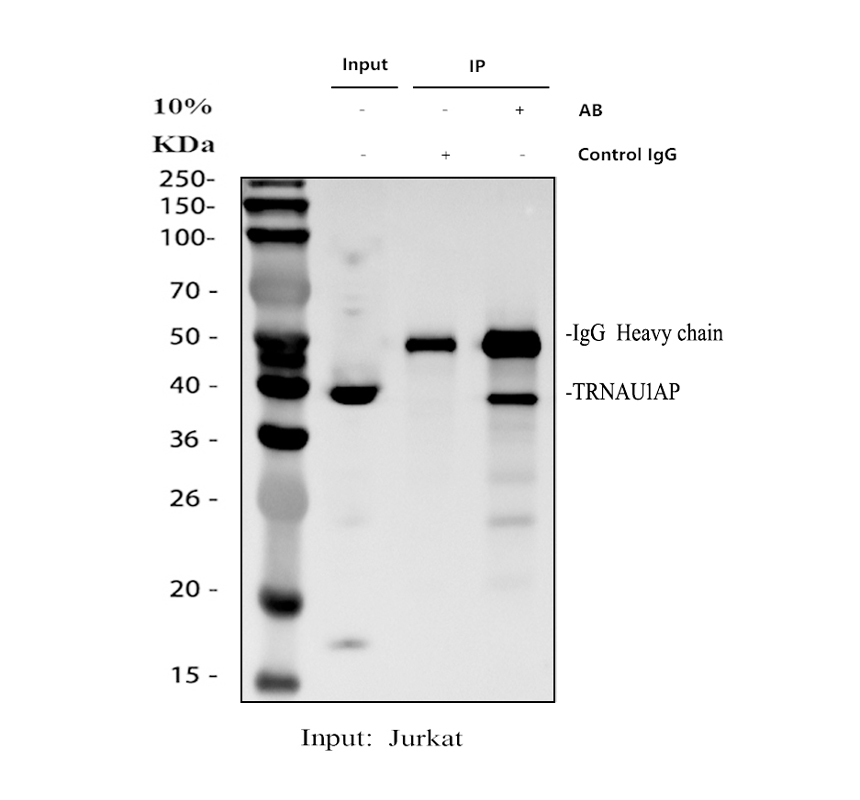
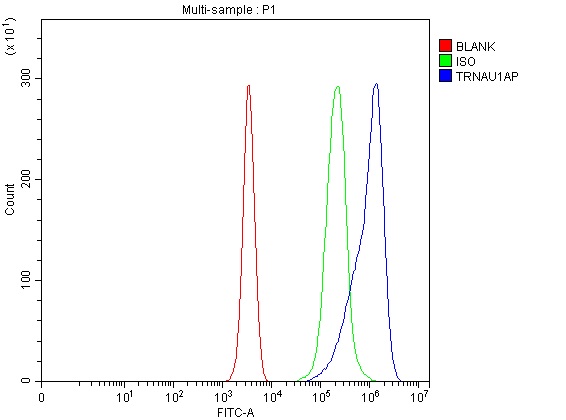
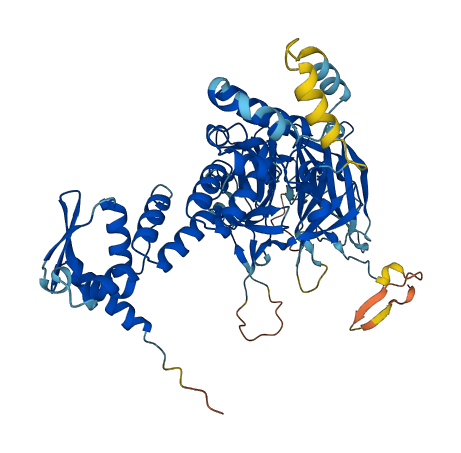
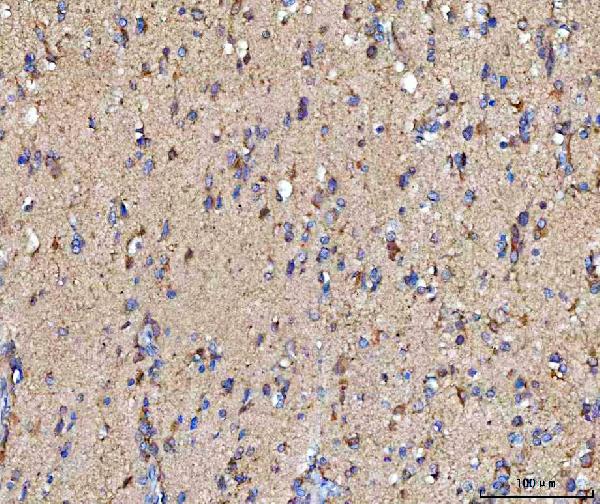
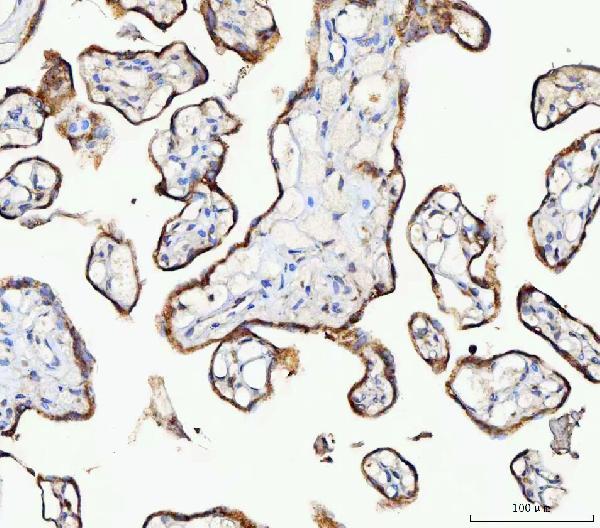
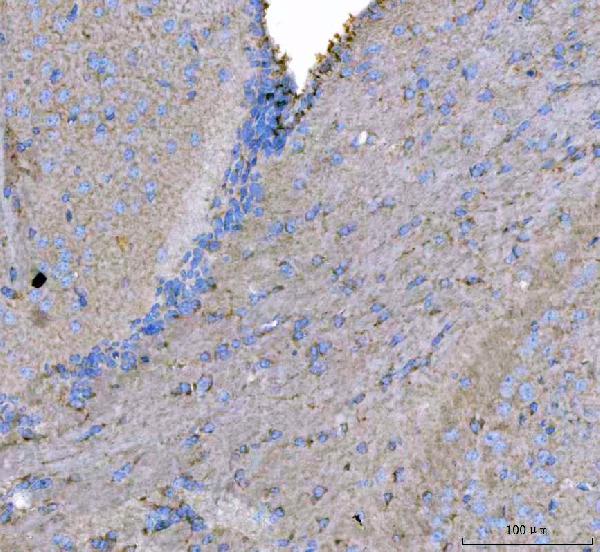
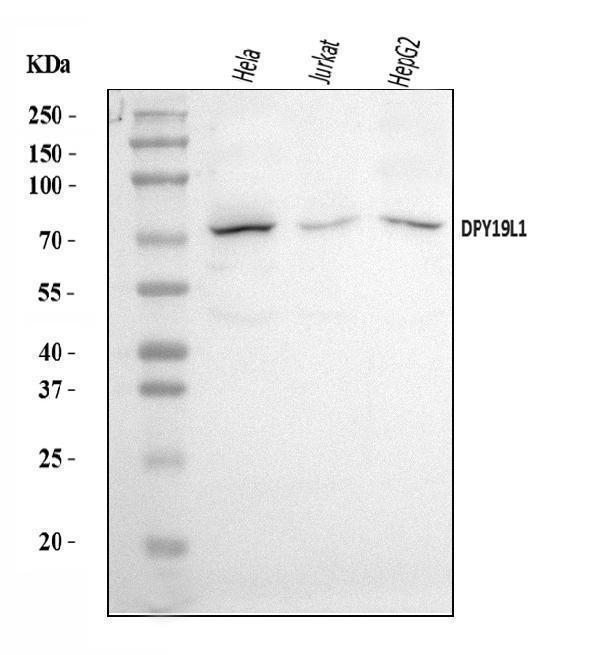
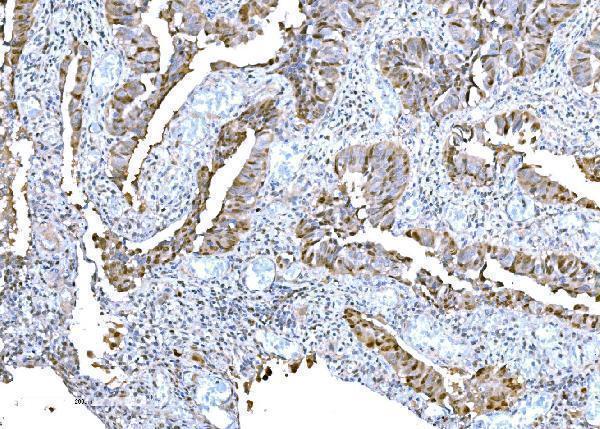
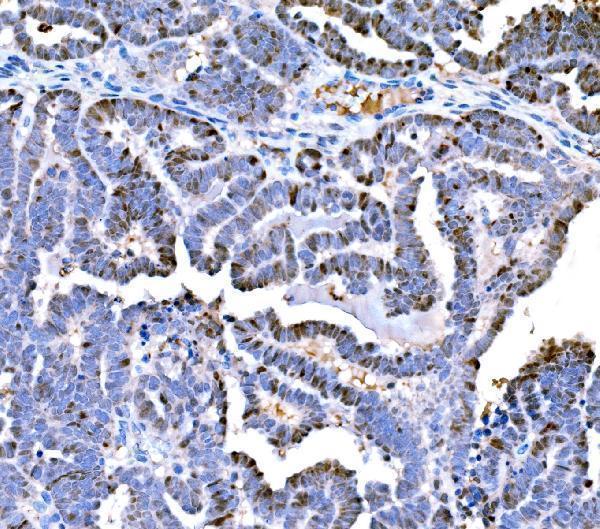
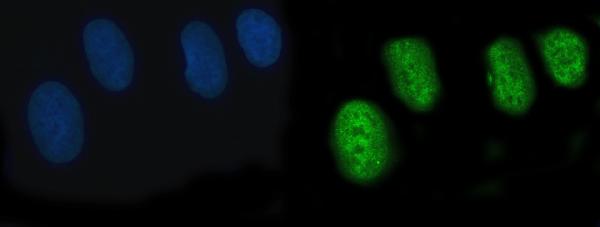
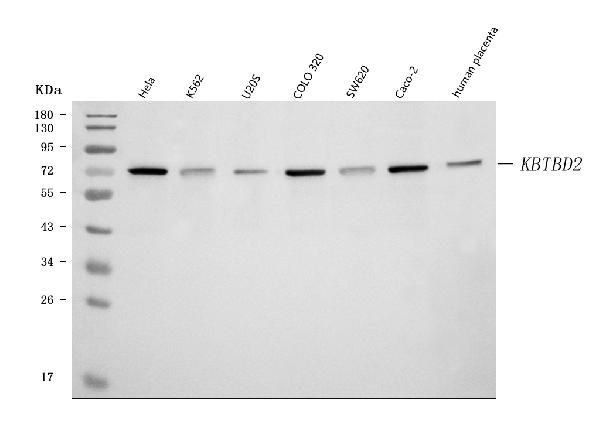
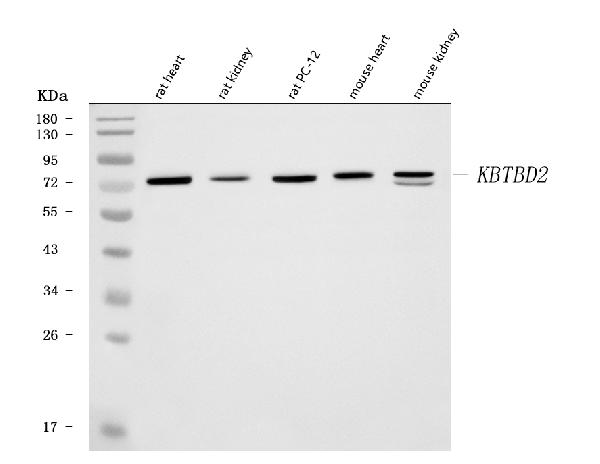
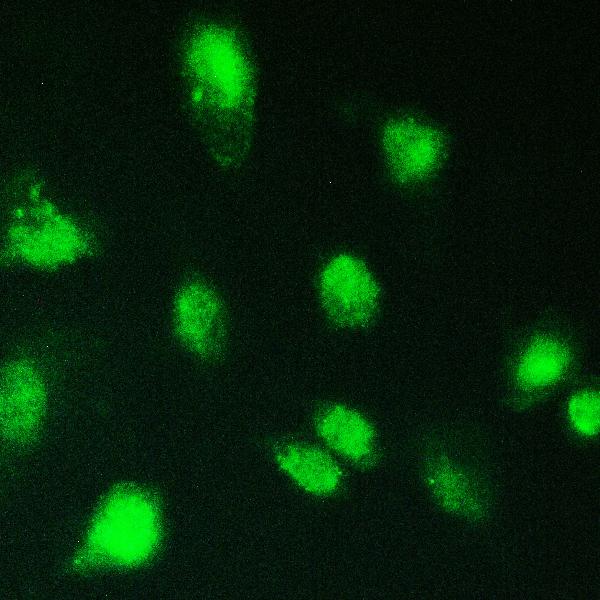
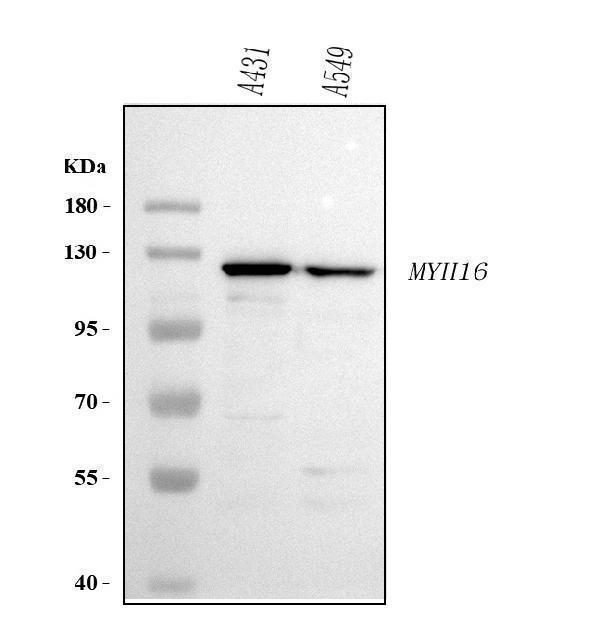
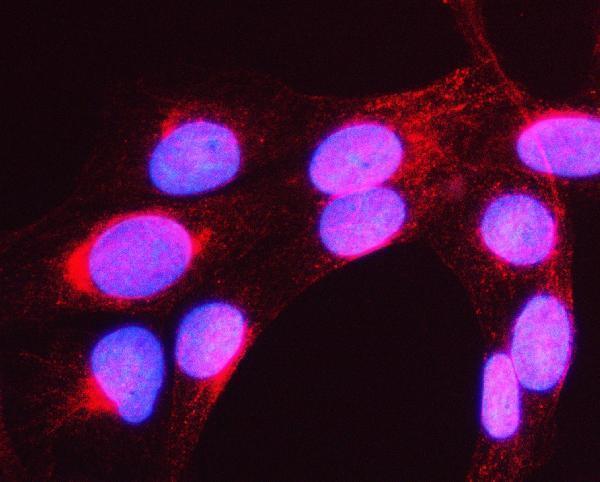
Many biological assays use antibodies to detect KBTBD2, such as Western Blot (WB), ELISA, Flow Cytometry, Immunocytochemistry (IHC). These antibodies can be polyclonal or monoclonal, and react with KBTBD2 in Human, Mouse, Rat, and many other animal samples. Boster Bio use mainly mouse and rabbit to develop KBTBD2 antibodies...
We validate the specificity of these antibodies to KBTBD2 by testing them on tissues known to express KBTBD2 positively and negatively. Browse below to find the KBTBD2 antibody that suites your experiment. We have 58 of these antibodies and many publications and validation images.
If you cannot find antibodies that fit your needs, contact us for making custom antibodies. We have a full suite of custom antibody services covering from research to diagnostic and therapeutic applications.
Designing a Western blot for KBTBD2?
The guide has the expected band size, antibodies backed by real blot images, the controls to run alongside, and protocols taken from published papers.
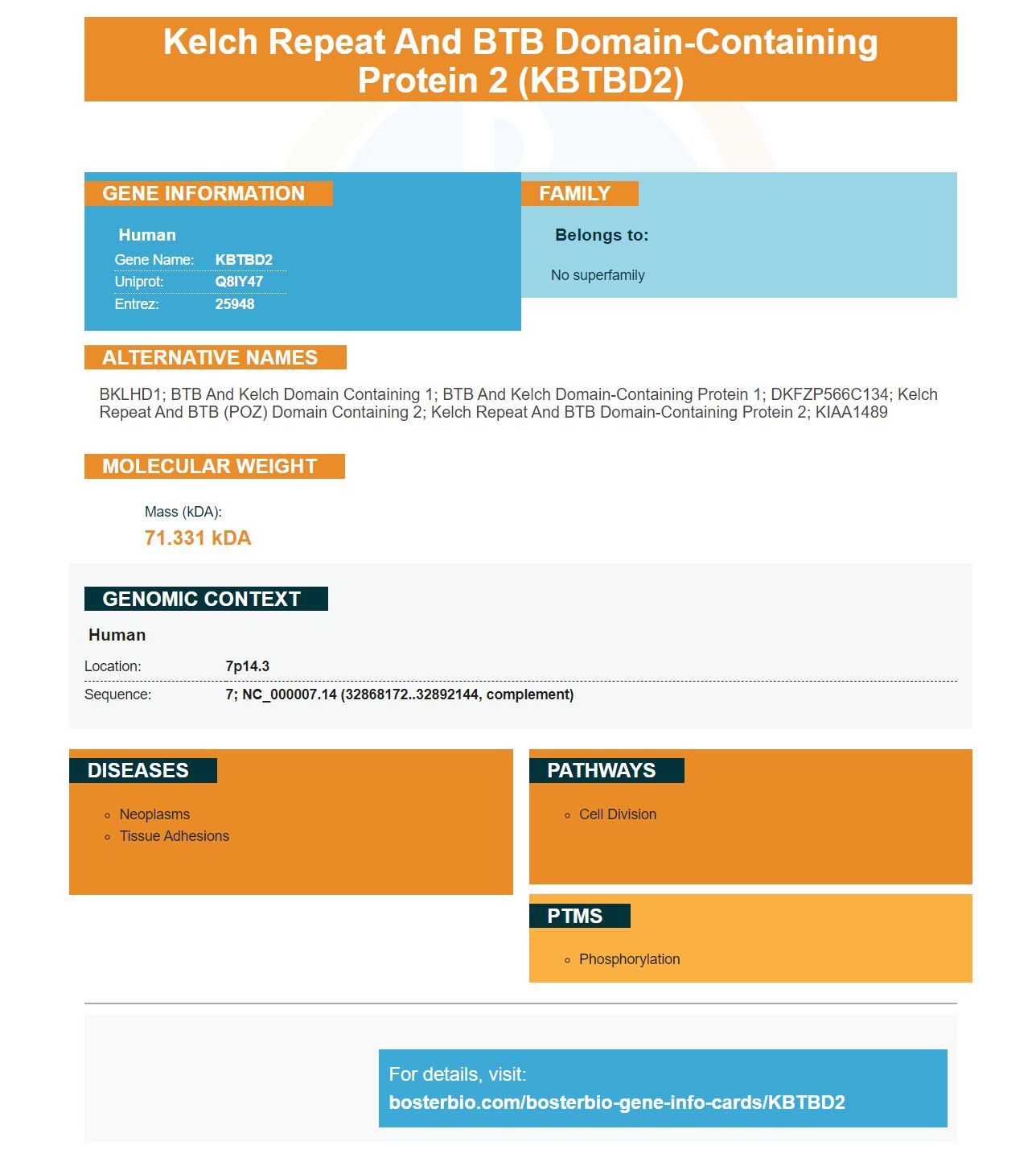
Facts about Kelch repeat and BTB domain-containing protein 2.
Kelch repeat and BTB domain-containing protein 2 (KBTBD2)
Gene Information
Human
Gene Name:
KBTBD2
Uniprot:
Q8IY47
Entrez:
25948
Family
Belongs to:
No superfamily
Alternative Names
BKLHD1; BTB and kelch domain containing 1; BTB and kelch domain-containing protein 1; DKFZP566C134; kelch repeat and BTB (POZ) domain containing 2; kelch repeat and BTB domain-containing protein 2; KIAA1489
Molecular Weight
Mass (kDA): 71.331 kDA
Genomic Context
Human
Location:
7p14.3
Sequence:
7; NC_000007.14 (32868172..32892144, complement)
Diseases
Neoplasms
Tissue Adhesions
Pathways
Cell Division
PTMs
Phosphorylation
For details, visit: bosterbio.com/bosterbio-gene-info-cards/KBTBD2
References
PMID: 14702039 by Ota T., et al. Complete sequencing and characterization of 21,243 full-length human cDNAs.
PMID: 10810093 by Lai C.-H., et al. Identification of novel human genes evolutionarily conserved in Caenorhabditis elegans by comparative proteomics.