This website uses cookies to ensure you get the best experience on our website.


- Table of Contents
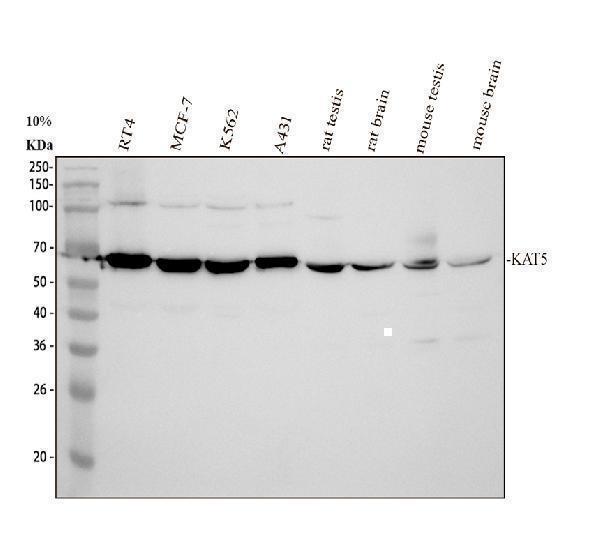
Designing an IHC experiment for KAT5? The guide has the expected staining pattern, antigen retrieval and fixation, antibodies backed by real IHC images, the tissue controls to run alongside, and protocols taken from published papers.
Open the KAT5 IHC Guide
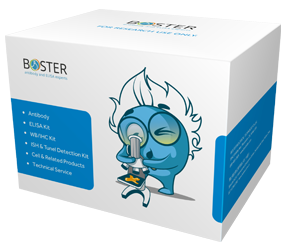


Facts about Histone acetyltransferase KAT5.
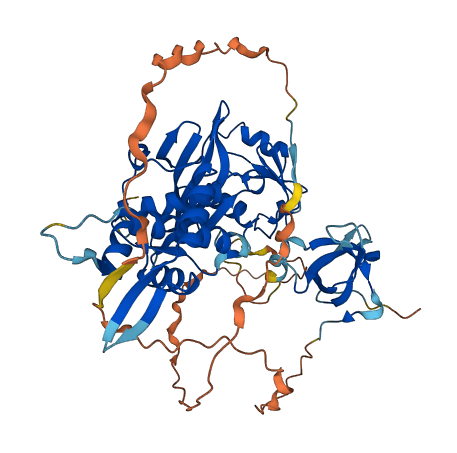
This complex may be required for the activation of transcriptional programs associated with oncogene and proto-oncogene mediated growth induction, tumor suppressor mediated growth arrest and replicative senescence, apoptosis, and DNA repair. NuA4 may also play a direct role in DNA repair when recruited to sites of DNA damage.
| Human | |
|---|---|
| Gene Name: | KAT5 |
| Uniprot: | Q92993 |
| Entrez: | 10524 |
| Belongs to: |
|---|
| MYST (SAS/MOZ) family |

cPLA2; ESA1EC 2.3.1.48; Histone acetyltransferase HTATIP; histone acetyltransferase KAT5; HIV-1 Tat interactive protein; HIV-1 Tat interactive protein, 60kDa; HTATIP1; HTATIPcPLA2 interacting protein; K(lysine) acetyltransferase 5,60 kDa Tat-interactive protein; K-acetyltransferase 5; Lysine acetyltransferase 5; PLIPTIP; Tat interacting protein, 60kDa; Tip60; TIP60cPLA(2)-interacting protein
Mass (kDA):
58.582 kDA

| Human | |
|---|---|
| Location: | 11q13.1 |
| Sequence: | 11; NC_000011.10 (65712018..65719604) |
Nucleus. Nucleus, nucleolus. Cytoplasm, perinuclear region. Upon stimulation with EDN1, it is exported from the nucleus to the perinuclear region and UV irradiation induces translocation into punctuate subnuclear structures named nuclear bodies.




PMID: 8607265 by Kamine J., et al. Identification of a cellular protein that specifically interacts with the essential cysteine region of the HIV-1 Tat transactivator.
PMID: 11416127 by Sheridan A.M., et al. PLIP, a novel splice variant of Tip60, interacts with group IV cytosolic phospholipase A(2), induces apoptosis, and potentiates prostaglandin production.