This website uses cookies to ensure you get the best experience on our website.


- Table of Contents
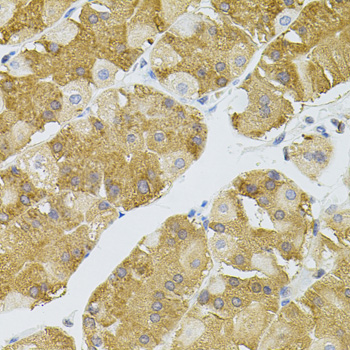
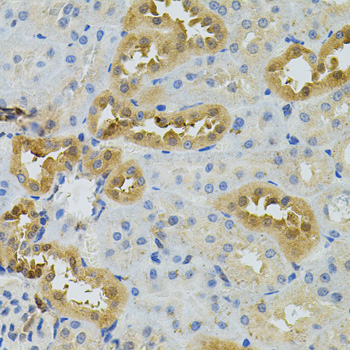
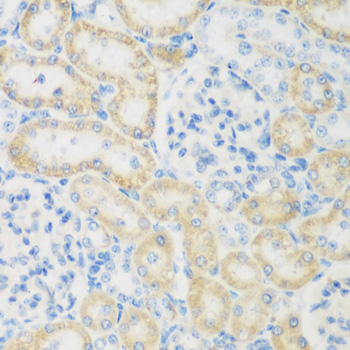
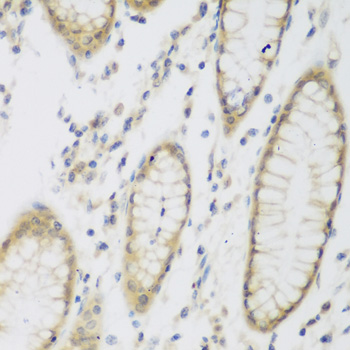
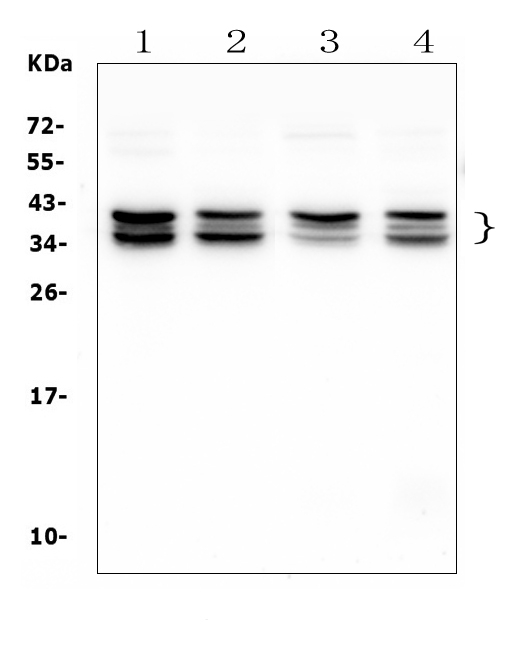
Designing an IHC experiment for N-acetyltransferase 8? The guide has the expected staining pattern, antigen retrieval and fixation, antibodies backed by real IHC images, the tissue controls to run alongside, and protocols taken from published papers.
Open the NAT8 IHC Guide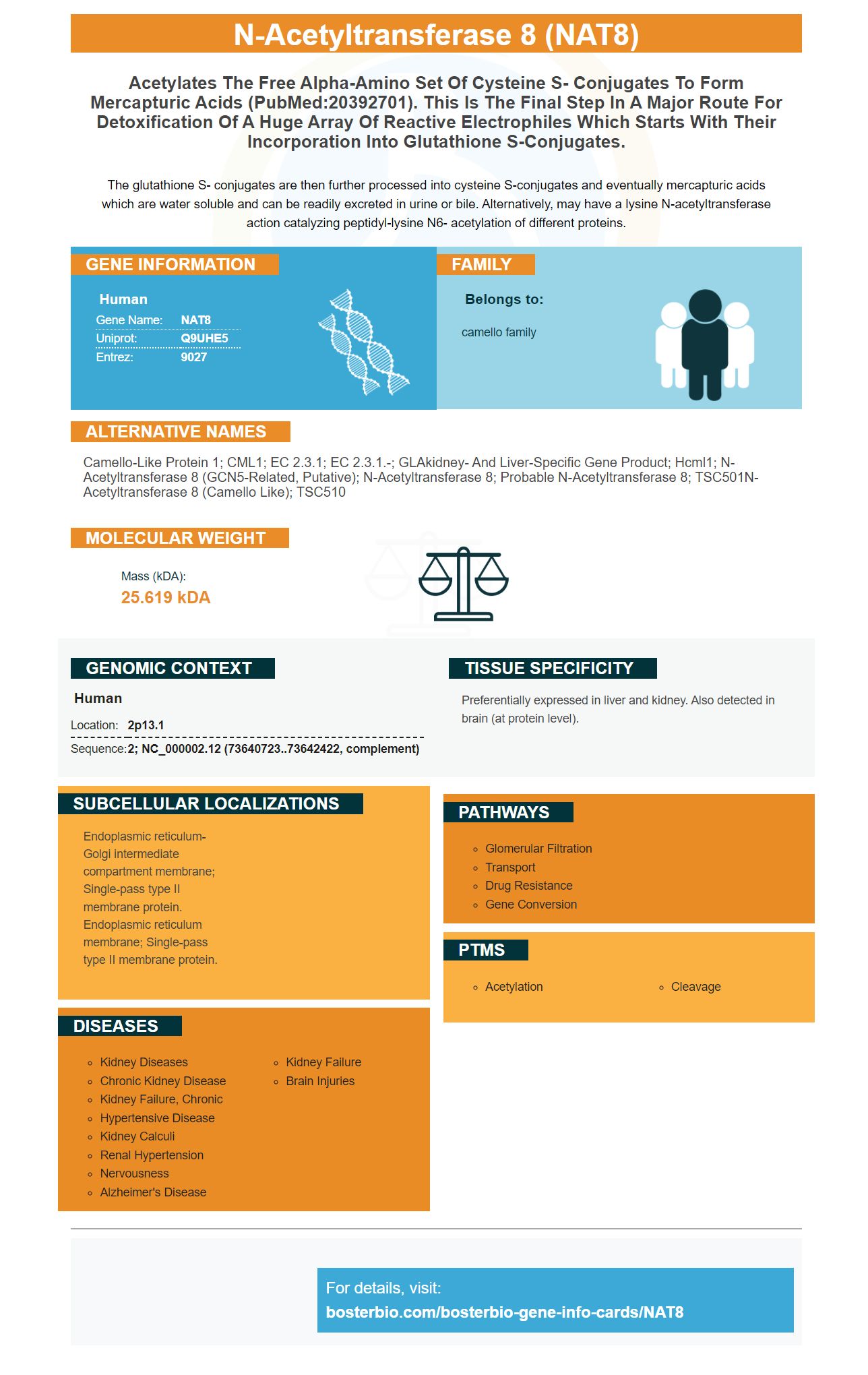
Facts about N-acetyltransferase 8.
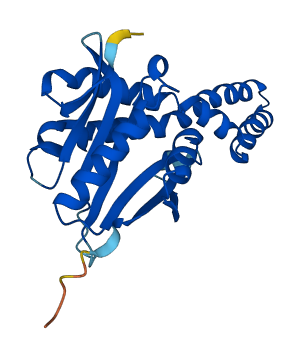
The glutathione S- conjugates are then further processed into cysteine S-conjugates and eventually mercapturic acids which are water soluble and can be readily excreted in urine or bile. Alternatively, may have a lysine N-acetyltransferase action catalyzing peptidyl-lysine N6- acetylation of different proteins.
| Human | |
|---|---|
| Gene Name: | NAT8 |
| Uniprot: | Q9UHE5 |
| Entrez: | 9027 |
| Belongs to: |
|---|
| camello family |

Camello-like protein 1; CML1; EC 2.3.1; EC 2.3.1.-; GLAkidney- and liver-specific gene product; Hcml1; N-acetyltransferase 8 (GCN5-related, putative); N-acetyltransferase 8; probable N-acetyltransferase 8; TSC501N-acetyltransferase 8 (camello like); TSC510
Mass (kDA):
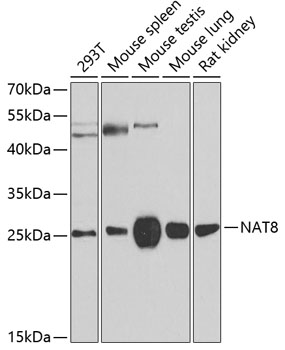
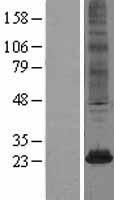
25.619 kDA

| Human | |
|---|---|
| Location: | 2p13.1 |
| Sequence: | 2; NC_000002.12 (73640723..73642422, complement) |
Preferentially expressed in liver and kidney. Also detected in brain (at protein level).
Endoplasmic reticulum-Golgi intermediate compartment membrane; Single-pass type II membrane protein. Endoplasmic reticulum membrane; Single-pass type II membrane protein.




PMID: 9852678 by Ozaki K., et al. Isolation and mapping of a novel human kidney- and liver-specific gene homologous to the bacterial acetyltransferases.
PMID: 11397015 by Popsueva A.E., et al. Overexpression of camello, a member of a novel protein family, reduces blastomere adhesion and inhibits gastrulation in Xenopus laevis.