This website uses cookies to ensure you get the best experience on our website.


- Table of Contents
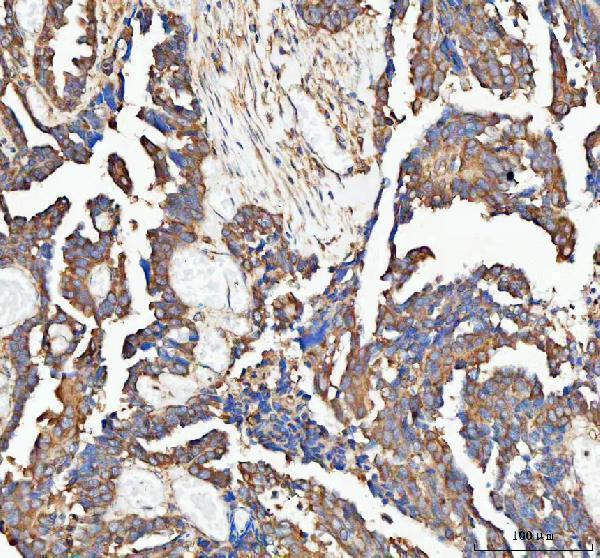
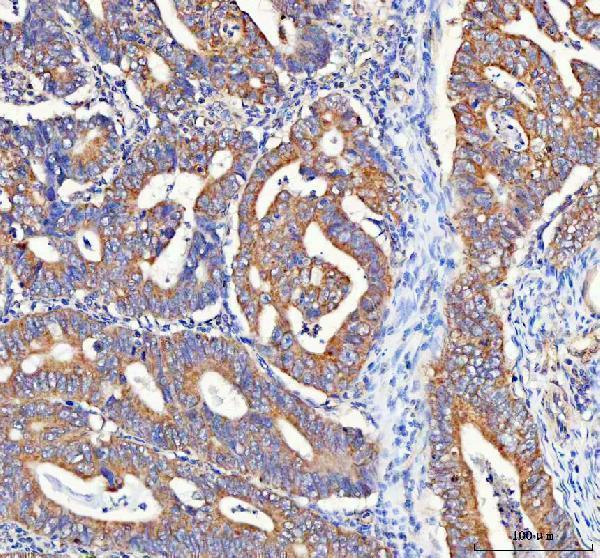
Designing an IHC experiment for PAIP1? The guide has the expected staining pattern, antigen retrieval and fixation, antibodies backed by real IHC images, the tissue controls to run alongside, and protocols taken from published papers.
Open the PAIP1 IHC Guide
Facts about Polyadenylate-binding protein-interacting protein 1.

Competes with PAIP2 for binding to PABPC1. Its association with EIF4A and PABPC1 may potentiate contacts between mRNA termini.
| Human | |
|---|---|
| Gene Name: | PAIP1 |
| Uniprot: | Q9H074 |
| Entrez: | 10605 |

| Belongs to: |
|---|
| No superfamily |

MGC12360; PABC1-interacting protein 1; PABP-interacting protein 1; PAIP-1; poly(A) binding protein interacting protein 1; Poly(A)-binding protein-interacting protein 1; polyadenylate binding protein-interacting protein 1; polyadenylate-binding protein-interacting protein 1
Mass (kDA):
53.525 kDA

| Human | |
|---|---|
| Location: | 5p12 |
| Sequence: | 5; NC_000005.10 (43526267..43557419, complement) |
Cytoplasm.


PMID: 9548260 by Craig A.W.B., et al. Interaction of polyadenylate-binding protein with the eIF4G homologue PAIP enhances translation.
PMID: 11051545 by Grosset C., et al. A mechanism for translationally coupled mRNA turnover: interaction between the poly(A) tail and a c-fos RNA coding determinant via a protein complex.