This website uses cookies to ensure you get the best experience on our website.


- Table of Contents
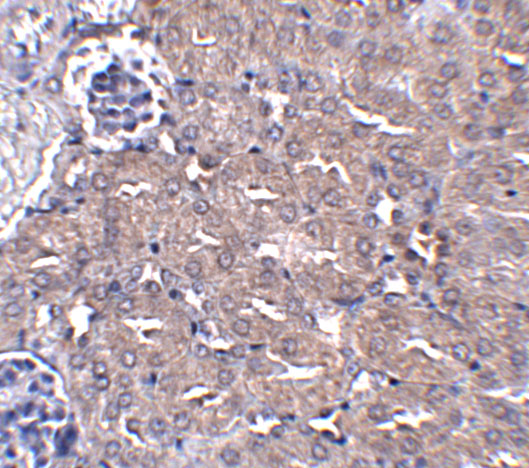
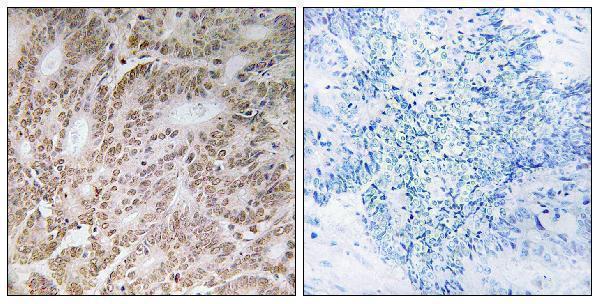
Designing an IHC experiment for Ubiquilin-4? The guide has the expected staining pattern, antigen retrieval and fixation, antibodies backed by real IHC images, the tissue controls to run alongside, and protocols taken from published papers.
Open the UBQLN4 IHC Guide
Facts about Ubiquilin-4.

6). Plays a role in the regulation of the proteasomal degradation of non-ubiquitinated GJA1 (By similarity).
| Human | |
|---|---|
| Gene Name: | UBQLN4 |
| Uniprot: | Q9NRR5 |
| Entrez: | 56893 |

| Belongs to: |
|---|
| No superfamily |

A1Uataxin-1 ubiquitin-like interacting protein; Ataxin-1 ubiquitin-like-interacting protein A1U; C1orf6ubiquilin-4; chromosome 1 open reading frame 6; UBINCIP75; ubiquilin 4
Mass (kDA):
63.853 kDA

| Human | |
|---|---|
| Location: | 1q22 |
| Sequence: | 1; NC_000001.11 (156033129..156053798, complement) |
Highly expressed in pancreas, kidney, skeletal muscle, heart and throughout the brain, and at lower levels in placenta, lung and liver.
Nucleus. Cytoplasm. Chromosome. Endoplasmic reticulum. Cytoplasm, perinuclear region. Cytoplasmic vesicle, autophagosome. Colocalizes with the proteasome, both in nucleus and cytoplasm (PubMed:15280365). Exported from the nucleus following interaction with DESI1/POST (PubMed:29666234). In response to DNA damage and phosphorylation at Ser-318 by ATM, localizes to the nucleus and is recruited to sites of DNA damage (PubMed:30612738).


PMID: 11001934 by Davidson J.D., et al. Identification and characterization of an ataxin-1-interacting protein: A1Up, a ubiquitin-like nuclear protein.
PMID: 10575211 by Fogli A., et al. Identification of two paralogous regions mapping to the short and long arms of human chromosome 2 comprising LIS1 pseudogenes.