This website uses cookies to ensure you get the best experience on our website.


- Table of Contents
and ELISA kits, proteins related to Gastric Cancer.
Gastric cancer, also known as stomach cancer, is a significant global health challenge, ranking as the fifth most common cancer and the third leading cause of cancer-related deaths worldwide. This aggressive disease originates in the lining of the stomach and often goes undetected until advanced stages, making early diagnosis crucial for improving survival rates. Researchers are tirelessly exploring innovative treatment avenues to combat gastric cancer, with a particular focus on antibody-based therapies. These targeted treatments harness the body's immune system to identify and eliminate cancer cells more effectively while minimizing damage to healthy tissues. Advances in antibody research hold promise for enhancing the precision and efficacy of gastric cancer treatments, offering hope for better patient outcomes and paving the way toward more personalized medicine approaches. Continued investment and collaboration in this field are essential to unlock new potentials in the fight against gastric cancer.
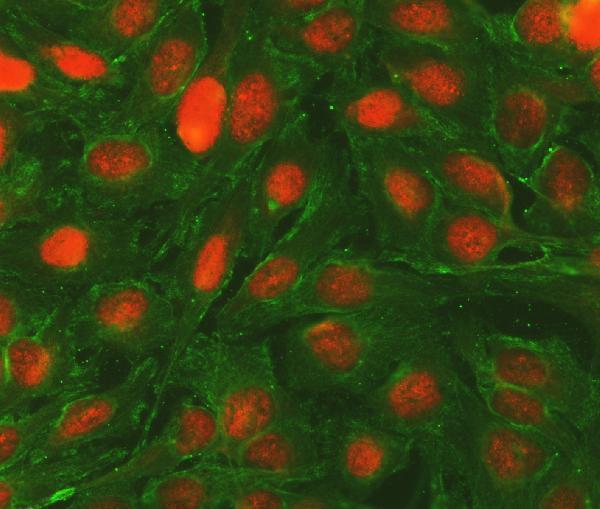
Anti-Bcl-2/BCL2 Antibody Picoband®, Figure 2. IF analysis of BCL2 and Tubulin alpha using anti-BCL2 antibody (A00040-2) and anti-Tubulin alpha antibody (M03989-3).
BCL2 a...
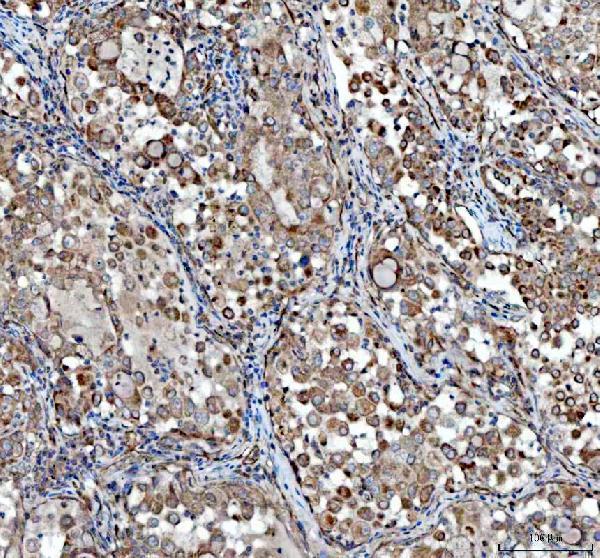
Anti-VEGF/VEGFA Antibody Picoband®, Figure 2. IHC analysis of VEGFA using anti-VEGFA antibody (PA1080).
VEGFA was detected in a paraffin-embedded section of human lung cancer tissue. Heat...
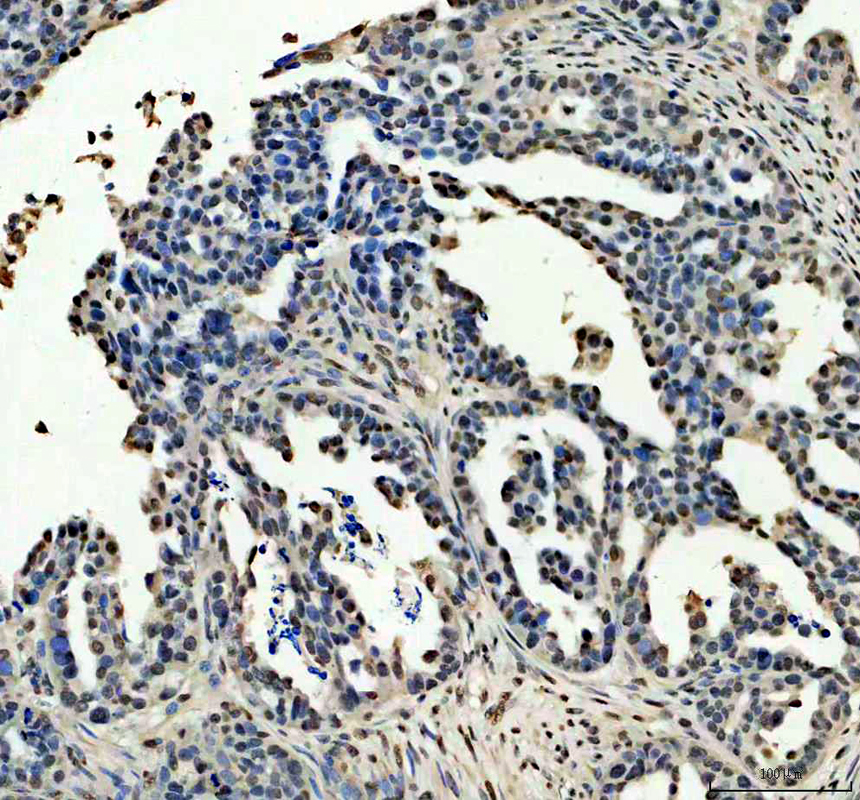
Anti-P53/TP53 Antibody Picoband®, IHC analysis of P53 using anti-P53 antibody (PB9008).
TP53 was detected in a paraffin-embedded section of humn ovarian cancer tissue. Heat mediated antigen retrieval was...
| Protein Name | Gene Name | Function |
|---|---|---|
| HER2 | ERBB2 | Involved in cell growth and differentiation signaling pathways. |
| PD-L1 | CD274 | Immune checkpoint protein that inhibits T-cell activation. |
| VEGF | VEGFA | Promotes angiogenesis and blood vessel formation. |
| EGFR | EGFR | Mediates cell proliferation and survival signals. |
| MET | MET | Regulates cell growth, survival, and metastasis. |
| E-cadherin | CDH1 | Maintains cell-cell adhesion and epithelial integrity. |
| p53 | TP53 | Tumor suppressor involved in DNA repair and apoptosis. |
| FGFR2 | FGFR2 | Involved in cell proliferation, differentiation, and angiogenesis. |
| Claudin18.2 | CLDN18 | Component of tight junctions, involved in cell adhesion. |
| KRAS | KRAS | Regulates cell signaling pathways related to growth and survival. |
| c-MYC | MYC | Transcription factor regulating cell cycle and apoptosis. |
| Bcl-2 | BCL2 | Regulates apoptosis by controlling mitochondrial membrane permeability. |
| Cyclin D1 | CCND1 | Controls cell cycle progression from G1 to S phase. |
| PI3K | PIK3CA | Involved in intracellular signaling pathways affecting growth and survival. |
| APC | APC | Tumor suppressor involved in Wnt signaling and cell migration. |
| CDH17 | CDH17 | Involved in cell adhesion and maintaining the intestinal phenotype. |
| ALK Fusion Proteins | ALK | Oncogenic fusions driving cell proliferation and survival. |
| HER3 | ERBB3 | Partners with HER2 to activate downstream signaling pathways. |
Molecular pathogenesis is a critical sub-research area in gastric cancer, focusing on the genetic and molecular alterations that drive the initiation, progression, and metastasis of the disease. This area explores various genetic mutations, epigenetic modifications, and signaling pathway dysregulations that contribute to oncogenesis. Key factors include alterations in genes such as TP53, CDH1, and HER2, which play significant roles in cell cycle regulation, cell adhesion, and growth factor signaling, respectively. Understanding these molecular changes is essential for identifying potential therapeutic targets and developing personalized treatment strategies. Additionally, research in molecular pathogenesis delves into the role of Helicobacter pylori infection and its association with gastric cancer, examining how chronic inflammation and immune responses can lead to malignant transformation. By elucidating the complex molecular mechanisms underlying gastric cancer, scientists aim to improve diagnostic accuracy, prognostic assessments, and the efficacy of targeted therapies, ultimately enhancing patient outcomes and advancing the field of oncology.
The tumor microenvironment (TME) is a pivotal area of research in gastric cancer, focusing on the complex interactions between cancer cells and their surrounding non-cancerous components. The TME comprises various cell types, including immune cells, fibroblasts, endothelial cells, and the extracellular matrix, all of which influence tumor growth, invasion, and metastasis. In gastric cancer, the TME plays a crucial role in modulating immune responses, promoting angiogenesis, and facilitating the dissemination of cancer cells. Researchers study how factors like cytokines, chemokines, and growth factors within the TME contribute to creating a supportive niche for tumor progression. Additionally, the TME is involved in the development of therapeutic resistance, as certain stromal cells can protect cancer cells from the effects of chemotherapy and targeted therapies. By investigating the dynamics of the tumor microenvironment, scientists aim to identify novel biomarkers for prognosis and develop innovative treatment approaches that disrupt the supportive interactions, enhance immune-mediated tumor destruction, and overcome resistance mechanisms. This holistic understanding of the TME is essential for designing more effective and comprehensive strategies to combat gastric cancer.