This website uses cookies to ensure you get the best experience on our website.


- Table of Contents
and ELISA kits, proteins related to Prostate Cancer.
Prostate cancer is one of the most prevalent cancers affecting men globally, posing significant health challenges and impacting countless lives. As the second leading cause of cancer-related deaths among men, early detection and effective treatment are paramount for improving patient outcomes. Recent advancements in biomedical research have highlighted the promising role of antibody-based therapies in the fight against prostate cancer. These specialized antibodies are designed to target and neutralize cancer cells with high precision, minimizing damage to healthy tissues and reducing side effects. By harnessing the body’s immune system, antibody therapies offer a tailored approach that can enhance the effectiveness of existing treatments and provide new avenues for combating resistant forms of the disease. Our dedicated research into prostate cancer-related antibodies aims to advance these innovative therapies, bringing hope and improved quality of life to those affected by this challenging condition.
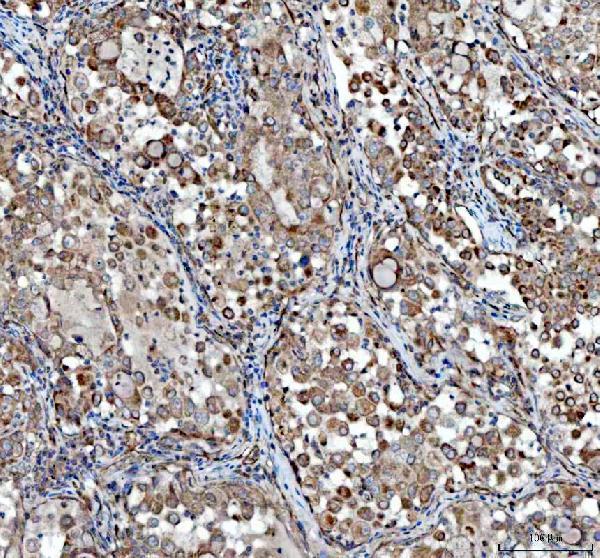
Anti-VEGF/VEGFA Antibody Picoband®, Figure 2. IHC analysis of VEGFA using anti-VEGFA antibody (PA1080).
VEGFA was detected in a paraffin-embedded section of human lung cancer tissue. Heat...
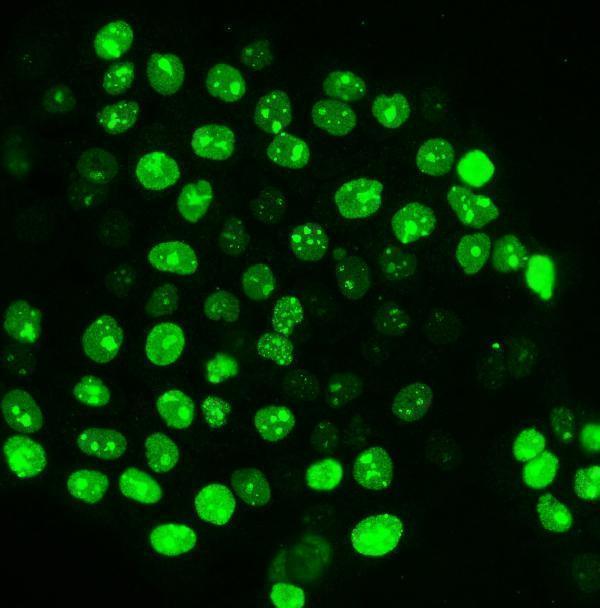
Anti-Ki67 Antibody Picoband® (monoclonal, 5C7), Figure 7. IF analysis of Ki67 using anti-Ki67 antibody (M00254-9).
Ki67 was detected in an immunocytochemical section of A...
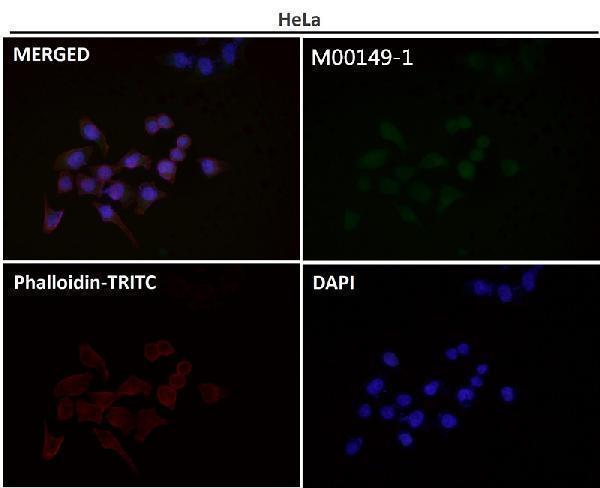
Anti-Cyclin D1 CCND1 Rabbit Monoclonal Antibody, Immunofluorescent analysis using the Antibody at 1:50 dilution....
| Protein Name | Gene Name | Function |
|---|---|---|
| Prostate-Specific Antigen (PSA) | KLK3 | Used for screening and monitoring prostate cancer. |
| Prostate-Specific Membrane Antigen (PSMA) | FOLH1 | Cell surface protein overexpressed in prostate cancer, target for imaging and therapy. |
| Androgen Receptor (AR) | AR | Mediates androgen signaling, critical for prostate cancer growth. |
| PTEN | PTEN | Tumor suppressor gene frequently deleted or mutated in prostate cancer. |
| TMPRSS2-ERG Fusion | ERG | Gene fusion leading to overexpression of ERG, associated with prostate cancer. |
| Alpha-Methylacyl-CoA Racemase (AMACR) | AMACR | Enzyme upregulated in prostate cancer, used in diagnosis. |
| NKX3-1 | NKX3-1 | Prostate-specific homeobox gene, tumor suppressor. |
| MYC | MYC | Oncogene amplification associated with aggressive prostate cancer. |
| EZH2 | EZH2 | Histone methyltransferase involved in silencing tumor suppressor genes. |
| GSTP1 | GSTP1 | Epigenetic silencing via promoter methylation, common in prostate cancer. |
| B7-H3 | CD276 | Immune checkpoint molecule associated with poor prognosis. |
| SPOP | SPOP | Frequently mutated in prostate cancer, involved in protein ubiquitination. |
| HOXB13 | HOXB13 | Transcription factor associated with hereditary prostate cancer. |
| Cyclin D1 | CCND1 | Cell cycle regulator overexpressed in prostate cancer. |
| VEGF | VEGFA | Angiogenesis factor correlated with tumor growth and metastasis. |
| MDM2 | MDM2 | E3 ubiquitin-protein ligase regulating p53. |
| RB1 | RB1 | Tumor suppressor gene involved in cell cycle regulation. |
| SPINK1 | SPINK1 | Serine peptidase inhibitor overexpressed in a subset of prostate cancers. |
| Ki-67 | MKI67 | Proliferation marker indicating cell division rate. |
| ALDH1A1 | ALDH1A1 | Stem cell marker associated with prostate cancer aggressiveness. |
Androgen signaling plays a central role in the development and progression of prostate cancer. Androgens, such as testosterone and dihydrotestosterone (DHT), bind to androgen receptors (AR) in prostate cells, promoting their growth and survival. This understanding has led to hormone therapy approaches aimed at reducing androgen levels or blocking AR function to inhibit tumor growth. While initial responses to androgen deprivation therapy (ADT) are often promising, many patients eventually develop castration-resistant prostate cancer (CRPC), which continues to progress despite low androgen levels. Research in this subarea focuses on elucidating the mechanisms of resistance to ADT, such as AR amplification, mutations, and activation of alternative signaling pathways. Advancements in this field are crucial for developing more effective therapies that can overcome or prevent resistance, ultimately improving outcomes for patients with advanced prostate cancer.
Genetic and molecular profiling has become increasingly important in understanding the heterogeneity of prostate cancer. This subarea involves identifying specific genetic alterations, mutations, and molecular signatures that drive cancer development and progression. Key genetic factors include mutations in genes like BRCA1/2, PTEN, and TP53, which can influence tumor aggressiveness and response to treatment. Molecular profiling techniques, such as next-generation sequencing and transcriptomic analysis, enable the classification of prostate cancer into distinct subtypes based on their genetic and molecular characteristics. This information facilitates personalized medicine approaches, allowing for the tailoring of therapies to target specific genetic abnormalities. Additionally, understanding the molecular landscape of prostate cancer aids in the discovery of novel therapeutic targets and the development of biomarkers for early detection, prognosis, and treatment response. Continued research in genetic and molecular profiling is essential for advancing precision oncology and improving the management of prostate cancer patients.