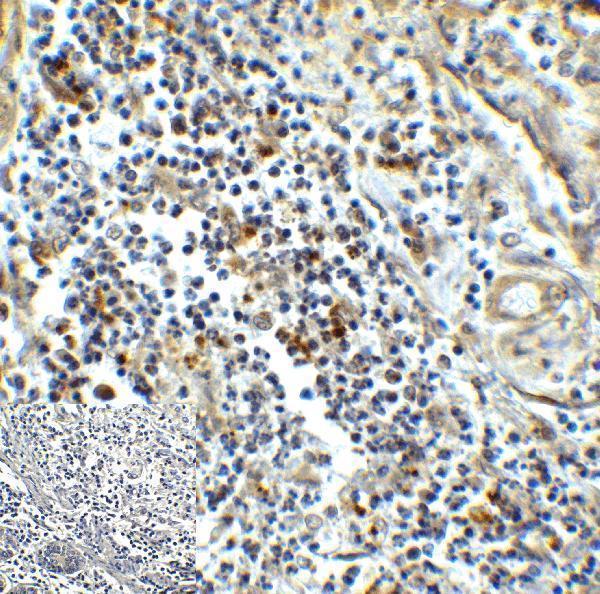
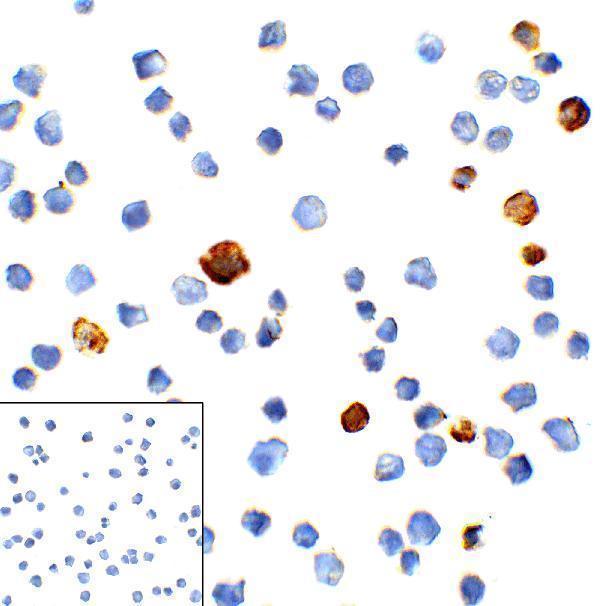
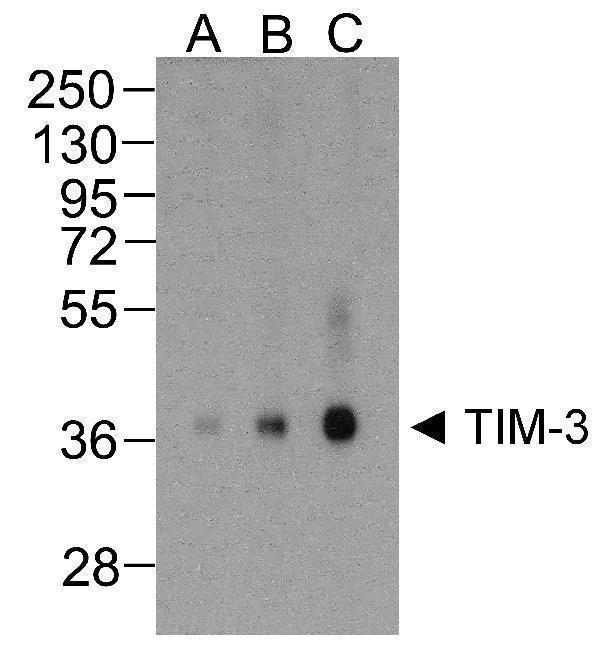
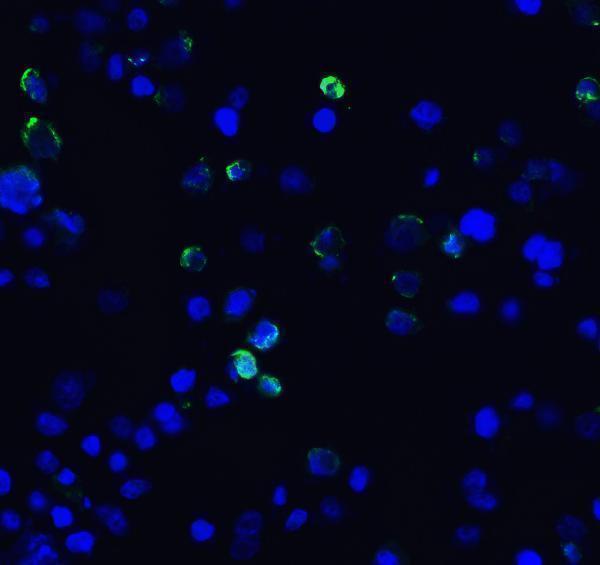
HAVCR2 antibody (M00657) performs well in ELISA, Flow Cytometry, IF, IHC-P, ICC, WB and shows reactivity with Human.

  • Validated for inter-lot consistency, specificity, and reproducibility
  • Committed to quality since 1993
Filter:
m00657 havcr2 primary antibodies fcm testing 6m00657 havcr2 primary antibodies if testing 3m00657 havcr2 primary antibodies if testing 4m00657 havcr2 primary antibodies ihc testing 5m00657 havcr2 primary antibodies icc testing 2m00657 havcr2 primary antibodies wb testing 1

Designing a Western blot or IHC for HAVCR2? The guides cover the expected band size and staining pattern, antibodies backed by real images, the controls to run, and protocols from published papers.

Anti-TIM3 HAVCR2 Monoclonal Antibody [10C10]

HAVCR2 antibody

Reactive SpeciesHostApplication
HumanMouseELISA, Flow Cytometry, IF, IHC-P, ICC, WB

SKU: M00657

Size: 0.1 mg

Bundle to save: I do not want free secondary ab
Price:
$481/0.1 mg

Ships in: 4-7 days

Quantity: 1

1
Get A Quote
Guarantee / Product Promise

Recommend Dilution

Application
Dilution
Species
TIM-3 antibody can be used for ELISA starting at 0.1 μg/mL. For Western blot start at 1 μg/mL. For Immunocytochemistry start at 1 μg/mL. For Immunofluorescence start at 10 μg/mL. For Immunohistochemistry start at 5 μg/mL. For Flow Cytometry start at 0.1 μg/ml. Optimal dilutions for each application should be determined by the researcher.

* It is recommended to optimize the amount of this reagent in each experimental system to achieve the best results.

Product Information

Product Name
Anti-TIM3 HAVCR2 Monoclonal Antibody [10C10]
View all HAVCR2 Antibodies
Form
Liquid
Uniprot
Gene ID
Storage & Handling
TIM-3 antibody can be stored at 4°C for three months and -20°C, stable for up to one year. Avoid repeated freeze-thaw cycles. Antibodies should not be exposed to prolonged high temperatures.
Host
Mouse
Contents
TIM-3 Antibody is supplied in PBS containing 0.02% sodium azide and 50% glycerol.
Clonality
Monoclonal
Clone Number
Clone: 10C10
Isotype
IgG1,k
Immunogen
TIM-3 antibody was raised against the extracellular domain of human TIM-3
Observed Molecular Weight
68 kDa
Calculated Molecular Weight

33.4 kDa

Background of HAVCR2
The immune checkpoint protein TIM3 is a member of the immunoglobulin superfamily and TIM family of proteins that was initially identified as a specific marker of fully differentiated IFN-γ producing CD4 T helper 1 (Th1) and CD8 cytotoxic cells. It is a Th1-specific cell surface protein that regulates macrophage activation and negatively regulates Th1-mediated auto- and alloimmune responses, and is also highly expressed on regulatory T cells, monocytes, macrophages, and dendritic cells (1). TIM3 and PD-1 are co-expressed on most CD4 and CD8 T cells infiltrating solid tumors or in hematologic malignancy in mice; blocking TIM3 in conjugation with a PD-1 blockade increases the functionality of exhausted T cells and synergizes with to inhibit tumor growth (2,3).
Cite This Product
Anti-TIM3 HAVCR2 Monoclonal Antibody [10C10] (Boster Biological Technology, Pleasanton CA, USA, Catalog # M00657)

Review

Have you used Anti-TIM3 HAVCR2 Monoclonal Antibody [10C10]?

Submit a review and receive $370 in product credits, a $185 Amazon gift card, or our carefully curated gift bundles.

Product Promise

We promise Anti-TIM3 HAVCR2 Monoclonal Antibody [10C10] performs excellently in relevant applications for ELISA, Flow Cytometry, IF, IHC-P, ICC, WB. If it doesn't perform as promised, we will refund the product. Learn more


In stock
Order Product
M00657
Buy one primary antibody get one 0.5ml HRP or Biotin secondary antibody for free.
*Sample sizes are prepared on demand and will take extra lead time. (cannot be conjugated)
$481.00

Troubleshooting

troubleshooting-box-image

Download troubleshooting handbooks for IHC, Western blot and ELISA for FREE.

Download Free PDFs Now

Boster Guarantee

Guaranteed product quality

Guaranteed product quality

We promise all of our products perform as described in datasheets.

This product is for Research Use Only. Not for use in diagnostic procedures.

Update date: Oct 20, 2026