This website uses cookies to ensure you get the best experience on our website.


- Table of Contents
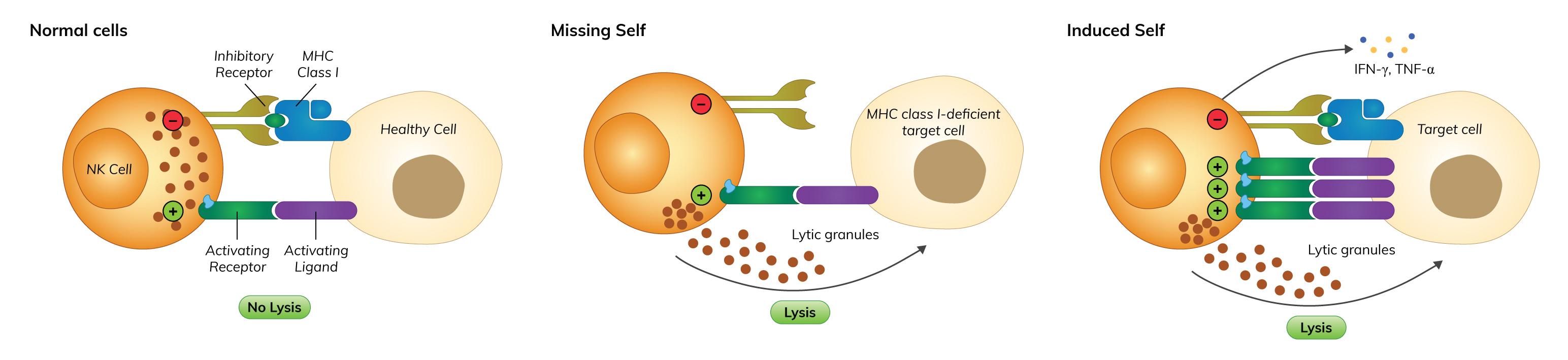
Representing 5-20% of the circulating group 1 innate lymphoid cells (ILCs), natural killer (NK) cells play a crucial role in the innate immune system. They were named ‘natural killer’ due to their ability to recognize and kill physiologically stressed cells (tumor cells or virus-infected cells) without the presence/activation of typical markers for immune system activation, such as antibodies or major histocompatibility complex (MHC) on cell surfaces (Abel et al., 2018; Guia et al., 2018; Pol...
This month, we're excited to spotlight a selection of cutting-edge research studies that have benefited from Boster Bio's high-quality products.
Several studies this month deepen our understanding of disease mechanisms, including the role of pancreatic acinar cells in chronic pancreatitis fibrosis and the intriguing connections between the PCCB gene, associated with schizophrenia, and GABAergic pathways.
On the therapeutic front, different innovative methods have emerged, from an injectable hydrogel for osteoarthritis therapy to the promising rapid antidepressant-like effects of the connexin hemichannel inhibitor D4. Immunotherapy has also taken a front seat, with new research on IL2Rbg targeting combined with radiotherapy in HNSCC, and the screening of potential vaccines against Mycoplasma synoviae.
Scroll down to learn more and uncover insights from these new research studies!
Authors: Wang, D., Han, S., Lv, G., Hu, Y., Zhuo, W., Zeng, Z., Tang, J…
Journal: Gastroenterology
BACKGROUND AND AIMS: Studies have demonstrated that the activated pancreatic stellate cells (PSCs) play a crucial role in pancreatic fibrogenesis in chronic pancreatitis (CP), while the precise mechanism for PSCs activation has not been fully elucidated. We analyzed that the role of injured pancreatic acinar cells (iPACs)...
Cited Boster Product(s): Goat Anti-Rabbit IgG (H+L) Secondary Antibody, Cy3 Conjugated (BA1032)
Authors: Gadwa, J., Amann, M., Bickett, T.E., Knitz, M.W., Darragh, L.B…
Journal: Cell Reports Medicine
The implementation of cancer immunotherapies has seen limited clinical success in head and neck squamous cell carcinoma (HNSCC). Interleukin-2 (IL-2), which modulates the survival and functionality of lymphocytes, is an attractive target for new immunotherapies but one that is limited by presence of regulatory T cells (Tregs)...
Cited Boster Product(s): Human IL-2/Interleukin-2 ELISA Kit PicoKine® (EK0397)

Authors: Zhang, W., Zhang, M., Xu, Z., Yan, H., Wang, H., Jiang, J., Wan, J…
Journal: Nature Communications
Identifying genes whose expression is associated with schizophrenia (SCZ) risk by transcriptome-wide association studies (TWAS) facilitates downstream experimental studies. Here, we integrated multiple published datasets of TWAS, gene coexpression, and differential gene expression analysis to prioritize SCZ candidate genes for functional...
Cited Boster Product(s): Goat Anti-Mouse IgG (H+L) Secondary Antibody, Cy3 Conjugated (BA1031)

Authors: Wan, J., He, Z., Peng, R., Wu, X., Zhu, Z., Cui, J., Hao, X., Chen, A…
Journal: Journal of Nanobiotechnology
Osteoarthritis (OA) is a common degenerative joint disease urgently needing effective treatments. Bone marrow mesenchymal stromal cell-derived exosomes (Exo) are considered good drug carriers whereas they have limitations such as fast clearance and low retention. This study aimed to overcome the limitations of Exo in drug delivery...
Cited Boster Product(s): Anti-SOX9 Antibody Picoband™ (A00177-2); Goat

Good news! We're happy to announce that we have established a warehouse in the Netherlands that has already started operations! With our new warehouse, we hope to enable faster shipping for all our customers in Europe. For products in stock, this arrangement will significantly reduce lead time.
To check if a product is in stock at our Netherlands warehouse, please visit any product page and select “Europe (including UK)” in the “Add to Cart”/“Get a Quote” box, which will display sto...

Welcome to this month's Research Spotlight where we delve into an array of exciting scientific discoveries!
For the field of neuroscience, scientists examined the significance of G3BP2-Tau interaction for Tau aggregation as well as the role of SMN for neurodegeneration. In gastroenterology, researchers presented modified prebiotic-based probiotics as a novel approach for treating colitis. Furthermore, another study offered insights into the connections between gut microbiota and diabetic...

Writing a winning research grant proposal is essential for securing funding to support your scientific endeavors. However, crafting a successful proposal can be a daunting task, even for experienced researchers. Research grant proposals require careful planning, strategic thinking, and attention...

When applying for a research grant, the rationale of your project is one of the most critical components of your grant proposal. Your rationale should justify why your research is necessary and why it is worth funding. A well-crafted rationale can help demonstrate the significance and potential impact of your project, ultimately raising your chances of receiving funding. Below, we discuss some guidelines for crafting...

When applying for research grants, an important component of your proposal is the budget. A well-planned budget can help convince funders that your project is feasible and will have a significant impact. However, creating a budget can be challenging, especially for early-career researchers who may not have experience in managing research funds. In this blog, we discuss some tips for budgeting for your research grant proposal.
Before creating a budget, it's essential to understand the funder's guidelines. Each funding agency may have different rules and regulations about what expenses are eligible for funding. Some may have specific limits on how much funding can be allocated to different categories, such as personnel, travel, and equipment. It's critical to read the guidelines carefully and make sure that your budget adheres to them.
Creating a budget requires careful planning and attention to detail. Start by outlining the different categories of expenses that your project will incur, such as personnel, equipment, supplies, and travel. Consider the duration of your project and estimate the costs for each category for the entire project timeline. Be realistic and considerate of potential delays or unexpected expenses.
Your budget should be as detailed as possible to provide clarity and transparency to funders. Provide a breakdown of each expense category, including the number of personnel involved, the duration of their involvement, and their hourly or daily rates. When listing equipment and supplies, provide thorough descriptions and itemized costs.
Funders want to know that their investment will be used efficiently and effectively. Therefore, you will need to justify each expense and demonstrate how it will contribute to the success of your project. For example, if you're requesting funds for travel expenses, explain how attending a conference or meeting will contribute to your...

Research grants are a critical source of funding for scientists, researchers, and academics across various fields. However, searching for relevant grants for your research project can be a daunting task. With numerous funding opportunities available, it can be challenging to navigate the funding landscape and find the right fit. In this blog, we will share some guidelines...

If you are a researcher, scientist, or aspiring grant applicant, you have likely heard of the National Institutes of Health (NIH) and its pivotal role in funding cutting-edge research and advancing scientific discoveries. The NIH, a part of the U.S. Department of Health and Human Services, is the largest public funder of biomedical research in the world. Through various grant mechanisms, the NIH supports a wide array of research projects, from basic scientific investigations to clinical trials...

Research grants are a crucial component of funding provided by various organizations to support research projects across various fields, including science, engineering, social sciences, and humanities. These grants can be categorized into different types based on the criteria used to award them, the duration of the grant, the research focus, the eligibility of the applicant, and the funding amount. Understanding the different types of research grants available can help researchers identify the appropriate funding source for their research project.
For scientists and researchers, there are several types of research grants available, each with its own purpose and eligibility criteria. In this blog, we will discuss the 8 most common types of research grants.
Project grants are the most common type of research grants. They are awarded to individual researchers or research teams to support a specific research project, and are typically for a set amount of time and funding. The funds can be used for salaries, equipment, supplies, travel, and other expenses related to the project. Examples of organizations that provide project grants include the National Institutes of Health (NIH), National Science Foundation (NSF), and the Wellcome Trust.
Program grants are awarded to institutions or organizations to support a broader research program, center, or initiative. These grants fund multiple research projects that are focused on a common theme or research question. Program grants often require a more comprehensive proposal and may be more competitive than project grants. Examples of organizations that provide program grants include the American Cancer Society (ACS), Bill and Melinda Gates Foundation, and the Robert Wood Johnson Foundation.
Fellowship grants provide funding for individual researchers to support their training or career development. These grants may be designed for specific career stages, such as postdoctoral fellowships or early career researcher awards, and often provide stipends for living expenses, tuition, and research-related expenses. Fellowship grants can be awarded to postdoctoral researchers or graduate students. Examples of organizations that provide fellowship grants include the NIH, the National Science Foundation (NSF), the Howard Hughes Medical Institute (HHMI), and the American Association for Cancer Research (AACR).
Travel grants provide funding for researchers to conduct research in a different location, or attend conferences, workshops, or meetings related to their research field. These grants can cover travel expenses, registration fees, and accommodation costs. Travel grants are usually smaller in amount than other types of research grants. Examples of organizations that provide travel grants include the Association for Computing Machinery (ACM), the Society for Neuroscience (SfN), the American Society for Microbiology (ASM), and the American Physiological Society (APS).
Equipment grants provide funding for researchers to purchase equipment necessary for their research project. These grants can be awarded to individual researchers or institutions. Equipment grants are often more competitive than other types of research grants, as they require a detailed justification for the equipment purchase. Examples of organizations that provide equipment grants include the NSF, the National Cancer Institute (NCI), and the American Chemical Society (ACS).
Seed Grants are awarded to support the early stages of a research project, often with the goal of securing additional funding in the future. Examples of organizations that provide seed grants include the NSF, the ACS, and the American Heart Association (AHA), and the American Diabetes Association (ADA).
Collaborative Grants are awarded to support research collaborations between two or more institutions or researchers. Examples of organizations that provide collaborative grants include the NIH, Wellcome Trust, Cancer Research UK, the European Research Council (ERC), and the European Commission’s Horizon Europe program.
Industry-sponsored research grants are designed to support research projects that are sponsored by private companies or corporations. These grants typically support research projects that are of mutual interest to the company and the research institution or researcher. Examples of organizations that provide industry-sponsored grants include Pfizer, Novartis, Merck & Co., Johnson & Johnson, AstraZeneca, GlaxoSmithKline (GSK), Sanofi, and Eli Lilly and Company.
Research grants come in many types and sizes, each with its own specific criteria and funding amount. Researchers can apply for project grants to fund a specific research project, program grants to support a broader research program, fellowship grants for career development, travel grants for conference attendance, and several other grants for varying purposes.
Knowing the different types of research grants available can help researchers identify the most appropriate funding opportunities f...