This website uses cookies to ensure you get the best experience on our website.


- Table of Contents
and ELISA kits, proteins related to Autism Spectrum Disorder.
Autism Spectrum Disorder (ASD) is a multifaceted neurodevelopmental condition that affects individuals’ ability to communicate, interact socially, and adapt to varying environments. Characterized by a wide range of symptoms and varying degrees of severity, ASD is termed a "spectrum" disorder to reflect its diverse manifestations. People with ASD may experience challenges in understanding social cues, forming relationships, and exhibiting repetitive behaviors, while also demonstrating unique strengths and talents. Recent research has increasingly focused on the biological underpinnings of ASD, including the role of specific antibodies and the immune system in its development and progression. By exploring these areas, scientists aim to uncover new insights that can lead to more effective diagnostics, interventions, and support strategies, ultimately enhancing the quality of life for individuals affected by Autism Spectrum Disorder.
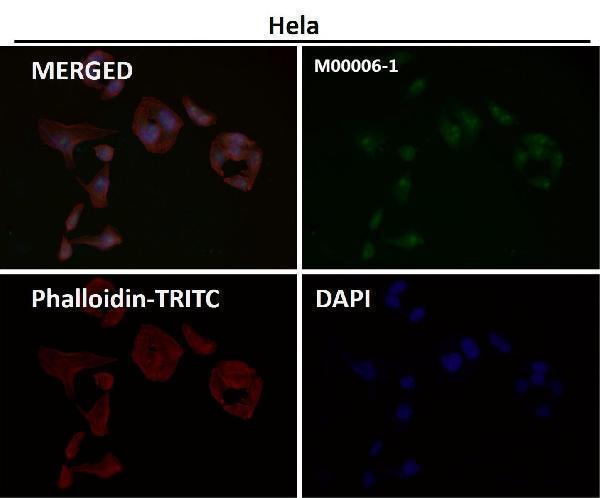
Anti-PTEN Rabbit Monoclonal Antibody, Immunofluorescent analysis using the Antibody at 1:150 dilution....

Anti-BDNF Rabbit Monoclonal Antibody, Immunofluorescent analysis of HeLa cells, using BDNF Antibody....

Anti-Synaptophysin/SYP Picoband® Antibody, Figure 2. IF analysis of SYP using anti-SYP antibody (A05049).
SYP was detected in immunocytochemical section of SH-...
| Protein Name | Gene Name | Function |
|---|---|---|
| SHANK3 | SHANK3 | Synaptic scaffolding protein involved in excitatory synapse formation and function. |
| CNTNAP2 | CNTNAP2 | Cell adhesion molecule critical for neuronal network development and function. |
| NLGN3 | NLGN3 | Neurexins and Neuroligins interaction proteins essential for synaptic formation and maintenance. |
| MECP2 | MECP2 | Chromatin-associated protein regulating gene expression essential for neural development. |
| FMR1 | FMR1 | RNA-binding protein involved in synaptic plasticity and neural development. |
| TSC1 | TSC1 | Tumor suppressor involved in the mTOR signaling pathway regulating cell growth. |
| TSC2 | TSC2 | Tumor suppressor partnering with TSC1 to regulate mTOR signaling and cell growth. |
| CHD8 | CHD8 | Chromatin remodeler implicated in regulation of gene expression during brain development. |
| PTEN | PTEN | Phosphatase involved in regulating cell growth and proliferation through the PI3K/AKT pathway. |
| IL-6 | IL6 | Cytokine involved in immune response and neuroinflammation associated with ASD. |
| BDNF | BDNF | Neurotrophin involved in neuronal growth, survival, and synaptic plasticity. |
| mTOR | MTOR | Central regulator of cell growth, proliferation, and synaptic plasticity. |
| SERT | SLC6A4 | Serotonin transporter involved in the reuptake of serotonin from synaptic clefts. |
| OXTR | OXTR | Oxytocin receptor implicated in social behavior and bonding. |
| COMT | COMT | Enzyme involved in the metabolism of dopamine, norepinephrine, and epinephrine. |
| RORA | RORA | Nuclear receptor involved in regulating circadian rhythm and neuronal development. |
| Synaptophysin | SYP | Synaptic vesicle protein involved in synapse formation and neurotransmitter release. |
| UBE3A | UBE3A | E3 ubiquitin ligase involved in synaptic development and function. |
Research into the genetic and biological factors of Autism Spectrum Disorder (ASD) seeks to understand the complex interplay of genes and neurological structures that contribute to the condition. This sub-area explores the heritability of ASD, identifying specific genes and genetic mutations that increase the risk of developing autism. Advances in genomics and neuroimaging have allowed scientists to investigate how genetic variations influence brain development and function, leading to the characteristic behaviors associated with ASD. Studies often focus on pathways related to synaptic development, neurotransmitter systems, and neural connectivity. Understanding the biological basis of ASD not only aids in early diagnosis but also paves the way for targeted interventions and treatments. This research is crucial for unraveling the heterogeneous nature of autism, as diverse genetic profiles can result in varying phenotypic expressions of the disorder.
Behavioral and cognitive therapies represent a critical area of research within ASD, focusing on developing and refining interventions that enhance social, communicative, and adaptive skills. Applied Behavior Analysis (ABA) is one of the most widely studied and implemented therapies, employing structured techniques to improve specific behaviors and reduce undesired ones. Cognitive Behavioral Therapy (CBT) is also adapted for individuals with autism to help manage anxiety and develop coping strategies. Additionally, research explores the effectiveness of novel therapeutic approaches such as social skills training, occupational therapy, and speech therapy. These therapies are increasingly personalized to cater to the unique strengths and challenges of each individual with ASD. Ongoing studies aim to determine the optimal timing, intensity, and combination of therapeutic interventions to maximize outcomes. By improving behavioral and cognitive functions, these therapies significantly enhance the quality of life and independence of individuals on the autism spectrum.