This website uses cookies to ensure you get the best experience on our website.


- Table of Contents

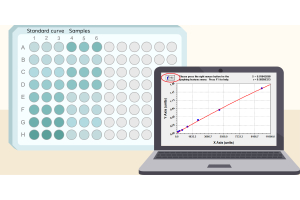
ELISA (enzyme-linked immunosorbent assay) is a convenient and simple method to quantitatively or qualitatively detect peptides, proteins, antibodies, and hormones in samples, rendering it as one of the most widely used immunoassays. Many laboratories perform these assays using standardized elisa kits, which help streamline assay setup and improve reproducibility. To derive accurate concentrations from measured signals, most ELISA protocols rely on constructing an standard curve from known standards, which serves as the reference for sample interpolation, alongside the use of quick elisa kits to support faster and more efficient assay workflows. Despite the many advantages of conducting ELISA—or more complex formats like those used in Multiplex Assay Services and multiplex ELISA kits, where multiple targets are analyzed simultaneously—there are some mistakes that could turn your ELISA experiment sour. Help prevent this situation from happening by avoiding 5 common pitfalls when performing an ELISA:
Using inconsistent or improperly stored reagents can negatively affect ELISA sensitivity, reproducibility, and signal consistency.
“I think I still have some of the TMB coloring development agent from the previous kit. Maybe I’ll use that instead.”
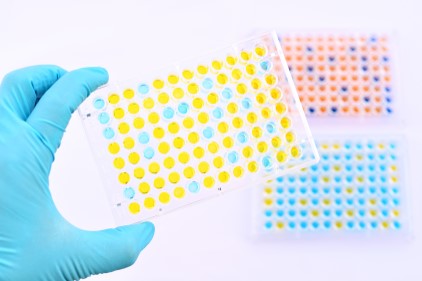
Stop! Wanting to conserve resources is a good habit, but not in this case. We should avoid using reagents from different batches together. Each reagent in the kit has been optimized for that specific lot to ensure best performance. This is particularly important for assays that rely on carefully validated elisa antibody pairs, where consistency between capture and detection reagents is essential for reliable results. Using a reagent from a different lot may affect the ELISA’s detection ability and generate inconsistent experiment results, especially in assays developed with peptides for ELISA development that require strict reagent consistency.
Previous reagents may have degraded depending on the manufacturing date and storage conditions. Expired or improperly stored TMB substrates can lead to reduced signal intensity, inconsistent color development, or elevated background noise. Variability introduced by degraded reagents can compromise standard curve accuracy and reduce confidence in quantitative analysis.
Always use reagents supplied with the original kit lot whenever possible and follow manufacturer-recommended storage conditions carefully.
Remember: Do not mix reagents from different lots.
LISA plates and reagents illustration for common ELISA pitfalls
Proper incubation conditions are critical for maintaining assay consistency across all wells within the microplate.
2. “Hmm...Might not have enough space in the incubator, so I’ll stack these plates instead.”

That’s not a good idea.
Stacking plates during incubation may cause the edge effect to occur. The edge effect happens when the outer wells are exposed to different conditions (e.g. varied temperature) than their neighboring inner wells, resulting in unexpected and inconsistent values.
Plates that are unequally incubated will lead to greater CV values for OD readings. Uneven heat distribution and airflow may alter reaction kinetics between wells and negatively affect assay reproducibility.
To control for wells that have been affected by the edge effect, we would recommend duplicating, or even triplicating, well assay for both standard and samples so that comparisons can be made when large discrepancies develop.
Remember: For more consistent results, do not stack plates during incubation.
Stacked ELISA plates during incubation illustration
Maintaining proper moisture levels within the ELISA plate is important for preserving assay component activity and ensuring reliable performance.
3. “I don’t think the plate is dry enough. Should I do anything else to make it drier?”

Please proceed with caution.
When the wells are completely dry, the active components on the plate will become inactivated, which will negatively impact assay performance.
ELISA protocols instruct to invert the 96-well plate and tap any residual fluid onto paper towels or other absorbent material. We want to make sure that the residual fluid has been removed, but we don’t want the plate to become completely dry.
Careful handling during wash steps helps preserve immobilized antibodies and antigens while reducing variability between wells.
Remember: Do not let the 96-well plate become completely dry.
ELISA plate drying after wash step illustration
Improper pipetting practices can introduce contamination and compromise assay accuracy.
“I don’t think I need to change the pipette tip for these wells. It should be fine.”

A bit risky there.
We do not want contamination to ruin your experiment results. Cross-contamination between standards or samples can alter concentration measurements and reduce assay reliability.
Although you don’t need to change pipette tips for each replicate, careful pipetting technique is essential for minimizing sample carryover and maintaining quantitative consistency. Using calibrated pipettes and proper aspiration techniques can further improve assay precision.
We would advise to change pipette tips when switching between different samples or standards.
Remember: To avoid cross-contamination, do not reuse tips and tubes between different samples or standards.
Pipetting in ELISA with fresh pipette tips illustration
Improper reagent handling and storage can reduce reagent stability and negatively affect ELISA assay performance.
“Will I be able to use this today? It’s okay, I’ll just put it back into the freezer even if I don’t get to use it today.”

Attention!
Unless otherwise specified, reagents should be brought down to room temperature. However, it is also important to limit the number of freeze-thaw cycles the reagents are subjected to.
Repeated freeze-thaw exposure can denature proteins, reduce enzyme activity, and affect antibody binding performance.
In order to keep reagents in their best condition, we would recommend preparing single-use aliquots once you receive the reagents. By doing so, you are taking another step to ensure that you can obtain consistent and reproducible results.
When purchasing an ELISA kit, make sure to choose an ELISA kit that provides microplates in strip-well format. For example, Boster Bio’s PicoKine™ ELISA kits are provided in 96-well format with removable strips, so you can use a portion now and store the rest for later!
Remember: Do not let reagents experience repeated freeze-thaw cycles. Aliquot the reagents!
Removable strip ELISA plate for flexible assay setup illustration
Questions? Have another pitfall you would like to share to save your research fellows from stumbling? Boster Bio provides technical support resources to assist researchers with ELISA troubleshooting, reagent handling, assay optimization, and workflow consistency.
Feel free to let us know at support@bosterbio.com and we will be happy to assist you.
Use Boster Bio’s search tools to find ELISA kits, antibodies, technical resources, and troubleshooting guides relevant to your research needs.
Contact Boster Bio for assistance with ELISA workflows, assay troubleshooting, reagent recommendations, and optimization support.
Explore additional ELISA technique articles, assay optimization resources, and immunoassay troubleshooting guides to improve experimental accuracy and reproducibility.