This website uses cookies to ensure you get the best experience on our website.


- Table of Contents
Designing an IHC experiment for ARPC5? The guide has the expected staining pattern, antigen retrieval and fixation, antibodies backed by real IHC images, the tissue controls to run alongside, and protocols taken from published papers.
Open the ARPC5 IHC Guide
1 Citations

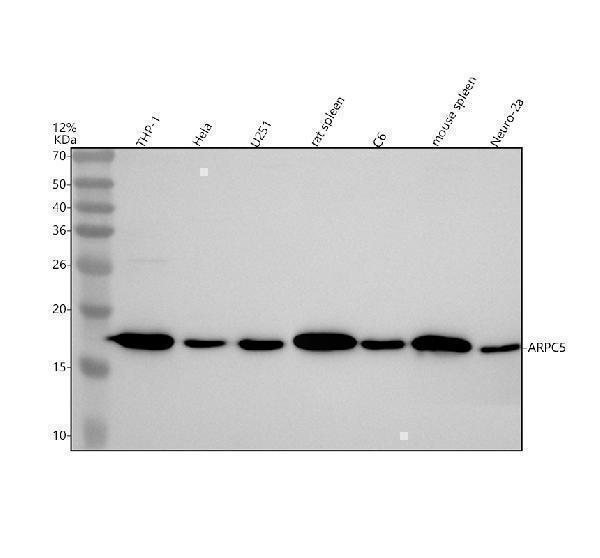
Facts about Actin-related protein 2/3 complex subunit 5.

Besides its function in the cytoplasmic cytoskeleton, the Arp2/3 complex also promotes actin polymerization in the nucleus, thereby regulating gene transcription and repair of damaged DNA (PubMed:29925947). The Arp2/3 complex promotes homologous recombination (HR) repair in response to DNA damage by encouraging nuclear actin polymerization, leading to drive motility of double- strand breaks (DSBs) (PubMed:29925947).
| Human | |
|---|---|
| Gene Name: | ARPC5 |
| Uniprot: | O15511 |
| Entrez: | 10092 |

| Belongs to: |
|---|
| ARPC5 family |

actin related protein 2/3 complex, subunit 5, 16kDa; ARC16subunit 5 (16 kD); MGC88523
Mass (kDA):
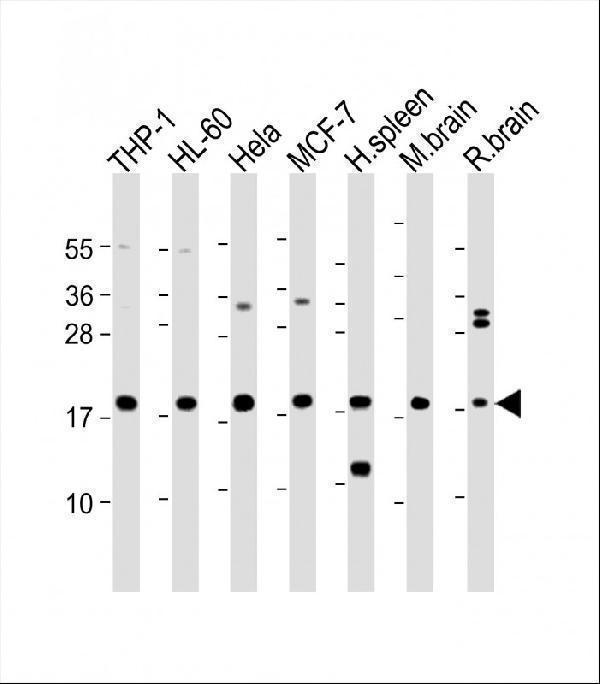
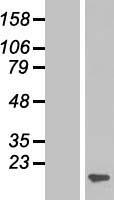
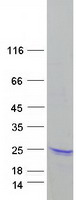
16.32 kDA

| Human | |
|---|---|
| Location: | 1q25.3 |
| Sequence: | 1; NC_000001.11 (183620846..183635783, complement) |
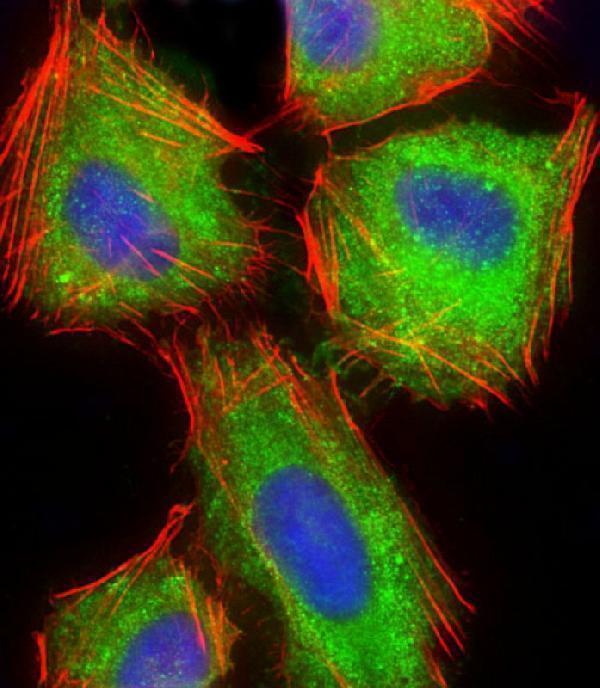
Cytoplasm, cytoskeleton. Cell projection. Nucleus.

PMID: 9230079 by Welch M.D., et al. The human Arp2/3 complex is composed of evolutionarily conserved subunits and is localized to cellular regions of dynamic actin filament assembly.
PMID: 9359840 by Machesky L.M., et al. Mammalian actin-related protein 2/3 complex localizes to regions of lamellipodial protrusion and is composed of evolutionarily conserved proteins.