This website uses cookies to ensure you get the best experience on our website.


- Table of Contents
and ELISA kits, proteins related to Esophageal Cancer.
Esophageal cancer, originating in the esophagus—the long, hollow tube connecting the throat to the stomach—remains one of the more challenging malignancies to diagnose and treat effectively. Primarily affecting the cells lining the esophagus, this disease often presents subtly with symptoms like difficulty swallowing, weight loss, and chest pain, often appearing in more advanced stages. There are two main types of esophageal cancer: squamous cell carcinoma, which is generally found in the upper and middle part of the esophagus, and adenocarcinoma, typically located in the lower part, often associated with a condition called Barrett’s esophagus linked to long-term acid reflux. Globally, variations in incidence of the disease reflect differences in diet, lifestyle, and other risk factors such as smoking and alcohol use. Early detection and targeted research are crucial in improving prognoses. Advances in medical research, particularly the development and deployment of specific antibodies, offer hope for better diagnostic tools and more effective targeted treatments, potentially improving survival rates and quality of life for patients battling this formidable cancer.

Anti-VEGF/VEGFA Antibody Picoband®, YJD affected the VEGF/VEGFR-2/FAK pathway in vivo. ( A – B ) Germ cell markers MVH and Oct4 were detected by IF. ( C ) The expression of VEGF, VEGFR-2, and...
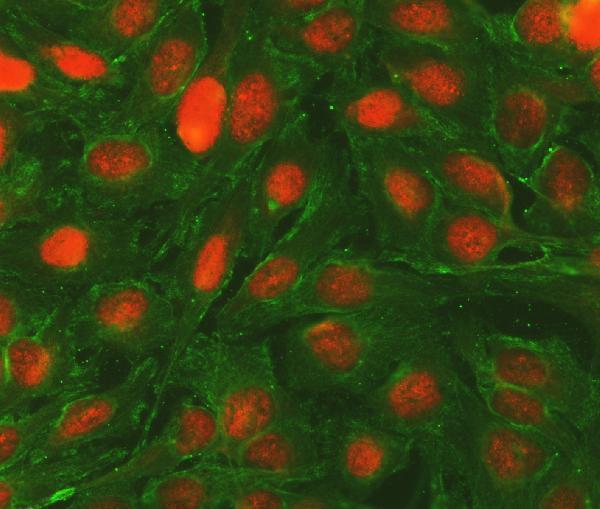
Anti-Bcl-2/BCL2 Antibody Picoband®, IF analysis of BCL2 and Tubulin alpha using anti-BCL2 antibody (A00040-2) and anti-Tubulin alpha antibody (M03989-3).
BCL2 and Tubuli...
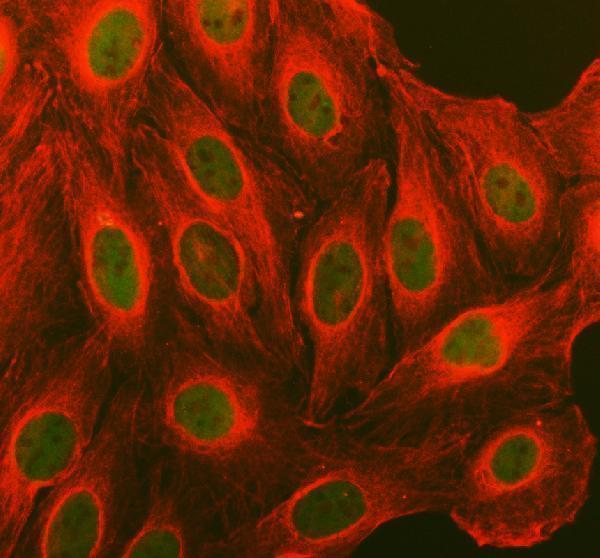
Anti-Cyclin D1/CCND1 Antibody Picoband®, IF analysis of CCND1 using anti-CCND1 antibody (PB9370) and anti-Tubulin Alpha antibody (M03989-3).
CCND1 was detected in immun...
| Protein Name | Gene Name | Function |
|---|---|---|
| EGFR | EGFR | Epidermal growth factor receptor, involved in cell growth, commonly overexpressed in esophageal cancer |
| HER2 | ERBB2 | Human Epidermal growth factor Receptor 2, related to cell proliferation, targeted by specific therapies |
| p53 | TP53 | Tumor suppressor regulating cell cycle, commonly mutated in cancers including esophageal |
| VEGF | VEGFA | Vascular endothelial growth factor, involved in angiogenesis and disease progression |
| CYFRA 21-1 | KRT19 | Cytokeratin fragment, marker for cell proliferation and metastasis |
| E-cadherin | CDH1 | Calcium-dependent cell adhesion protein, often downregulated in metastatic diseases |
| MMP-9 | MMP9 | Matrix metallopeptidase 9, involved in extracellular matrix degradation and tumor invasion |
| p21 | CDKN1A | Cyclin-dependent kinase inhibitor, controls cell cycle progression at G1 |
| Cyclin D1 | CCND1 | Regulates cell cycle transition from G1 to S phase, frequently amplified in cancer |
| Bcl-2 | BCL2 | Anti-apoptotic protein, contributes to resistance against cancer cell death |
| CEA | CEACAM5 | Carcinoembryonic antigen related cell adhesion molecule, used as a marker for GI cancers |
| Fibronectin 1 | FN1 | Glycoprotein, plays a role in cell adhesion and migration |
| Squamous cell carcinoma antigen | SERPINB3 | Serine protease inhibitor, used as a biomarker for squamous cell carcinoma |
| Ki-67 | MKI67 | Protein associated with cellular proliferation, used to determine growth fraction of tumors |
| TGF-beta | TGFB1 | Transforming growth factor beta, plays crucial roles in tissue regeneration, cell differentiation, and immune function |
| PD-L1 | CD274 | Programmed death-ligand 1, involved in immune evasion by tumors, target for immunotherapy |
| mTOR | MTOR | Mechanistic target of rapamycin, central to cell growth and proliferation, target for anti-cancer therapy |
| c-Met | MET | Hepatocyte growth factor receptor, implicated in the growth and spread of cancers |
| Alpha-fetoprotein | AFP | Produced during fetal development, sometimes reactivated in cancer cells |
The molecular biology of esophageal cancer encompasses a vast area of research focused on understanding the genetic and molecular alterations that lead to the development and progression of esophageal cancer. This subfield investigates genetic mutations, epigenetic changes, and disruptions in cellular signaling pathways. One of the key aspects includes the study of oncogenes and tumor suppressor genes. Researchers also explore how molecular markers can aid in the diagnosis, prognosis, and treatment responsiveness of esophageal cancer. Identifying key molecules involved in the pathogenesis of esophageal cancer, such as the epidermal growth factor receptor (EGFR) and the E-cadherin/catenin complex, remains crucial. This leads to the potential development of targeted therapies, significantly impacting how personalized medicine is approached in treating esophageal cancer patients.
Early detection and screening are critical sub areas within esophageal cancer research aimed at identifying the disease at an initial stage when it is most treatable. This research area includes the development and refinement of diagnostic techniques such as endoscopic imaging and biopsy protocols. Molecular biomarkers are also explored for their potential to serve as early indicators of esophageal cancer. Advances in imaging technology such as confocal laser endomicroscopy offer new potentials for early and accurate visualization of esophageal lesions. Additionally, demographic and clinical factors are analyzed to better tailor screening programs to those at increased risk, such as individuals with Barrett’s esophagus. Effective early screening methods have the potential significantly to reduce mortality rates by enabling early intervention strategies.