This website uses cookies to ensure you get the best experience on our website.


- Table of Contents

According to a report on GEN, 41% of researchers admit that their Western blots are unsuccessful at least 25% of the time.
Yikes! Western blotting (WB) is a widely practiced analytical technique to detect target proteins within samples using antigen-specific antibodies, and when properly optimized, it can be significantly enhanced by a professional Western Blotting Service that ensures reproducibility and high-quality results. A solid grasp of the western blot principle is essential to maximize the success rate and minimize common experimental failures. , while meticulous western blot sample preparation lays the foundation for accurate and reliable protein detection. When it fails to perform as expected, it can really be a downer. Common issues like high background or weak signals often stem from early-stage variables related to western blot optimization.
We’re here to help you succeed. Next time you encounter another problem with Western blot, we’ve compiled a checklist to help you troubleshoot your experiment.
High background frequently occurs due to antibody cross-reactivity or improper blocking. Ensuring proper membrane handling and wash conditions is essential. Supplementing your protocol with blocking agents, a well-prepared blocking buffer, and checking your secondary antibodies for unwanted interactions can help minimise artefacts. When washing, ensure that PVDF membranes or nitrocellulose membranes are fully rinsed to avoid persistent blot background.
| Cause | Solution |
|---|---|
| Antibody incubation temperature was too high |
|
| Antibody cross-reacted with other proteins or the blocking agent |
|
| Insufficient blocking |
|
| Insufficient washing |
|
Weak or absent signals often stem from insufficient sample loading, antibody degradation, or masking caused by blocking reagents. Reviewing your loading strategy, ensuring proper gel preparation, and validating controls can improve outcomes. Adding a loading control, ensuring proper protein expression validation, and confirming the presence of your protein of interest can improve interpretation.
| Cause | Solution |
|---|---|
| Insufficient sample loaded on the gel |
|
| Loss of primary antibody effectiveness |
|
| Inhibition of secondary antibody by sodium azide |
|
| Antigen masking by blocking buffer |
|
If your sample has very low abundance, consider using an overexpression lysate, a recombinant protein, or ensuring proper molecular weight markers or a protein ladder are included for reference.
Nonspecific bands can appear if protein loading is excessive or if antibodies bind unintended targets. Ensuring proper gel running, transfer quality, and membrane blocking can reduce these issues. Evaluating molecular weight expectations with molecular weight markers helps confirm which protein bands correspond to your target.
| Cause | Solution |
|---|---|
| Primary antibody concentration was too high |
|
| Excess protein on gel |
|
| Insufficient washing |
|
| Blocking problem |
|
Consistent protein transfer is also essential. Issues such as air bubbles, improper transfer sandwich assembly, or inconsistent Transfer Conditions during semi-dry transfer can distort signals. Confirm membrane placement between Blotting Papers, ensure the absence of air bubbles, and verify constant power settings.
Reliable Western blotting requires consistent protein transfer, correct alignment with molecular weight markers, and validation that your protein of interest appears at the expected size. Addressing issues during transfer includes inspecting transfer buffer, avoiding trapped air bubbles, and checking Transfer Conditions if you are using a semi-dry transfer system.
After transfer, use PVDF membranes or nitrocellulose membranes, depending on compatibility with antibodies and detection. Keep an eye on Signal Strength, as weak signals may indicate antibody issues or insufficient ECL substrate exposure.
Access our Technical Resource Center and western blot troubleshooting resource for more WB tips and troubleshooting guidance.

*Note to educators: You are encouraged to share Boster Bio's resources and PDFs on your class and lab websites, please cite or link to origin bosterbio.com
16,000+ Antibodies, find yours: Shop now!


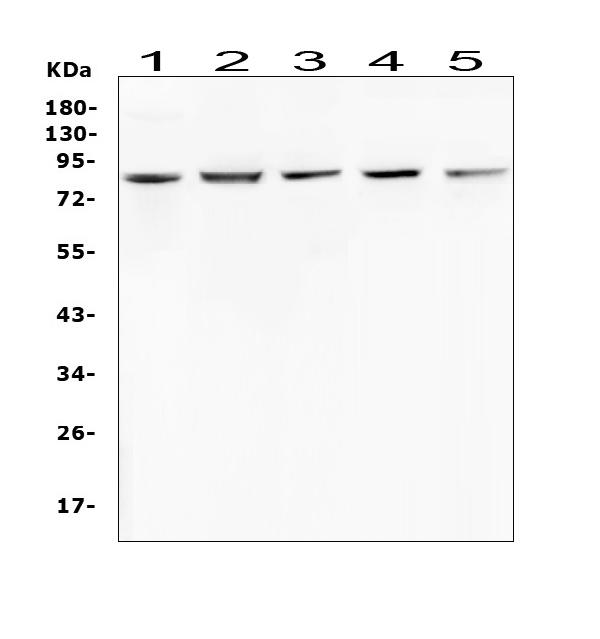
| SKU | A01694-1 |
|---|---|
| Reactivity | Mouse, Rat |
| Applications | ELISA, WB |
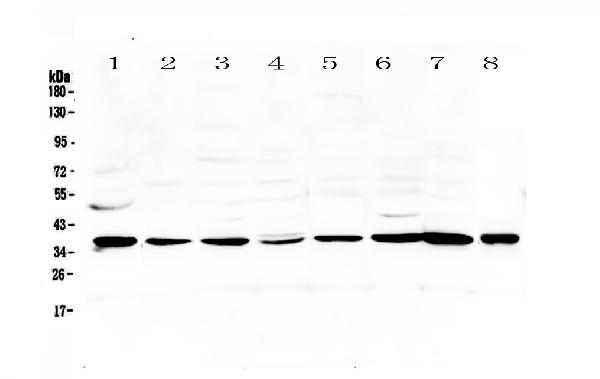
| SKU | A03222-2 |
|---|---|
| Reactivity | Mouse, Rat |
| Applications | ELISA, WB |

| SKU | A02062-1 |
|---|---|
| Reactivity | Human, Rat |
| Applications | ELISA, WB |

| SKU | M00213-8 |
|---|---|
| Reactivity | Human, Mouse, Rat |
| Applications | IHC-P, WB |
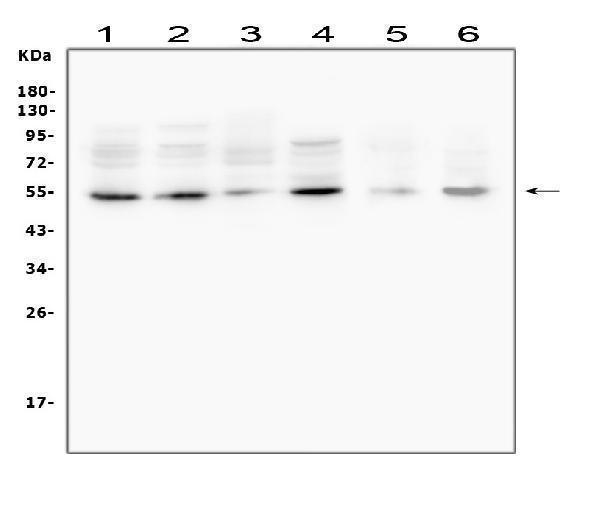
| SKU | A00420-2 |
|---|---|
| Reactivity | Human, Mouse, Rat |
| Applications | ELISA, IHC, WB |
| SKU | A02236-1 |
|---|---|
| Reactivity | Mouse, Rat |
| Applications | ELISA, Flow Cytometry, IHC, ICC, WB |
All Boster antibodies and ELISA kits are guaranteed to meet the specifications on the data sheet. We promise to thoroughly investigate any concerns about the quality of our products; if you encounter a problem with a Boster antibody or ELISA kit, our technical support team will respond with personalized advice within 24 hours. If we can’t make your experiment work, we will refund your purchase in full or provide a replacement free of charge.


Review : "This is an excellent antibody to endoplasmin in HC11 cells. Clean, reliable detection with very little if any background. Great antibody for Westerns. Could probably be optimized for 1 hour primary incubation."
Supercharge your research and extract valuable insights from your samples with our exceptional service. Learn more about our in-cell western blot service to detect target proteins directly within intact cells for precise cellular analysis. Don't wait any longer—get in touch today to discuss your project requirements and see how our expert Western blotting service can revolutionize your research.
Here are some quick facts about bosterbio.com