This website uses cookies to ensure you get the best experience on our website.


- Table of Contents
We're delighted to present this month's research roundup, featuring studies from scientists we have served.
In this issue, dive into innovative cancer immunotherapy techniques using lipid rewiring nanoparticles to revitalize tumor-associated dendritic cells, uncover new mechanisms of antibiotic resistance in S. aureus, explore the potential of gut microbial b-galactosidase for alleviating liver damage, and examine the role of matrix stiffness in determining osteoclast fate...

What is CCK-8?
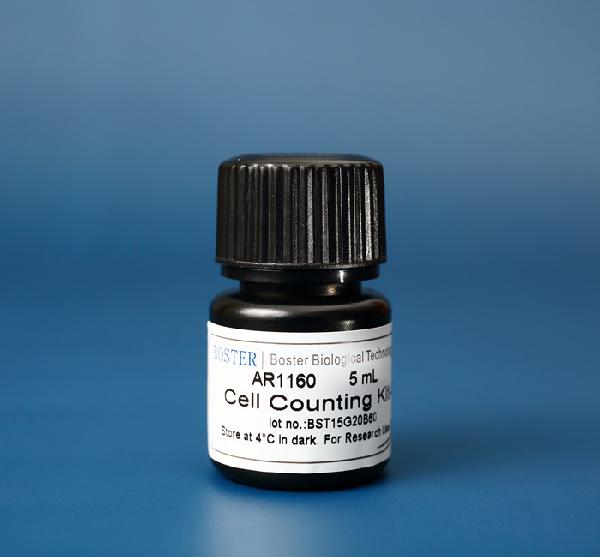
Cell Counting Kit-8 (CCK-8) is a readily available, easy-to-use cell viability and cytotoxicity assay. CCK-8 takes advantage of WST-8 [2- (2- methoxy-4-nitrophenyl)-3- (4-nitrophenyl)-5- (2, 4-disulfophenyl)-2H- tetrazolium, monosodium salt] to directly measure cell viability. Specifically, WST-8 is a water-soluble salt that can be reduced by dehydrogenases in viable cells to a water-soluble formazan dye. The biochemical reaction causes a change in color that can be easily quantified by measuring absorbance at 450nm.This simple and convenient colorimetric assay has been widely used to determine cell viability and cytotoxicity of various agents in cell culture and is also adaptable to broader workflows such as Multiplex Assay Services that assess multiple cellular parameters simultaneously, and is one of several assay services commonly employed in laboratory research. Boster Bio offers an affordable, highly cited Cell Counting Kit-8 (CCK-8) (Catalog# AR1160) for use in your cell culture experiments. CCK-8 assays are quick and easy to use since they do not require thawing or mixing any reagents before use. Simply add the reagent to cells in culture, incubate cells at standard conditions for up to four hours, then determine cell viability or cytotoxicity by measuring the colorimetric change in a cell plate reader at 450 nm.
CCK-8 measures cell viability by correlating the production of colored formazan dye to the amount of living cells in culture. Dehydrogenases from viable cells convert WST-8 into a formazan dye, which produces an easily measurable color change that can be quantified in a cell plate reader at 450 nm.
Cell viability assays often measure the amount of living, healthy cells while cytotoxicity assays typically measure the amount of dead or apoptotic cells in culture. The CCK-8 assay has been used in both types of assays though it is measuring the number of living cells. The cell counting kit-8 can be used in combination with common or novel drugs to test cytotoxicity by measuring the number of viable cells remaining after treatment...
For our April issue of Research Spotlight, we’re happy to feature 10 recent publications from scientists whom Boster has served.
In one study, to prevent cardiac fibrosis after myocardial infarction (MI), researchers developed a reduced glutathione (GSH)-responsive nanoparticle platform for targeted drug delivery to activated cardiac fibroblasts (CFs) within the infarct area of a post-MI heart, which demonstrated higher therapeutic efficacy and lower systemic toxicity than systemic drug administration.
Another study investigated the osteo-immunomodulatory effects of bicalcium phosphate (BCP) ceramics coupled with micro-vibration stimulation (MVS). Our selected papers also include studies on bacterial outer membrane vesicles (OMVs) for intestinal homeostasis regulation, 3TC for protection against age-related cognitive dysfunction, and several more.
Scroll down to learn about exciting discoveries from top scientific journals!
Authors: Ji, X., Meng, Y., Wang, Q., Tong, T., Liu, Z., Lin, J., Li, B., Wei, Y…
Journal: ACS Nano
Upon myocardial infarction (MI), activated cardiac fibroblasts (CFs) begin to remodel the myocardium, leading to cardiac fibrosis and even heart failure. No therapeutic approaches are currently available to prevent the development of MI-induced pathological fibrosis. Most pharmacological trials fail from poor local drug activity...
Cited Boster Product(s): Anti-ACTA2/Alpha Smooth Muscle Actin Monoclonal Antibody (A01072)

Authors: Wang, X., Lin, X., Wang, L., Cao, Z., Zhang, M., Zhang, Y., Liu, R...
Journal: Science Advances
Outer membrane vesicles (OMVs) play vital roles in bacterial communication both intraspecifically and interspecifically. However, extracellular mechanisms of gut microbiota–derived OMVs in the intestine remain poorly understood. Here, we report that OMVs released from Akkermansia muciniphila are able to (i) restore disturbed...
Cited Boster Product(s): Mouse ACE2 ELISA Kit PicoKine® (EK1188)

Authors: Wu, J., Wang, M., Wu, Y., Liu, J., Zhi, W., Chen, X., Zhu, X., Zhang, X.
Journal: Advanced Functional Materials
The osteoimmunology has revealed that immune system plays an important role in maintaining bone metabolism and remodeling. As long-term physiological factor in bone, mechanical stimulation such as micro-vibration stimulation (MVS) exerts effects on regulating osteogenesis and immune response. In this study, the osteo-immunodulatory...
Cited Boster Product(s): RIPA Lysis Buffer (AR0105-100)

Authors: Wu, J., Bu, D., Wang, H., Shen, D., Chong, D., Zhang, T., Tao, W…
Journal: Nature Communications
The liver lipid metabolism of older individuals canbecome impaired and the circadian rhythm of genes involved in lipid metabolism is also disturbed. Although the link between metabolism and circadian rhythms is already recognized, how these processes are decoupled in liver during aging is still largely unknown...
Cited Boster Product(s): HRP Conjugated AffiniPure Goat Anti-Rabbit IgG (H+L) (BA1054); HRP Conjugated AffiniPure Goat Anti-Mouse IgG (H+L) (BA1050)

Authors: Wahl, D., Smith, M.E., McEntee, C.M., Cavalier, A.N., Osburn, S.C…
Journal: Aging Cell
Aging is the primary risk factor for most neurodegenerative diseases, including Alzheimer's disease. Major hallmarks of brain aging include neuroinflammation/immune activation and reduced neuronal health/function. These processes contribute to cognitive dysfunction (a key risk factor for Alzheimer's disease)...
Cited Boster Product(s): Multiplex ELISA Kit For Mouse Cytokine Panel 2 (4-Plex) (MEK1016)


The AACR 2023 Annual Meeting in Orlando, Florida is coming up next week from April 14-19! Every year, the cancer research community gathers to share latest advances in cancer science and medicine at the AACR Annual Meeting.
Meet us at Booth# 2175 to pick up some Boster goodies including pathway posters, technical resources, free phone accessories, and a Dr. Booster plush doll!
Come and discover how our services and resources can boost your research. See you soon...

Welcome to the March issue of Research Spotlight! This month, we present an array of research papers offering new insights for cutting-edge biomedical technologies.
One research study describes a novel nanostructure with magnetocaloric oscillation and catalytic effects for pyroptosis-triggered tumor immunotherapy. Another study investigates a brain-targeted peptide-functionalized chitosan nanoparticle for resveratrol delivery, showing promise in combating obesity-related Alzheimer's...

Join us in Nashville from March 19-23 for the Society of Toxicology (SOT) 62nd Annual Meeting and ToxExpo! More than 70 Featured and Scientific Sessions, 2,000 presentations, and 250 exhibitors will be featured.
Be sure to stop by Boster's Booth #411 and meet our team. Tell us about your research needs and learn how our products and services can help you reach your goals. We look forward to seeing you there...

Learn about the health benefits of various vitamins from this colorful infographic and check out available vitamin detection kits from Boster!

There are thirteen essential vitamins that the human body requires to function properly. These vitamins are Vitamin A, Vitamin C, Vitamin D, Vitamin E, Vitamin K, Vitamin...
In our February issue of Research Spotlight, we feature 10 recent publications from scientists whom Boster has served.
This month, several studies highlight the potential of nanotechnology innovations such as EPC-secreted exosomes, NIR-responsive hollow germanium nanospheres, berberin-enriched PLGA nanoparticles, and nanofiber-based meshes for improving the therapeutic output of nanomedicines.
Scientists also investigated how different groups of bioactive compounds, such as polyamine, vimentin, and dietary genistein exhibit immunomodulatory effects on the molecular pathways involved in the immune response against various disease conditions. In addition, novel roles for components of the SP3/PAD4 and miR-139-5p/ECE1 pathways in disease progression are discussed.
Scroll down to learn more about the research studies!

According to a report on GEN, 41% of researchers admit that their Western blots are unsuccessful at least 25% of the time.
Yikes! Western blotting (WB) is a widely practiced analytical technique to detect target proteins within samples using antigen-specific antibodies, and when properly optimized, it can be significantly enhanced by a professional Western Blotting Service that ensures reproducibility and high-quality results. A solid grasp of the western blot principle is essential to maximize the success rate and minimize common experimental failures. , while meticulous western blot sample preparation lays the foundation for accurate and reliable protein detection. When it fails to perform as expected, it can really be a downer. Common issues like high background or weak signals often stem from early-stage variables related to western blot optimization.
We’re here to help you succeed. Next time you encounter another problem with Western blot, we’ve compiled a checklist to help you troubleshoot your experiment.
High background frequently occurs due to...

Following protein transfer, it is important to block the unreacted sites on the membrane using inert proteins and/or nonionic detergent to reduce levels of nonspecific protein binding during the assay. For labs aiming to reduce background and streamline results, using a professionally...