This website uses cookies to ensure you get the best experience on our website.


- Table of Contents
and ELISA kits, proteins related to Breast Cancer.
Breast cancer remains one of the most prevalent and impactful diseases affecting millions worldwide. Characterized by the uncontrolled growth of malignant cells in breast tissue, it poses significant health challenges for individuals and communities alike. Advances in medical research have been pivotal in enhancing our understanding of breast cancer's underlying mechanisms, leading to more effective detection, prevention, and treatment strategies. Among these advancements, antibody-based therapies have emerged as a promising frontier, offering targeted approaches to combat cancer cells with precision and reduced side effects. By harnessing the power of the immune system, these antibodies can specifically identify and neutralize cancerous cells, improving patient outcomes and quality of life. Continued research in this field is essential to develop innovative treatments, ultimately striving toward a future where breast cancer can be more effectively managed and, ideally, eradicated.
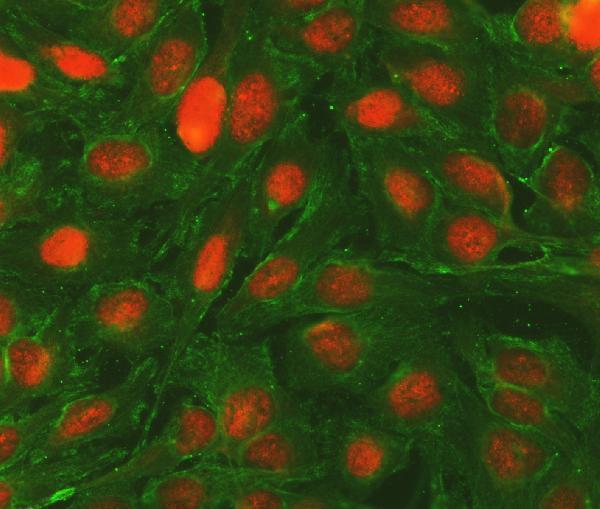
Anti-Bcl-2/BCL2 Antibody Picoband®, Figure 2. IF analysis of BCL2 and Tubulin alpha using anti-BCL2 antibody (A00040-2) and anti-Tubulin alpha antibody (M03989-3).
BCL2 a...
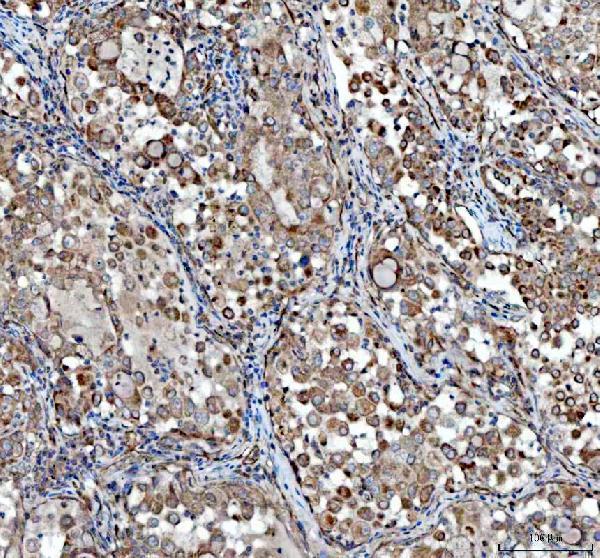
Anti-VEGF/VEGFA Antibody Picoband®, Figure 2. IHC analysis of VEGFA using anti-VEGFA antibody (PA1080).
VEGFA was detected in a paraffin-embedded section of human lung cancer tissue. Heat...
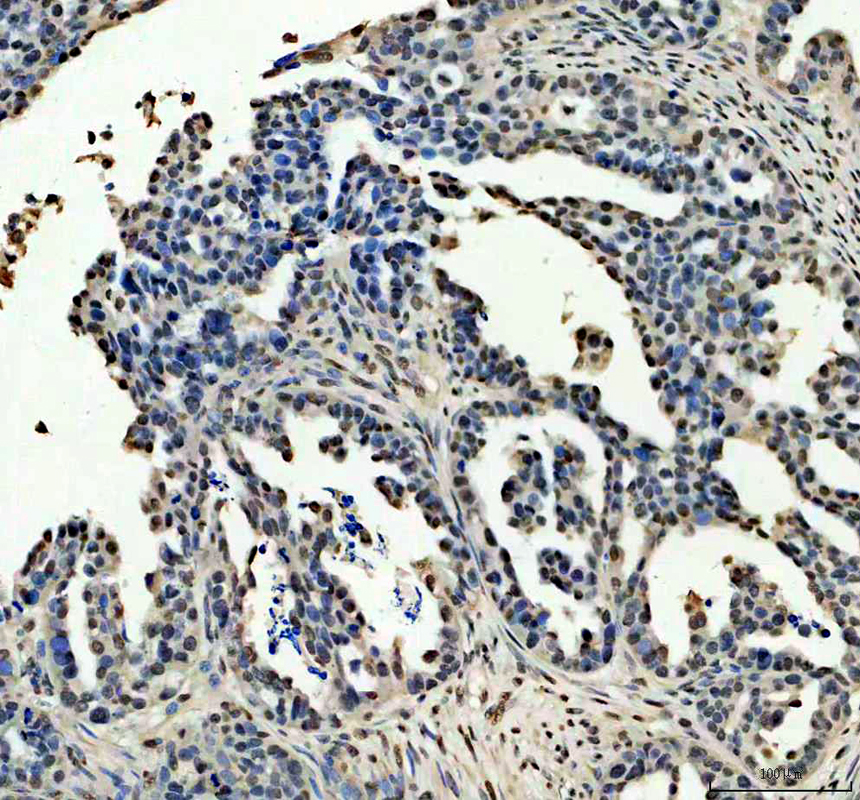
Anti-P53/TP53 Antibody Picoband®, IHC analysis of TP53 using anti-TP53 antibody (PB9008).
TP53 was detected in a paraffin-embedded section of humn ovarian cancer tissue. Heat mediated antigen retrieval was...
| Protein Name | Gene Name | Function |
|---|---|---|
| Estrogen Receptor (ER) | ESR1 | Mediates cell growth in hormone-responsive breast cancers |
| Progesterone Receptor (PR) | PGR | Indicates hormone receptor-positive breast cancer and prognosis |
| Human Epidermal Growth Factor Receptor 2 (HER2) | ERBB2 | Promotes cell proliferation and survival in HER2-positive breast cancers |
| Ki-67 | MKI67 | Marker of cell proliferation and tumor growth rate |
| BRCA1 | BRCA1 | Involved in DNA repair; mutations increase breast cancer risk |
| BRCA2 | BRCA2 | Plays a role in DNA repair; mutations elevate breast cancer susceptibility |
| PI3K | PIK3CA | Part of the PI3K/AKT pathway, involved in cell growth and survival |
| TP53 | TP53 | Tumor suppressor gene involved in cell cycle regulation and apoptosis |
| Epidermal Growth Factor Receptor (EGFR) | EGFR | Involved in cell growth and proliferation signaling pathways |
| Phosphatase and Tensin Homolog (PTEN) | PTEN | Tumor suppressor regulating the PI3K/AKT pathway |
| E-cadherin | CDH1 | Cell adhesion molecule; loss associated with invasive breast cancer |
| MYC | MYC | Oncogene involved in cell cycle progression, apoptosis, and cellular transformation |
| Cyclin D1 | CCND1 | Regulates cell cycle progression from G1 to S phase |
| BCL2 | BCL2 | Regulates apoptosis, often overexpressed in breast cancer |
| Vascular Endothelial Growth Factor (VEGF) | VEGFA | Promotes angiogenesis in tumor growth |
| Fibroblast Growth Factor Receptor 1 (FGFR1) | FGFR1 | Involved in cell differentiation, growth, and angiogenesis |
| AKT1 | AKT1 | Key component of the PI3K/AKT pathway, promoting cell survival and growth |
| mTOR | MTOR | Regulates cell growth, proliferation, and survival through the mTOR pathway |
| Anaplastic Lymphoma Kinase (ALK) | ALK | Involved in cell growth and differentiation; alterations linked to certain breast cancers |
| Cyclin-Dependent Kinase 4 (CDK4) | CDK4 | Regulates cell cycle progression; target for certain breast cancer therapies |
| Retinoblastoma Protein (Rb) | RB1 | Tumor suppressor controlling cell cycle progression from G1 to S phase |
Genetic and genomic research plays a pivotal role in understanding breast cancer's underlying mechanisms. This sub-area focuses on identifying genetic mutations and alterations that predispose individuals to breast cancer, such as BRCA1 and BRCA2 gene mutations. By analyzing the genetic makeup of tumors, researchers can uncover patterns and pathways that drive cancer progression, resistance to therapy, and metastasis. Advanced techniques like next-generation sequencing (NGS) and genome-wide association studies (GWAS) enable the comprehensive profiling of genetic changes in breast cancer cells. This knowledge not only aids in early detection and risk assessment but also facilitates the development of targeted therapies tailored to specific genetic alterations. Additionally, genomic studies contribute to personalized medicine approaches, allowing for the customization of treatment plans based on an individual's genetic profile, thereby improving efficacy and minimizing adverse effects. Ongoing research in this area continues to unravel the complex genetic landscape of breast cancer, offering promising avenues for innovative treatments and improved patient outcomes.
The tumor microenvironment (TME) is a critical aspect of breast cancer research, emphasizing the interactions between cancer cells and their surrounding non-cancerous components. The TME comprises various cell types, including immune cells, fibroblasts, endothelial cells, and the extracellular matrix, all of which influence tumor growth, progression, and response to therapy. Understanding the dynamic interplay within the TME is essential for identifying novel therapeutic targets and improving treatment strategies. For instance, immune cells within the TME can either suppress or promote tumor growth, depending on their activation status and the signaling molecules present. Additionally, the extracellular matrix can affect cancer cell migration and metastasis by altering tissue stiffness and providing biochemical cues. Researchers are exploring how modifying the TME can enhance the efficacy of existing treatments, such as immunotherapies and chemotherapy, and prevent resistance. Advances in imaging and molecular profiling technologies are enabling more detailed characterization of the TME, leading to insights that could revolutionize breast cancer treatment and management. By targeting the TME, scientists aim to disrupt the supportive environment that tumors rely on, thereby inhibiting cancer progression and improving patient prognosis.