This website uses cookies to ensure you get the best experience on our website.


- Table of Contents
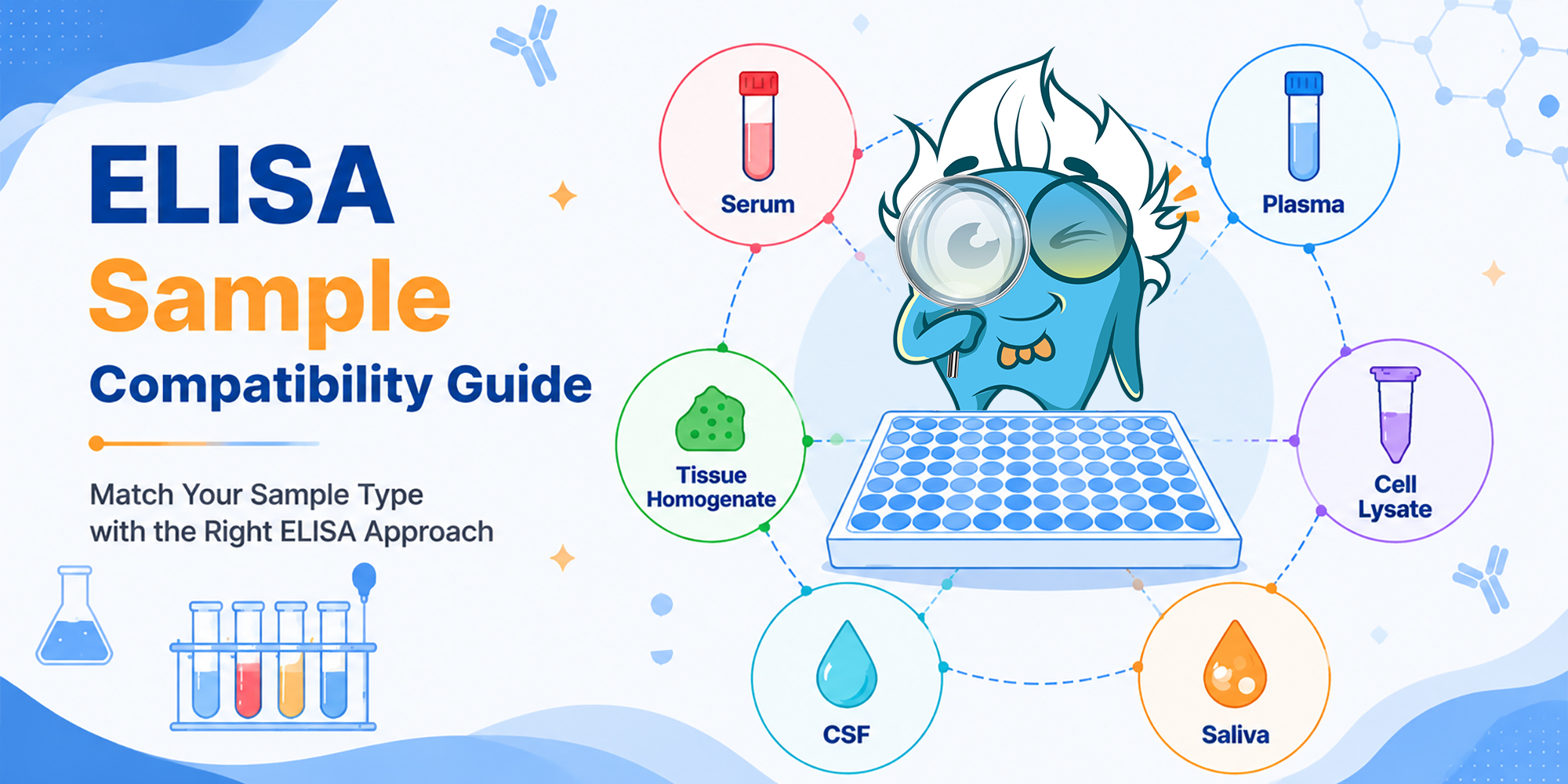
When selecting an ELISA kit, one of the first practical questions researchers ask is:
Can this kit be used with my sample type?
For many projects, the sample may be serum, plasma, cell culture supernatant, tissue homogenate, cell lysate, cerebrospinal fluid (CSF), saliva, urine, or another biological fluid. In some cases, the kit datasheet clearly lists the intended sample type. In other cases, the sample type is not listed, and researchers need to determine whether the kit can still be used.
The short answer is: sample compatibility depends on the specific ELISA kit, the target analyte, the biological matrix, and whether the sample type has been validated.
If you are still selecting an assay, you can start by browsing Boster Bio ELISA Kits, then review the individual product datasheet for validated sample types.
This guide explains how to evaluate ELISA sample compatibility, what to check in the datasheet, and how to approach non-validated sample types.
In ELISA, sample compatibility means that the assay can reliably detect and quantify the target analyte in a specific biological sample matrix.
Compatibility is not determined only by whether the target protein exists in the sample. It also depends on whether the sample matrix allows the assay to perform correctly.
A compatible sample type should generally allow:
Different sample types contain different levels of proteins, salts, enzymes, lipids, anticoagulants, detergents, endogenous biotin, or other interfering substances. These matrix components can affect antibody binding, enzyme activity, color development, background signal, and final concentration calculation. [1,2]
That is why a kit that works well with serum may not automatically perform the same way with saliva, urine, tissue homogenate, or cell lysate.
The first step is always to check the kit datasheet.
Most ELISA kit datasheets include a section listing validated, recommended, or tested sample types. These may include:
If your intended sample type is listed, that is the best starting point. It means the manufacturer has evaluated the kit with that matrix or recommends that matrix based on available validation data.
However, researchers should still review the details carefully. Even when a sample type is listed, you should check:
After checking the product datasheet, researchers may also review general ELISA workflow resources. Boster's ELISA Technical Resource Center provides supporting information for researchers planning ELISA experiments.
A listed sample type does not remove the need for good sample handling. Poor collection, storage, dilution, or preparation can still affect ELISA results. [3,4]
Serum is one of the most common sample types for ELISA. It is often used to measure circulating proteins, cytokines, hormones, antibodies, biomarkers, and other soluble analytes.
Important considerations for serum samples include:
Serum is generally a strong starting matrix for many ELISA kits, but not every analyte is stable or abundant in serum. Researchers should confirm that the kit detection range is appropriate for the expected concentration.
Plasma is also commonly used in ELISA, but it differs from serum because it contains anticoagulants.
Common plasma types include:
These anticoagulants may affect some assays differently. For example, certain anticoagulants may interfere with antibody binding, enzyme activity, or analyte stability. [5]
If the datasheet lists "plasma," check whether it specifies the type of plasma. If only one plasma type has been validated, do not assume that all plasma types are interchangeable.
In general, serum and plasma should not be treated as automatically equivalent without checking the kit documentation or performing matrix validation. [5]
Tissue homogenate is used when researchers want to measure proteins in solid tissues, such as brain, liver, lung, kidney, tumor tissue, or other organs.
Tissue homogenate can be more complex than serum or plasma because the result depends heavily on how the tissue is processed.
Key factors include:
If tissue homogenate is listed on the datasheet, follow the recommended preparation protocol as closely as possible.
If tissue homogenate is not listed, the kit may still be usable, but the matrix should be validated first. Spike recovery and dilution linearity testing are especially important for tissue extracts because tissue components can create matrix interference or high background. [1,2]
For ELISA kits that use a biotin-avidin, biotin-streptavidin, or ABC-based detection system, endogenous biotin in tissue homogenates may contribute to background signal or false-positive signal. This is especially relevant when testing tissue samples that have not been validated for the specific kit. [6]
Before running a full tissue sample set, researchers may consider a small pilot background check to evaluate whether endogenous biotin affects the assay.
A simple pilot check is to add the tissue homogenate to the wells, then add ABC reagent and TMB substrate without adding the biotinylated detection antibody. If no signal is observed, endogenous biotin is less likely to interfere under those assay conditions, and the tissue sample may be tested using the kit protocol.
If signal is observed, the background contribution from endogenous biotin should be considered before interpreting results. Additional optimization may be needed, such as adjusting sample dilution, improving sample preparation, or contacting technical support for kit-specific guidance.
Cell lysate is commonly used for intracellular proteins, signaling molecules, transcription factors, and other non-secreted targets.
The biggest compatibility concern with cell lysate is the lysis buffer.
Some buffer components may interfere with ELISA performance, including:
Before using cell lysates, check whether the kit protocol recommends a specific lysis buffer. If no buffer is specified, avoid aggressive lysis conditions unless compatibility has been confirmed. [2]
For comparative studies, researchers may also need to normalize samples by total protein concentration so that differences reflect analyte levels rather than unequal sample loading.
Cerebrospinal fluid, or CSF, is an important sample type in neuroscience, neuroinflammation, neurodegeneration, infection, and biomarker studies.
CSF has two major challenges:
Before testing valuable CSF samples, researchers should confirm that the kit sensitivity is appropriate for the expected analyte concentration. If the analyte is near or below the lower detection limit, a high-sensitivity ELISA kit may be needed. [1]
Because CSF samples can be difficult to obtain, it is useful to perform a small pilot test before running the full sample set.
Saliva is attractive because it is non-invasive and easy to collect. However, it can also be highly variable.
Potential issues include:
Some ELISA kits are validated for saliva, but many are not. If saliva is not listed on the datasheet, matrix validation is strongly recommended before interpreting results.
Sample collection should also be standardized as much as possible. For example, researchers may need to control collection time, fasting status, stimulation method, and storage conditions. [7]
Urine can be useful for kidney injury markers, metabolic biomarkers, hormones, inflammation-related analytes, and other soluble targets. However, it is also a challenging matrix.
Urine composition can vary based on:
Because urine is often low in protein, the target analyte may be present at low concentrations. Depending on the study design, researchers may need to normalize results to creatinine, total protein, or sample volume. [8]
If urine is not listed as a validated sample type, spike recovery and dilution linearity should be performed before using the kit for quantitative conclusions.
Cell culture supernatant is commonly used to measure secreted proteins, cytokines, chemokines, growth factors, and immune mediators.
Compatibility depends on several experimental variables:
If the target analyte is secreted at low levels, the sample may need to be concentrated, or a more sensitive kit may be required.
Once the sample matrix is selected, researchers should follow the kit-specific manual and a validated workflow. Boster's ELISA Protocol resource can be used as a supporting reference for understanding general ELISA workflow design.
Sometimes a researcher's sample type is not listed on the kit datasheet.
This does not always mean the kit cannot be used.
It usually means one of the following:
For example, an ELISA kit may be validated for serum and plasma, but a researcher may want to use tissue homogenate, saliva, urine, or CSF. In this case, the kit might still detect the analyte, but the sample matrix could affect recovery, background, linearity, or accuracy.
For non-validated sample types, results should be considered exploratory until the matrix is tested. [1]
Researchers should perform preliminary validation before using the data for publication, biomarker comparison, or important project decisions.
For projects that require deeper matrix testing, assay optimization, or antibody pair screening, Boster's ELISA Assay Development Services may be relevant, especially when catalog kits or existing reagents are not enough.
If your sample type is not listed on the datasheet, several basic tests can help determine whether the matrix is suitable.
Spike recovery is commonly used to evaluate whether the sample matrix interferes with ELISA detection. In practice, it can be combined with a serial dilution check to evaluate both recovery and dilution linearity in the same workflow. [1]
A typical setup includes an unspiked sample group, a spiked sample group, and a control group prepared with sample diluent and the same amount of standard. After preparation, these groups can be tested undiluted and through serial dilutions, such as 1:2, 1:4, and 1:8. This allows researchers to evaluate whether the added standard can be recovered from the sample matrix and whether the measured signal changes proportionally after dilution.
| Group | Purpose |
|---|---|
| Unspiked Group | Measures the endogenous analyte level in the test sample |
| Spiked Group | Measures recovery after adding a known amount of standard to the test sample |
| Control Group | Measures the same standard amount in sample diluent as a reference |
Recovery can be calculated as:
Recovery Rate = (Spiked Group - Unspiked Group) / Control Group x 100%
The Boster spike-and-recovery workflow also includes serial dilution steps for the spiked, control, and unspiked groups, followed by recovery rate calculation.
A commonly used starting criterion is spike recovery within 80-120%, while dilution linearity should show consistent dilution-corrected concentrations across the tested range. Final acceptance criteria should be predefined for the specific kit, analyte, and intended use. [1]
Because standard concentration, reconstitution volume, dilution factor, and acceptable recovery range may vary by kit and target analyte, researchers should always follow the kit-specific manual and confirm the final setup with technical support when testing a non-validated sample matrix.
Some sample types may produce high background or nonspecific signal.
Useful controls may include:
These controls help determine whether the sample matrix contributes signal independent of the target analyte.
High background is more likely in complex matrices such as tissue homogenate, cell lysate, saliva, or poorly clarified samples.
If your lab does not have enough sample volume, time, or internal assay capacity to perform these checks, Boster's ELISA Testing Service may provide an alternative route.
Even when a sample type is generally compatible with a kit, sample preparation can strongly affect the result.
Sample collection should be consistent across experimental groups. Differences in collection tubes, anticoagulants, timing, or handling can introduce variability. [3,4]
For plasma samples, EDTA, heparin, and citrate may not behave the same way. Use the plasma type recommended by the kit whenever possible. [5]
For cell lysate and tissue homogenate, buffer composition is critical. Strong detergents, high salt, or incompatible additives may reduce assay performance.
For tissue homogenates and other tissue-derived samples, endogenous biotin may be relevant when the kit uses a biotin-avidin, biotin-streptavidin, or ABC detection system.
This does not mean tissue samples cannot be used. It means that background signal from endogenous biotin should be considered, especially when the sample type has not been validated for that kit.
A small pilot background check may help determine whether the tissue matrix produces signal in the absence of the biotinylated detection antibody.
Protease inhibitors can help preserve analytes, especially in lysates and tissue homogenates. However, the inhibitor formulation should not interfere with the ELISA reaction.
Samples should usually be clarified before testing. Particulates, debris, lipids, or insoluble material can increase background or reduce reproducibility.
Repeated freeze-thaw cycles can degrade sensitive proteins. Aliquoting samples before storage can help reduce variability. [4]
Proper dilution can reduce matrix interference and bring the analyte concentration into the assay range. However, excessive dilution may push low-abundance analytes below the detection limit.
For tissue homogenate and cell lysate, results may need to be normalized to total protein concentration, tissue weight, cell number, or another relevant biological parameter.
Sample compatibility does not end when the plate is read. After running spike recovery, dilution linearity, endogenous biotin background checks, or other controls, researchers still need to review the standard curve, replicate consistency, blank signal, and calculated sample concentrations.
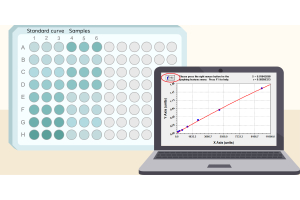
For routine ELISA data processing, Boster's ELISA Data Analysis Tool can help researchers analyze raw OD values and review calculated results.
This can be useful when checking whether diluted samples fall within the reliable range of the assay and whether calculated concentrations remain consistent after dilution correction.
When contacting technical support about ELISA sample compatibility, include as much detail as possible.
Useful information includes:
A clear inquiry may look like this:
I am interested in using this ELISA kit with mouse tissue homogenate. The samples will be prepared in PBS with protease inhibitors and stored at -80°C. Could you confirm whether tissue homogenate has been validated for this kit? If not, do you recommend spike recovery, dilution linearity testing, or an endogenous biotin background check before using these samples?
Providing these details helps technical support determine whether the sample type has been validated, whether any preparation changes are recommended, and whether additional matrix validation is needed.
If your project involves an unusual matrix, difficult biomarker, poor spike recovery, nonlinear dilution, high background, or possible endogenous biotin interference, Boster's ELISA Technical Resource Center and ELISA service pages can help you decide whether to use a catalog kit, adjust sample preparation, outsource testing, or consider custom assay development.
Possibly. A sample type that is not listed may still work, but it should be treated as non-validated. Researchers should perform preliminary validation, such as spike recovery, dilution linearity, background testing, and matrix-specific controls before relying on the results.
Not always. Plasma contains anticoagulants such as EDTA, heparin, or citrate, and these may affect some assays. Always check whether the datasheet specifies serum, plasma, or a particular plasma type.
Some ELISA kits are validated for tissue homogenate, while others are not. If tissue homogenate is not listed as a validated sample type, researchers should optimize the extraction method and perform matrix validation before interpreting the results. For kits using a biotin-avidin, biotin-streptavidin, or ABC-based detection system, researchers should also consider whether endogenous biotin in tissue homogenates may contribute to background signal.
Yes. Cell lysates may contain detergents, salts, protease inhibitors, reducing agents, or other buffer components that affect antibody binding or enzyme reaction. Use the recommended lysis buffer when available.
Some kits support saliva or urine, but these matrices can be variable and may contain interfering substances. If saliva or urine is not listed on the datasheet, spike recovery and dilution linearity testing are recommended.
Common tests include spike recovery, dilution linearity, and background control testing. In many workflows, spike recovery and dilution linearity can be evaluated together by testing unspiked, spiked, and control groups across serial dilutions.
If the analyte concentration is too low, researchers may need a more sensitive kit, a different sample preparation method, sample concentration, or a different sample type. Running a pilot test before using valuable samples is recommended.
After running these checks, researchers can use an ELISA Data Analysis Tool to review standard curve fitting, OD values, blank correction, and calculated concentrations.
ELISA sample compatibility depends on more than the name of the sample type. It depends on the specific kit, target analyte, biological matrix, sample preparation method, assay detection system, and validation data.
Before using an ELISA kit with serum, plasma, tissue homogenate, cell lysate, CSF, saliva, urine, or another sample type, start with the kit datasheet. If your sample type is listed, follow the recommended protocol. If your sample type is not listed, the kit may still be usable, but preliminary validation is recommended.
Spike recovery, dilution linearity, background control testing, and matrix-specific checks such as endogenous biotin evaluation can help determine whether a non-validated sample matrix is suitable for reliable ELISA quantification.
Need help checking ELISA sample compatibility?
Browse Boster Bio ELISA Kits, review the product datasheet, or contact technical support with your kit catalog number, species, sample type, and preparation method. For complex matrices, limited samples, or custom assay needs, Boster also offers ELISA Testing Service and ELISA Assay Development Services.