This website uses cookies to ensure you get the best experience on our website.


- Table of Contents
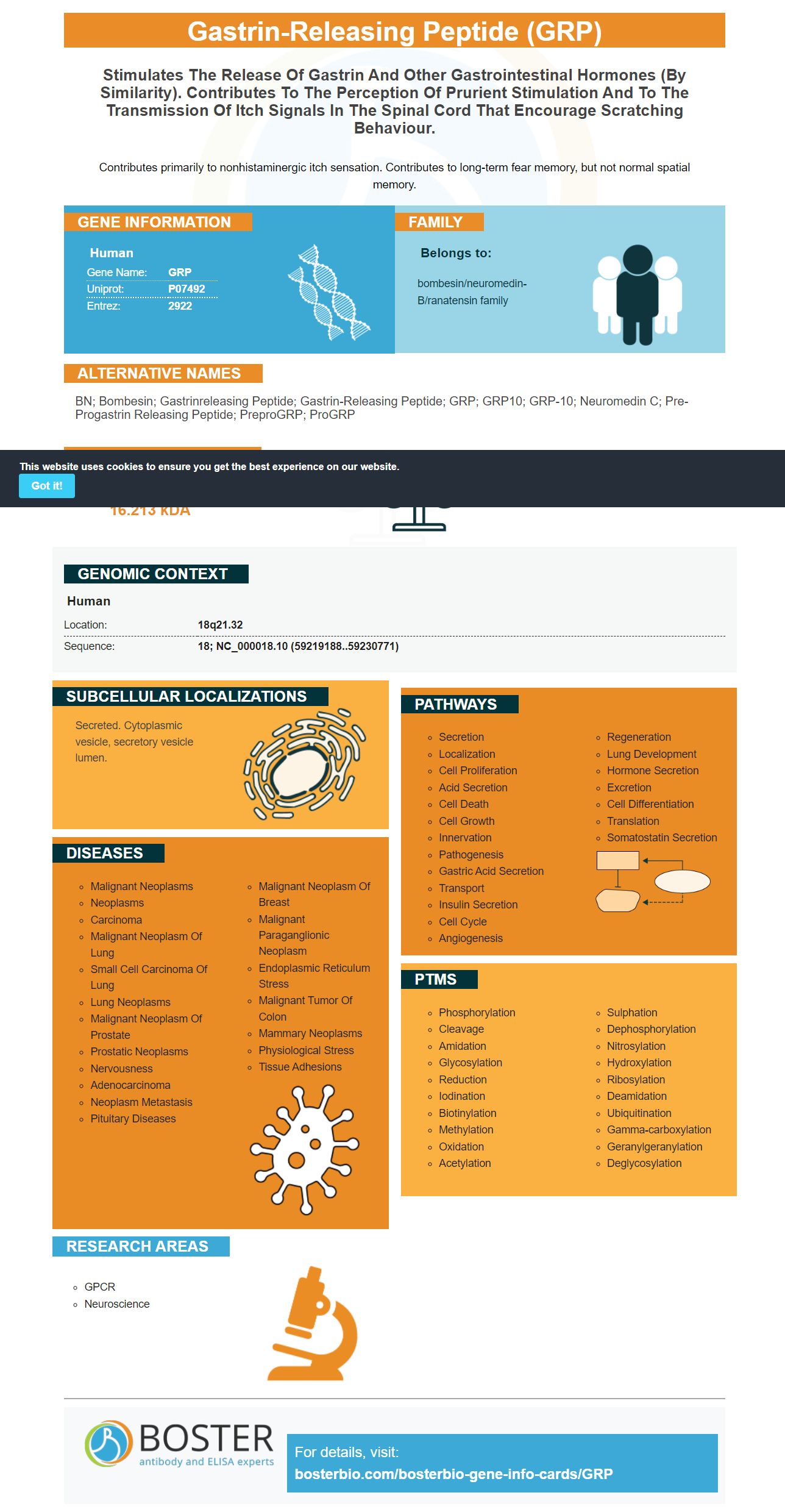
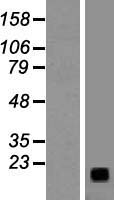
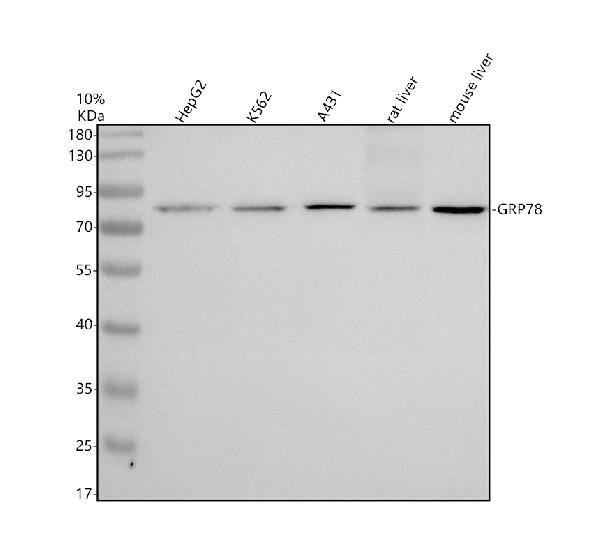
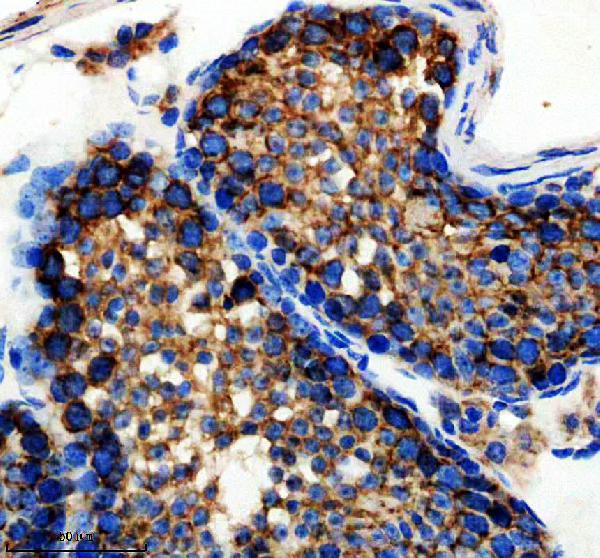

Facts about Gastrin-releasing peptide.
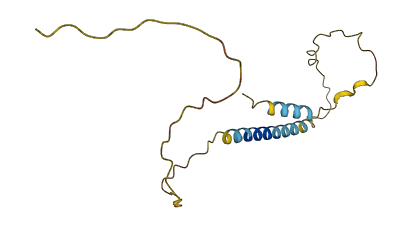
Contributes primarily to nonhistaminergic itch sensation. Contributes to long-term fear memory, but not normal spatial memory.
| Human | |
|---|---|
| Gene Name: | GRP |
| Uniprot: | P07492 |
| Entrez: | 2922 |
| Belongs to: |
|---|
| bombesin/neuromedin-B/ranatensin family |

BN; Bombesin; Gastrinreleasing Peptide; Gastrin-releasing Peptide; GRP; GRP10; GRP-10; neuromedin C; pre-progastrin releasing peptide; preproGRP; proGRP
Mass (kDA):
16.213 kDA

| Human | |
|---|---|
| Location: | 18q21.32 |
| Sequence: | 18; NC_000018.10 (59219188..59230771) |
Secreted. Cytoplasmic vesicle, secretory vesicle lumen.




PMID: 3001723 by Spindel E.R., et al. Two prohormones for gastrin-releasing peptide are encoded by two mRNAs differing by 19 nucleotides.
PMID: 3211139 by Lebacq-Verheyden A.-M., et al. Posttranslational processing of endogenous and of baculovirus- expressed human gastrin-releasing peptide precursor.
*More publications can be found for each product on its corresponding product page