This website uses cookies to ensure you get the best experience on our website.


- Table of Contents
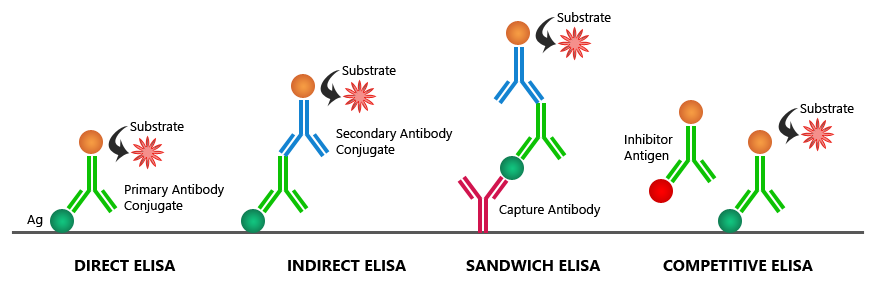
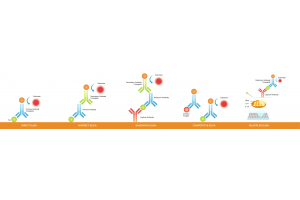
Are you familiar with the multiple methods you could use to perform an ELISA, including the wide range of commercially available elisa kits designed for different targets and sensitivity requirements? Among the standard assay formats illustrated below, where differences in both capture and detection are in concern, it is important to differentiate between the particular strategies that exist specifically for the detection step—especially in advanced applications like Multiplex Assay Services and the use of multiplex ELISA kits, where multiple analytes are measured simultaneously, alongside the use of quick elisa kits to support faster and more efficient assay workflows. The performance of these assays also depends heavily on the selection of appropriate elisa antibody pairs, which help ensure accurate target capture and detection. It is a critical distinction shared across many assay services involving protein quantification. However an antigen is captured to the plate (by direct adsorption to the surface or through a pre-coated "capture" antibody, as in a sandwich ELISA), it is the detection step (as either direct or indirect detection) that largely determines the sensitivity of an ELISA. Additional considerations on experimental setup and sensitivity optimization are further discussed in the context of this ELISA Testing Service framework. Similar attention to detection parameters is also central to understanding how to optimize Western blot performance across varying experimental conditions.
Different ELISA formats are designed to address specific experimental needs, including analyte concentration, sample complexity, required sensitivity, and throughput requirements. Understanding how each format works can help researchers choose the most suitable assay for reliable protein detection and quantification.
ELISA sensitivity and specificity are influenced by several experimental variables, including antibody affinity, antigen abundance, sample quality, incubation conditions, and detection strategy. The detection step often has the greatest impact on assay sensitivity, particularly when comparing direct and indirect detection approaches.
Factors such as background noise, nonspecific binding, washing efficiency, and signal amplification also contribute to overall assay performance. Optimizing these parameters is essential for generating reproducible and accurate quantitative data.
Capture methods determine how the target antigen is immobilized on the plate surface. In direct and indirect ELISA formats, antigens are typically adsorbed directly to the plate. In sandwich ELISA, a capture antibody is first coated onto the plate to selectively bind the target analyte from complex biological samples.
Detection methods differ based on whether labeled primary antibodies or enzyme-conjugated secondary antibodies are used. Direct detection offers simplicity and faster workflows, while indirect detection can significantly improve signal amplification and sensitivity.
The optimal ELISA format depends on the type of analyte, sample purity, expected concentration range, and desired sensitivity. Sandwich ELISA is commonly preferred for cytokines and low-abundance proteins in complex samples, while competitive ELISA is often used for small molecules and analytes with limited epitopes. Researchers should also consider assay turnaround time, reagent availability, multiplexing requirements, and compatibility with downstream analysis when selecting an ELISA workflow.
Choosing the appropriate ELISA type is critical for balancing sensitivity, specificity, assay complexity, and experimental throughput.
Direct ELISA involves coating the target antigen directly onto the plate and detecting it using an enzyme-conjugated primary antibody. This format offers a relatively simple and rapid workflow with fewer incubation steps. Direct ELISA is commonly used when antigen purity is high and rapid screening is required. However, because it lacks signal amplification from secondary antibodies, sensitivity may be lower compared to indirect or sandwich ELISA formats.
Indirect ELISA uses an unlabeled primary antibody followed by an enzyme-conjugated secondary antibody for signal detection. This approach increases assay sensitivity through signal amplification and offers greater flexibility because a single labeled secondary antibody can detect multiple primary antibodies. Indirect ELISA is widely used in antibody detection, serological studies, and applications where high sensitivity is needed without significantly increasing assay complexity.
Compared to the other ELISA formats, the sandwich ELISA has the following advantages:
The diagram below shows the schematics for Boster’s sandwich ELISA assay. Browse our ready-to-use sandwich ELISA kits and find your kit of interest from a selection of 1500+ ELISA kits!

Boster’s sandwich ELISA assay
Competitive ELISA is particularly useful for detecting small molecules, peptides, hormones, and analytes with limited antibody binding sites. In this format, target antigens compete with labeled antigens for antibody binding.
Because signal intensity is inversely proportional to analyte concentration, competitive ELISA requires careful calibration and data interpretation. Despite its complexity, this method is highly effective for measuring low-molecular-weight compounds and low-concentration analytes.
A standardized ELISA workflow helps improve assay reproducibility, reduce variability, and optimize quantitative accuracy across experiments.
Proper plate coating ensures efficient antigen or capture antibody immobilization. Blocking steps help minimize nonspecific binding and reduce background signal by covering unoccupied binding sites on the plate surface. Selection of appropriate blocking buffers and coating conditions can significantly affect assay sensitivity and signal-to-noise ratio.
Primary and secondary antibody concentrations should be optimized to balance signal intensity with background reduction. Antibody affinity, incubation time, and washing conditions all influence assay performance. Indirect detection methods often improve sensitivity because multiple secondary antibodies can bind to a single primary antibody, increasing signal amplification.
Sample preparation and incubation conditions play an important role in maintaining analyte stability and improving assay consistency. Careful handling of biological samples can help prevent degradation, contamination, and signal variability. Signal detection methods vary depending on the enzyme-substrate system used, including chromogenic, chemiluminescent, and fluorescent detection approaches.
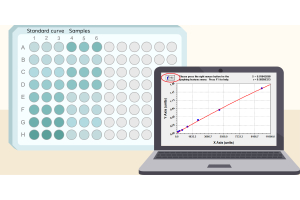
Reliable ELISA quantification depends on proper standard curve generation, replicate consistency, and statistical analysis. Researchers should evaluate assay linearity, detection limits, and control performance before interpreting final results. Careful normalization and validation help improve confidence in quantitative comparisons between experimental groups.
| Indirect | Direct | Sandwich | Competitive | |
| Capture Ab Coating | X | X | √ | X |
| Antigen Coating | √ | √ | X | √ |
| Blocking | √ | √ | √ | √ |
| Sample (Antigen) Incubation | X | X | √ | √ |
| Primary Ab Incubation | √ | √ | √ | √ |
| Secondary Ab Incubation | √ | X | √ | √ |
| Substrate Prep | √ | √ | √ | √ |
| Signal Detection | √ | √ | √ | √ |
| Data Analysis | √ | √ | √ | √ |
Boster Bio provides a broad selection of ELISA kits designed to support reliable biomarker detection across research, translational, and preclinical applications.
Boster Bio ELISA kits are developed to support sensitive and reproducible protein quantification while minimizing background interference and nonspecific binding.
Researchers can access a large portfolio of ELISA kits covering cytokines, growth factors, biomarkers, and disease-related targets across multiple species and applications.
Boster Bio has supported life science researchers for more than two decades with validated antibodies, immunoassays, and technical resources designed to improve experimental success.
For more free ELISA technical resources, click the button below!
View ELISA Resources*Note to educators: You are permitted to share Boster Bio's resources and PDFs on your class websites and lab websites. Please make sure to cite or link to the origin.
SKU: EK0525 Reactivity: Human Applications: ELISA
SKU: EK0397 Reactivity: Human Applications: ELISA
SKU: EK0465 Reactivity: Human Applications: ELISA
High-sensitivity ELISA kit designed for quantitative detection of myeloperoxidase in human samples for inflammation and immune response studies.
Optimized for accurate quantification of IL-6 in serum, plasma, cell culture supernatants, and other biological samples.
Designed for sensitive measurement of granulocyte colony-stimulating factor in research applications involving hematopoiesis and immune regulation.
Researchers often require different ELISA strategies depending on sample type, analyte abundance, and experimental goals. Boster Bio provides technical resources and assay support to help scientists identify the most suitable ELISA solution for their research.
Use Boster Bio’s search tools to quickly locate ELISA kits, antibodies, and assay resources based on target proteins, applications, and species reactivity.
Contact Boster Bio’s technical support team for assistance with ELISA troubleshooting, assay optimization, kit selection, and experimental planning.
Explore additional ELISA guides, troubleshooting resources, and immunoassay optimization articles to improve experimental workflows and assay performance.


| SKU | EK0525 |
|---|---|
| Reactivity | Human |
| Applications | ELISA |

| SKU | EK0397 |
|---|---|
| Reactivity | Human |
| Applications | ELISA |

| SKU | EK0465 |
|---|---|
| Reactivity | Human |
| Applications | ELISA |

| SKU | EK0850 |
|---|---|
| Reactivity | Human |
| Applications | ELISA |

| SKU | EK0410 |
|---|---|
| Reactivity | Human |
| Applications | ELISA |

| SKU | EK0360 |
|---|---|
| Reactivity | Human |
| Applications | ELISA |