Boster Bio Life Science Blog

  1. What Makes a Good Positive Control Tissue for IHC?

    Not all IHC positive controls are equally informative. Learn how to choose suitable control tissues, assess staining reliability, and interpret negative results with confidence.
    Read more
  2. Good Standard Curve, High ELISA Duplicate CV?

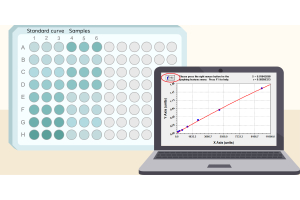
    High ELISA duplicate CV despite a good standard curve? Learn how to identify sources of variability, improve precision, and determine when to repeat samples.
    Read more
  3. How to Optimize Western Blot Transfer for Small and Large Proteins

    Learn how to adjust Western blot transfer conditions to prevent small protein loss, improve large protein transfer, and identify incomplete transfer.
    Read more
  4. Why High Analyte Concentrations Can Produce Low ELISA Signals

    Learn how the high-dose hook effect can cause falsely low ELISA results, how to identify it through serial dilution, and how to distinguish it from signal saturation and other assay interference.
    Read more
  5. Western Blot Smiling Bands: Causes and Fixes for Curved Bands

    Seeing western blot smiling bands, with edges higher than the center? Learn how to identify possible causes, troubleshoot electrophoresis conditions, and improve band consistency.
    Read more
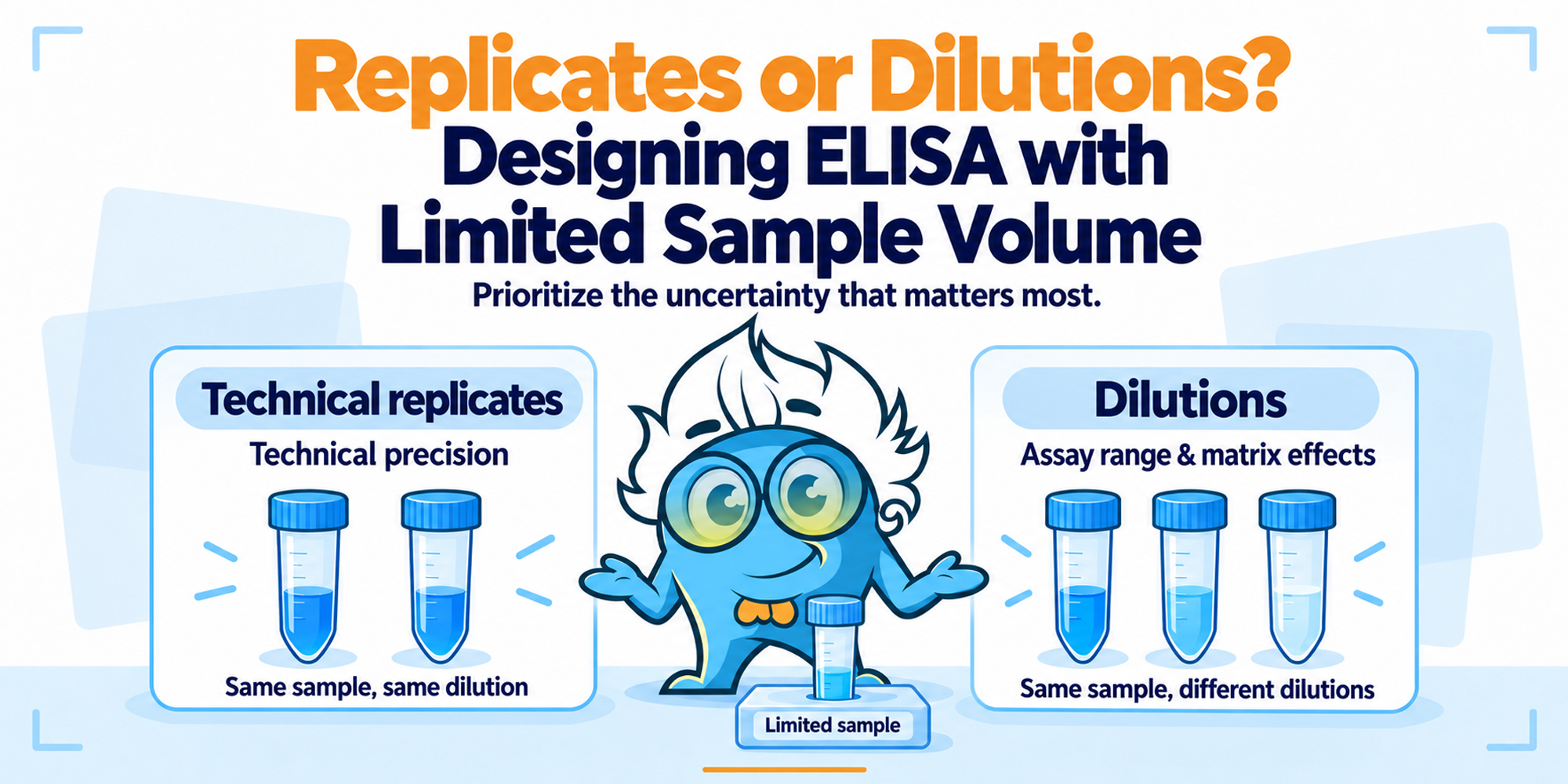
  6. Replicates or Dilutions? Designing ELISA with Limited Sample Volume

    Working with limited ELISA sample volume? Learn how to decide between duplicate wells and multiple dilutions, account for dead volume and matrix effects, and design a practical workflow that makes the most of scarce samples such as CSF or animal serum.
    Read more
    Replicates or Dilutions? Designing ELISA with Limited Sample Volume
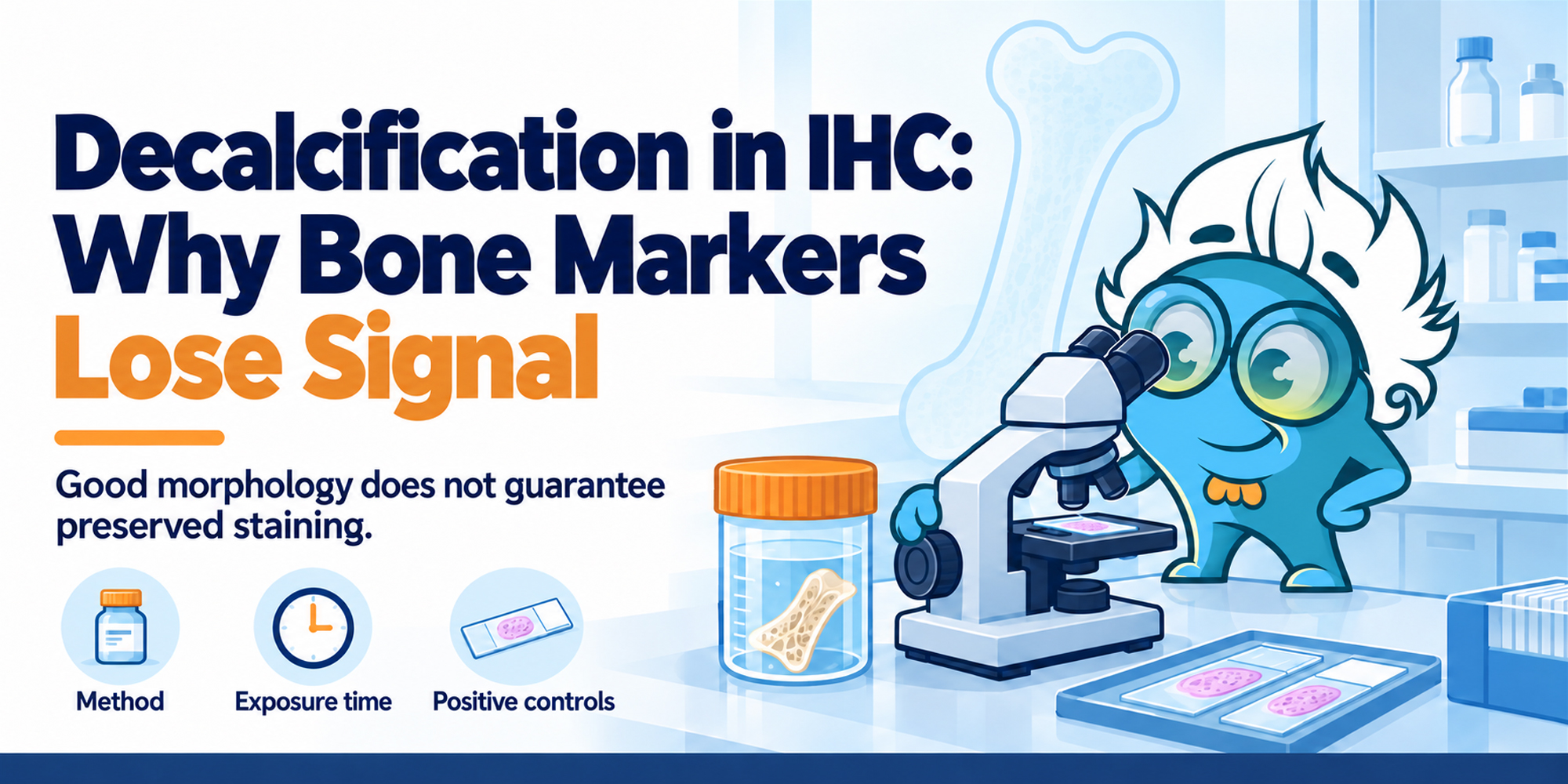
  7. Decalcification in IHC: Why Bone Markers Lose Signal

    Bone tissue can look well preserved while IHC staining becomes unexpectedly weak. Learn how decalcification, fixation, and antigen retrieval can affect antigen preservation—and how to tell whether the problem comes from tissue processing or the antibody.
    Read more
    Decalcification in IHC: Why Bone Markers Lose Signal
  8. ELISA False Positives from Heterophilic Antibodies

    Heterophilic antibodies can create false-positive ELISA signals by interacting with assay antibodies rather than the intended target. Learn how to recognize suspicious results and use dilution, blocking, and alternative antibody pairs to confirm interference.
    Read more
    ELISA False Positives from Heterophilic Antibodies
  9. First Well vs. Last Well: Does ELISA Pipetting Time Affect Your Results?

    A 10-minute gap between the first and last well does not always mean your ELISA plate is biased. Learn when pipetting order creates true timing drift, why substrate development is especially sensitive, and how to tell whether a plate should be repeated.
    Read more
  10. Can Western Blot Results from Different Gels Be Compared?

    Can western blot results from different gels or different experimental days be compared? This article explains why raw band intensity values should not be directly compared, and how loading controls, bridge samples, and appropriate normalization strategies can help researchers evaluate relative protein expression changes more reliably.
    Read more

    Can Western Blot Results from Different Gels Be Compared?