This website uses cookies to ensure you get the best experience on our website.


- Table of Contents
Research grants are a crucial component of funding provided by various organizations to support research projects across various fields, including science, engineering, social sciences, and humanities. These grants can be categorized into different types based on the criteria used to award them, the duration of the grant, the research focus, the eligibility of the applicant, and the funding amount. Understanding the different types of research grants available can help researchers identify the appropriate funding source for their research project.
For scientists and researchers, there are several types of research grants available, each with its own purpose and eligibility criteria. In this blog, we will discuss the 8 most common types of research grants.
Project grants are the most common type of research grants. They are awarded to individual researchers or research teams to support a specific research project, and are typically for a set amount of time and funding. The funds can be used for salaries, equipment, supplies, travel, and other expenses related to the project. Examples of organizations that provide project grants include the National Institutes of Health (NIH), National Science Foundation (NSF), and the Wellcome Trust.
Program grants are awarded to institutions or organizations to support a broader research program, center, or initiative. These grants fund multiple research projects that are focused on a common theme or research question. Program grants often require a more comprehensive proposal and may be more competitive than project grants. Examples of organizations that provide program grants include the American Cancer Society (ACS), Bill and Melinda Gates Foundation, and the Robert Wood Johnson Foundation.
Fellowship grants provide funding for individual researchers to support their training or career development. These grants may be designed for specific career stages, such as postdoctoral fellowships or early career researcher awards, and often provide stipends for living expenses, tuition, and research-related expenses. Fellowship grants can be awarded to postdoctoral researchers or graduate students. Examples of organizations that provide fellowship grants include the NIH, the National Science Foundation (NSF), the Howard Hughes Medical Institute (HHMI), and the American Association for Cancer Research (AACR).
Travel grants provide funding for researchers to conduct research in a different location, or attend conferences, workshops, or meetings related to their research field. These grants can cover travel expenses, registration fees, and accommodation costs. Travel grants are usually smaller in amount than other types of research grants. Examples of organizations that provide travel grants include the Association for Computing Machinery (ACM), the Society for Neuroscience (SfN), the American Society for Microbiology (ASM), and the American Physiological Society (APS).
Equipment grants provide funding for researchers to purchase equipment necessary for their research project. These grants can be awarded to individual researchers or institutions. Equipment grants are often more competitive than other types of research grants, as they require a detailed justification for the equipment purchase. Examples of organizations that provide equipment grants include the NSF, the National Cancer Institute (NCI), and the American Chemical Society (ACS).
Seed Grants are awarded to support the early stages of a research project, often with the goal of securing additional funding in the future. Examples of organizations that provide seed grants include the NSF, the ACS, and the American Heart Association (AHA), and the American Diabetes Association (ADA).
Collaborative Grants are awarded to support research collaborations between two or more institutions or researchers. Examples of organizations that provide collaborative grants include the NIH, Wellcome Trust, Cancer Research UK, the European Research Council (ERC), and the European Commission’s Horizon Europe program.
Industry-sponsored research grants are designed to support research projects that are sponsored by private companies or corporations. These grants typically support research projects that are of mutual interest to the company and the research institution or researcher. Examples of organizations that provide industry-sponsored grants include Pfizer, Novartis, Merck & Co., Johnson & Johnson, AstraZeneca, GlaxoSmithKline (GSK), Sanofi, and Eli Lilly and Company.
Research grants come in many types and sizes, each with its own specific criteria and funding amount. Researchers can apply for project grants to fund a specific research project, program grants to support a broader research program, fellowship grants for career development, travel grants for conference attendance, and several other grants for varying purposes.
Knowing the different types of research grants available can help researchers identify the most appropriate funding opportunities f...

We're delighted to bring you another issue of our Research Spotlight newsletter, showcasing the most recent papers our customers have published. These studies widen biological understanding and pave pathways for innovative therapies.
This month, we delve into a broad spectrum of biomedical research studies. We highlight research examining the intricate roles of the PD-L1/PD-1 pathway in neuroscience and the use of 3D bioprinting for biomimetic hydrogel scaffolds. Scientists demonstrate...

Welcome to the June issue of Research Spotlight! We are happy to feature 10 selected publications from scientists whom Boster has served.
Recent neurological research has uncovered the impact of glioblastoma on human neural circuits, providing insights into decreased survival. In oncology, researchers revealed the role of hepatic stellate cell stearoyl co-A desaturase in promoting liver tumorigenesis through the leukotriene B4 receptor 2 - β-catenin cascade.
Exciting advancements...

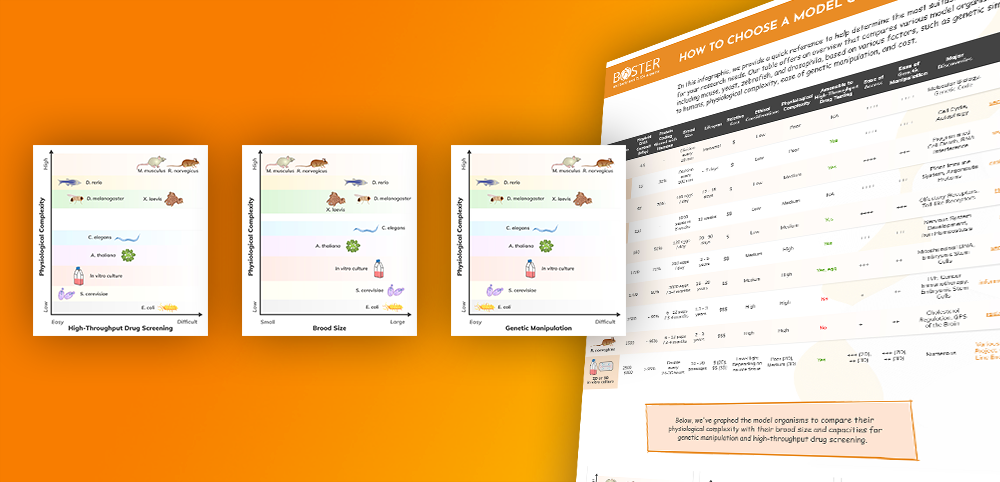
Download and share our “How to Choose a Model Organism” infographic! We offer an overview of model organisms in research to help you determine which one is most compatible with your research goals.
In the infographic, you will see a comparison of various model organisms, including mouse, yeast, zebrafish, dro...
We're delighted to present this month's research roundup, featuring studies from scientists we have served.
In this issue, dive into innovative cancer immunotherapy techniques using lipid rewiring nanoparticles to revitalize tumor-associated dendritic cells, uncover new mechanisms of antibiotic resistance in S. aureus, explore the potential of gut microbial b-galactosidase for alleviating liver damage, and examine the role of matrix stiffness in determining osteoclast fate...

For our April issue of Research Spotlight, we’re happy to feature 10 recent publications from scientists whom Boster has served.
In one study, to prevent cardiac fibrosis after myocardial infarction (MI), researchers developed a reduced glutathione (GSH)-responsive nanoparticle platform for targeted drug delivery to activated cardiac fibroblasts (CFs) within the infarct area of a post-MI heart, which demonstrated higher therapeutic efficacy and lower systemic toxicity than systemic drug administration.
Another study investigated the osteo-immunomodulatory effects of bicalcium phosphate (BCP) ceramics coupled with micro-vibration stimulation (MVS). Our selected papers also include studies on bacterial outer membrane vesicles (OMVs) for intestinal homeostasis regulation, 3TC for protection against age-related cognitive dysfunction, and several more.
Scroll down to learn about exciting discoveries from top scientific journals!
Authors: Ji, X., Meng, Y., Wang, Q., Tong, T., Liu, Z., Lin, J., Li, B., Wei, Y…
Journal: ACS Nano
Upon myocardial infarction (MI), activated cardiac fibroblasts (CFs) begin to remodel the myocardium, leading to cardiac fibrosis and even heart failure. No therapeutic approaches are currently available to prevent the development of MI-induced pathological fibrosis. Most pharmacological trials fail from poor local drug activity...
Cited Boster Product(s): Anti-ACTA2/Alpha Smooth Muscle Actin Monoclonal Antibody (A01072)
Authors: Wang, X., Lin, X., Wang, L., Cao, Z., Zhang, M., Zhang, Y., Liu, R...
Journal: Science Advances
Outer membrane vesicles (OMVs) play vital roles in bacterial communication both intraspecifically and interspecifically. However, extracellular mechanisms of gut microbiota–derived OMVs in the intestine remain poorly understood. Here, we report that OMVs released from Akkermansia muciniphila are able to (i) restore disturbed...
Cited Boster Product(s): Mouse ACE2 ELISA Kit PicoKine® (EK1188)
Authors: Wu, J., Wang, M., Wu, Y., Liu, J., Zhi, W., Chen, X., Zhu, X., Zhang, X.
Journal: Advanced Functional Materials
The osteoimmunology has revealed that immune system plays an important role in maintaining bone metabolism and remodeling. As long-term physiological factor in bone, mechanical stimulation such as micro-vibration stimulation (MVS) exerts effects on regulating osteogenesis and immune response. In this study, the osteo-immunodulatory...
Cited Boster Product(s): RIPA Lysis Buffer (AR0105-100)

Authors: Wu, J., Bu, D., Wang, H., Shen, D., Chong, D., Zhang, T., Tao, W…
Journal: Nature Communications
The liver lipid metabolism of older individuals canbecome impaired and the circadian rhythm of genes involved in lipid metabolism is also disturbed. Although the link between metabolism and circadian rhythms is already recognized, how these processes are decoupled in liver during aging is still largely unknown...
Cited Boster Product(s): HRP Conjugated AffiniPure Goat Anti-Rabbit IgG (H+L) (BA1054); HRP Conjugated AffiniPure Goat Anti-Mouse IgG (H+L) (BA1050)

Authors: Wahl, D., Smith, M.E., McEntee, C.M., Cavalier, A.N., Osburn, S.C…
Journal: Aging Cell
Aging is the primary risk factor for most neurodegenerative diseases, including Alzheimer's disease. Major hallmarks of brain aging include neuroinflammation/immune activation and reduced neuronal health/function. These processes contribute to cognitive dysfunction (a key risk factor for Alzheimer's disease)...
Cited Boster Product(s): Multiplex ELISA Kit For Mouse Cytokine Panel 2 (4-Plex) (MEK1016)

Welcome to the March issue of Research Spotlight! This month, we present an array of research papers offering new insights for cutting-edge biomedical technologies.
One research study describes a novel nanostructure with magnetocaloric oscillation and catalytic effects for pyroptosis-triggered tumor immunotherapy. Another study investigates a brain-targeted peptide-functionalized chitosan nanoparticle for resveratrol delivery, showing promise in combating obesity-related Alzheimer's...

In our February issue of Research Spotlight, we feature 10 recent publications from scientists whom Boster has served.
This month, several studies highlight the potential of nanotechnology innovations such as EPC-secreted exosomes, NIR-responsive hollow germanium nanospheres, berberin-enriched PLGA nanoparticles, and nanofiber-based meshes for improving the therapeutic output of nanomedicines.
Scientists also investigated how different groups of bioactive compounds, such as polyamine, vimentin, and dietary genistein exhibit immunomodulatory effects on the molecular pathways involved in the immune response against various disease conditions. In addition, novel roles for components of the SP3/PAD4 and miR-139-5p/ECE1 pathways in disease progression are discussed.
Scroll down to learn more about the research studies!

This month, we highlight several research advancements in tissue engineering and regenerative medicine, including the novel role of a transiently activated epicardial progenitor cell to enhance cardiac repair, inhibition of AMPK-mediated fibro-adipogenic progenitors apoptosis for muscle regeneration, and inhibition of PTGFR and its downstream pathway for proliferative retinal disease management.
In addition, recent discoveries in cancer diagnosis and treatment are presented. Different approaches to enhance cancer cells' response to immunotherapy, such as combining PCIF1 inhibition with anti-PD-1 treatment, offer promising results for tumor growth suppression.
Scroll down to learn more about these research studies!
Authors: Xia, Y., Duca, S., Perder, B., Dündar, F., Zumbo, P., Qiu, M., Yao, J…
Journal: Nature Communications
The epicardium, a mesothelial cell tissue that encompasses vertebrate hearts, supports heart regeneration after injury through paracrine effects and as a source of multipotent progenitors. However, the progenitor state in the adult epicardium has yet to be defined. Through single-cell RNA-sequencing of isolated epicardial cells...
Cited Boster Product(s): Anti-Zebrafish Mef2 Antibody (DZ01398-1)
Authors: Zhao, Y., Lei, Y., Ning, H., Zhang, Y., Chen, G., Wang, C., Wan, Q…
Journal: EMBO Molecular Medicine
The pathological retinal angiogenesis often causes blindness. Current anti-angiogenic therapy for proliferative retinopathy targets the vascular endothelial growth factor (VEGF), but many patients do not radically benefit from this therapy. Herein, we report that circulating prostaglandin (PG) F2α metabolites were increased in type...
Cited Boster Product(s): Mouse CXCL1/Gro Alpha ELISA Kit PicoKine® (EK0723)

Authors: Wang, L., Wu, L., Zhu, Z., Zhang, Q., Li, W., Gonzalez, G. M…
Journal: The EMBO Journal
Adenosine N6-methylation (m6A) and N6,2′-O-dimethylation (m6Am) are regulatory modifications of eukaryotic mRNAs. m6Am formation is catalyzed by the methyl transferase phosphorylated CTD-interacting factor 1 (PCIF1); however, the pathophysiological functions of this RNA modification and PCIF1 in cancers are unclear...
Cited Boster Product(s): Mouse TGF-Beta 3 ELISA Kit PicoKine® (EK1104)

Authors: Liu, X., Zhao, L., Gao, Y., Chen, Y., Tian, Q., Son, J. S., Chae, S. A…
Journal: Journal of Cachexia, Sarcopenia and Muscle
Background: Following muscle injury, fibro-adipogenic progenitors (FAPs) are rapidly activated and undergo apoptosis at the resolution stage, which is required for proper muscle regeneration. When excessive FAPs remain, it contributes to fibrotic and fatty infiltration, impairing muscle recovery. Mechanisms controlling FAP apoptosis...
Cited Boster Product(s): Mouse TGF Beta 1 ELISA Kit PicoKine® (EK0515)

Authors: Wang, Z., Qin, X., Hu, D., Huang, J., Guo, E., Xiao, R., Li, W., Sun, C...
Journal: Cell Reports
Ovarian cancer (OC) remains a clinical challenge for its difficulty in early diagnosis and insensitivity to treatments. Gut microbiota modulate multiple carcinoma progression through immunoregulation. The relationship between OC and gut microbiota has not been fully characterized. We find that the feces of patients with OC demonstrate...
Cited Boster Product(s): Mouse IFN Gamma / IFNG / Interferon Gamma ELISA Kit PicoKine® (EK0375)
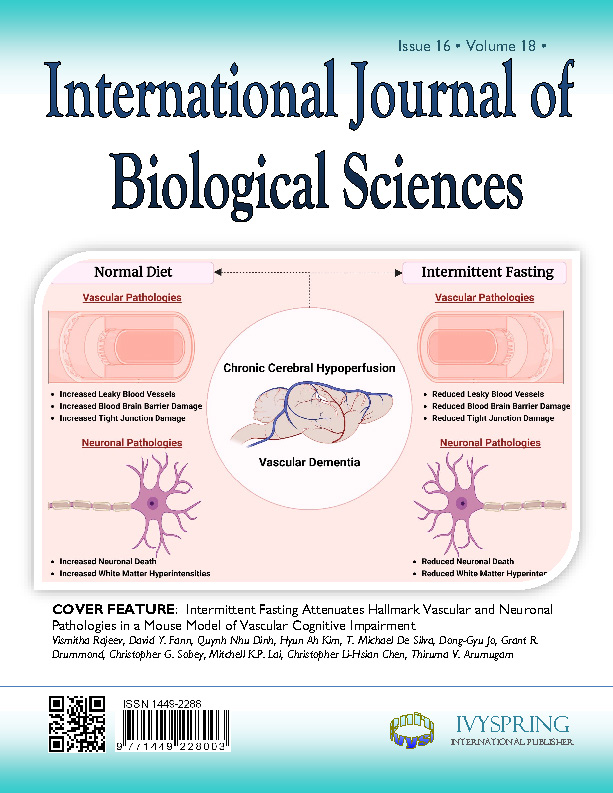
Authors: Zhao, D., Yuan, H., Fang, Y., Gao, J., Li, H., Li, M., Cong, H…
Journal: International Journal of Biological Sciences
Evidence has indicated that lysine methyltransferase 2B (KMT2B), a major H3K4 tri-methyltransferase (H3K4me3), contributes to the development of various cancers; however, its role in cervical cancer (CC) is unclear. In this study, increased KMT2B expression was observed in human CC specimens and significantly associated...
Cited Boster Product(s): Human EGF ELISA Kit PicoKine® (EK0325)
Authors: Isildar, B., Ozkan, S., Ercin, M., Oktayoglu, S. G., Oncul, M…
Journal: Inflammation and Regeneration
Type 1 diabetes (T1D) is a T-cell-mediated autoimmune disease characterized by the irreversible destruction of insulin-producing β-cells in pancreatic islets. Helper and cytotoxic T-cells and cytokine production, which is impaired by this process, take a synergetic role in β-cell destruction, and hyperglycemia develops due to insulin...
Cited Boster Product(s): Human IFN Gamma ELISA Kit PicoKine® (EK0373); Human IL-17/IL-17A ELISA Kit PicoKine® (EK0430); Human IL-4 ELISA Kit PicoKine® (EK0404); Human IL-10 ELISA Kit PicoKine® (EK0416)

Authors: Guo, X., Du, L., Ma, N., Zhang, P., Wang, Y., Han, Y., Huang, X…
Journal: Journal of Translational Medicine
Background: Radiation-induced lung injury (RILI) often occurs during clinical chest radiotherapy and acute irradiation from accidental nuclear leakage. This study explored the role of monophosphoryl lipid A (MPLA) in RILI. Materials and Methods: The entire thoracic cavity of C57BL/6N mice was irradiated at 20 Gy with or without...
Cited Boster Product(s): Mouse

Christmas is fast approaching and we’re delighted to present this year’s last issue of Research Spotlight, which features 10 selected publications from scientists whom Boster has served.
Recently, increasing attention has been focused on nanomaterials for therapeutic applications. Researchers demonstrated the immunomodulatory and spatiotemporal drug release effects of nanohydroxyapatite complexes, MSC-derived extracellular vesicles, antioxidant-constructed nanodrugs, Sr/Cu-borosilicate...