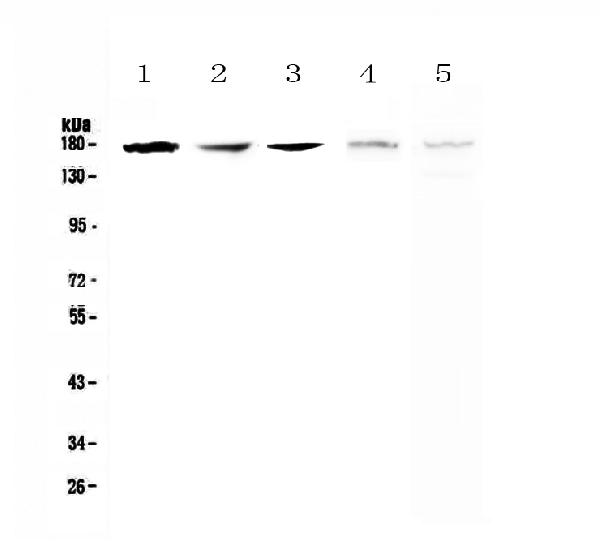
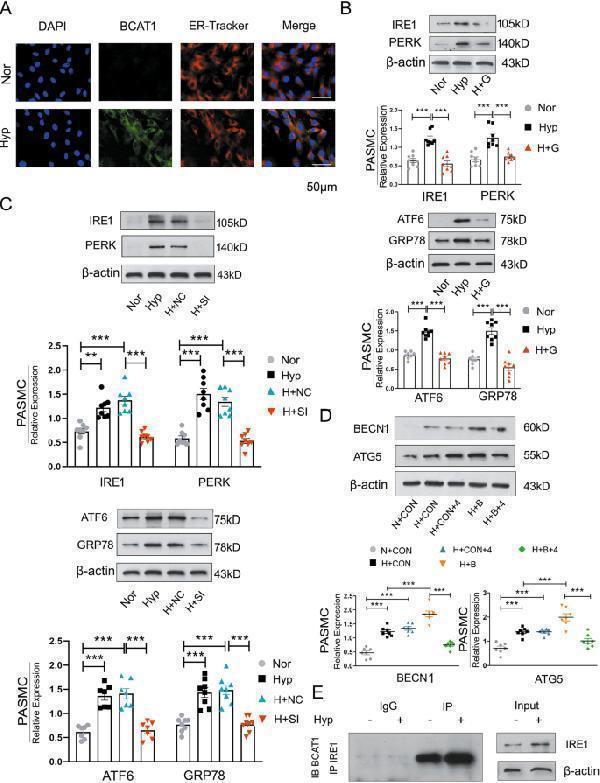
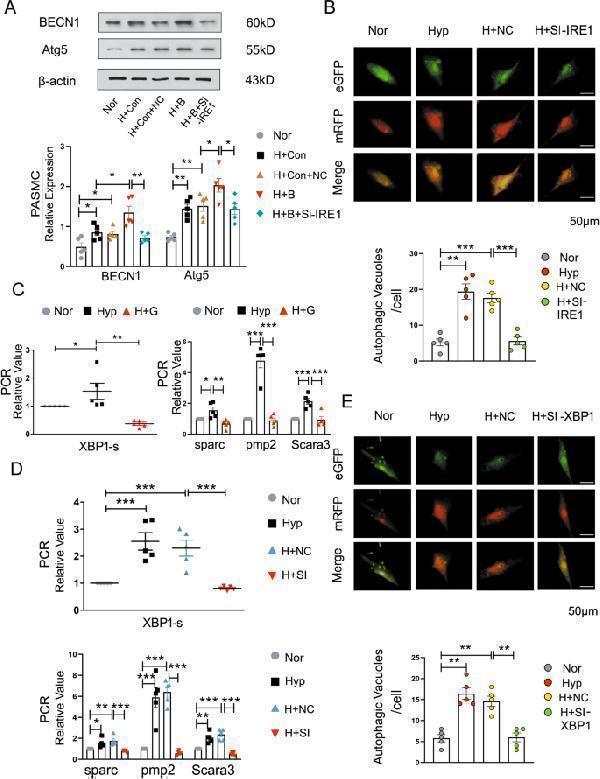
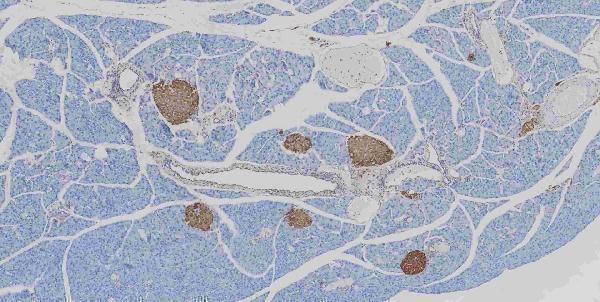
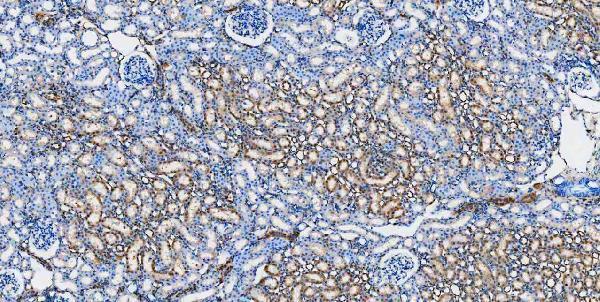
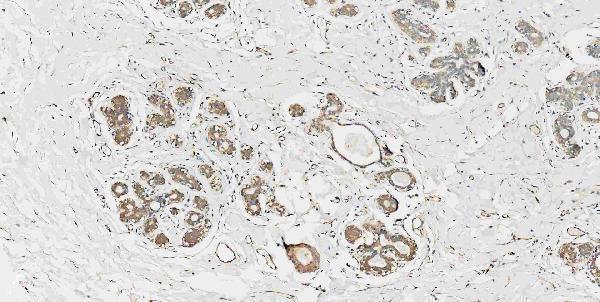
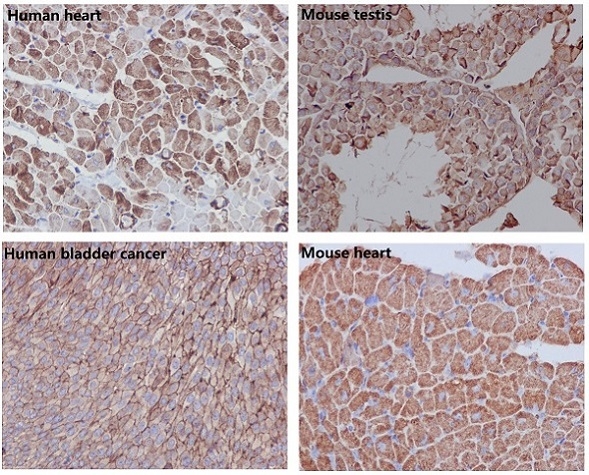
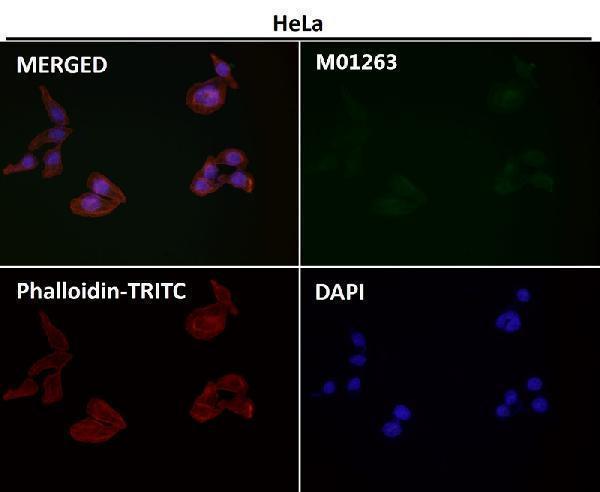
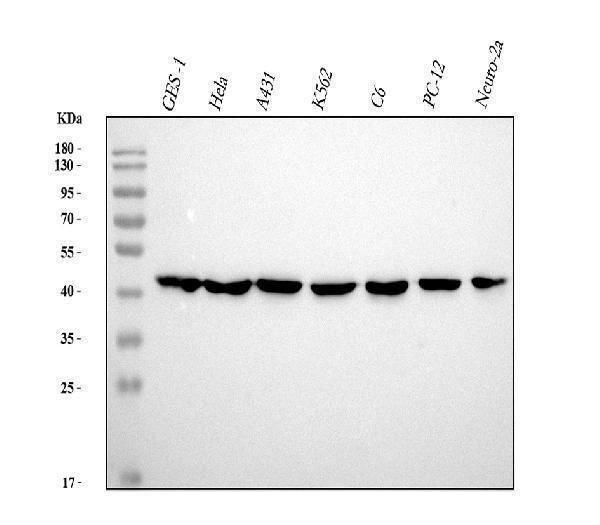
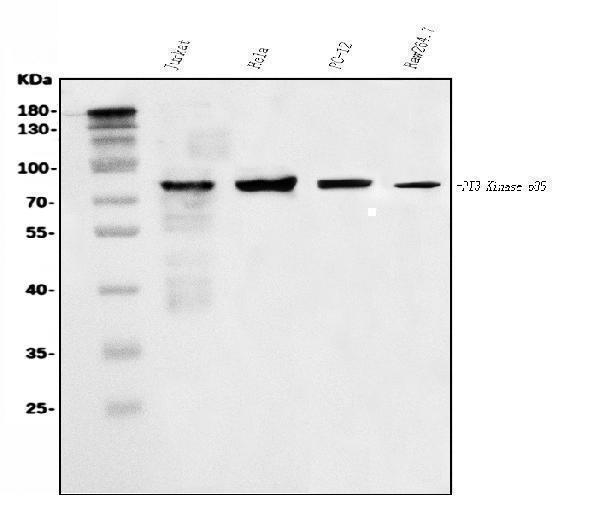
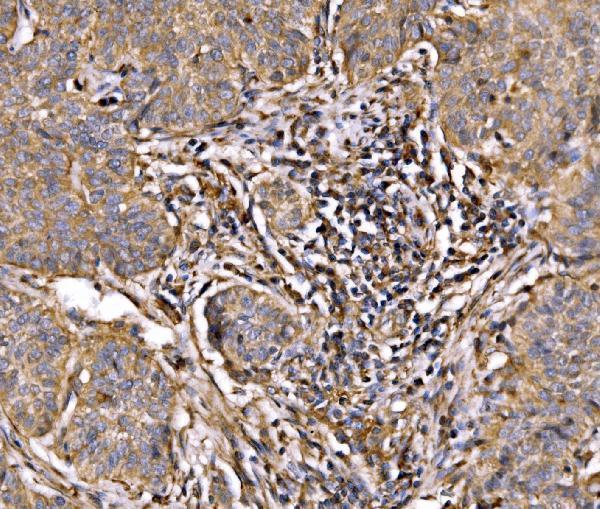
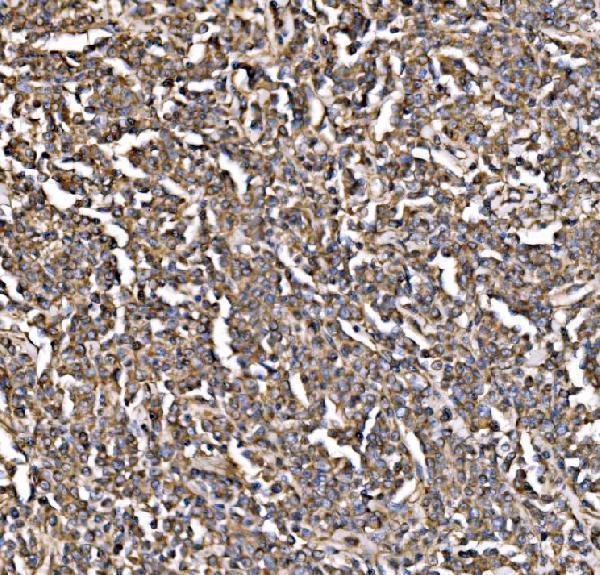
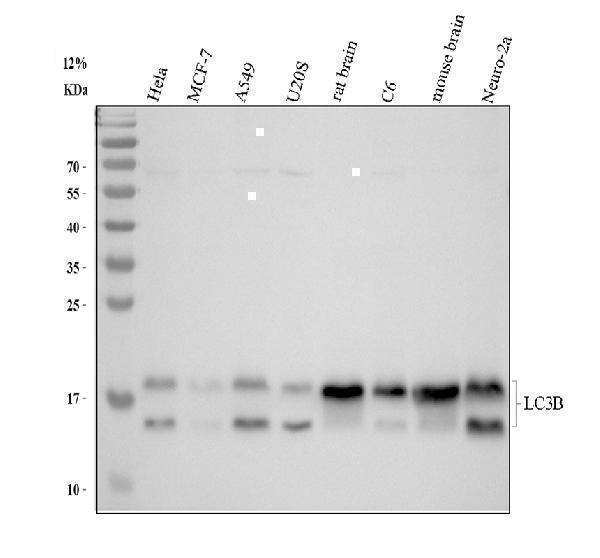
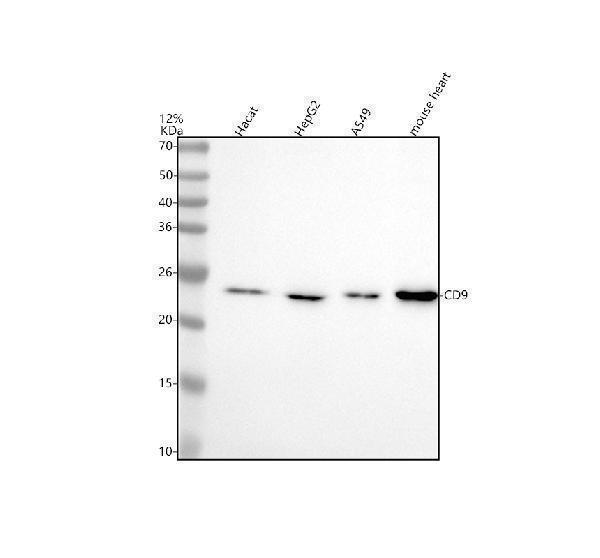
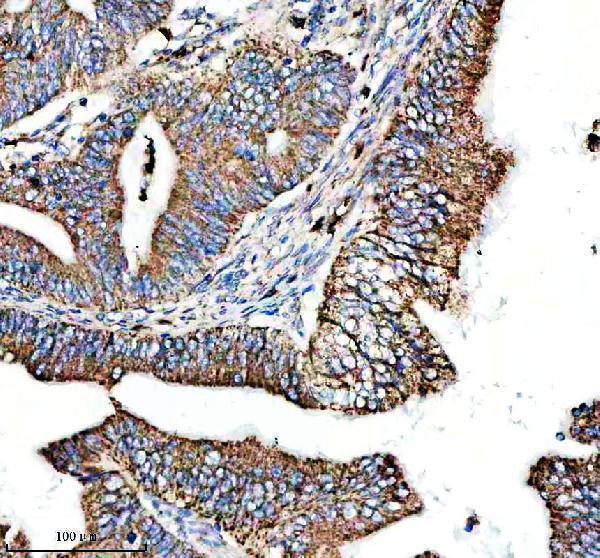
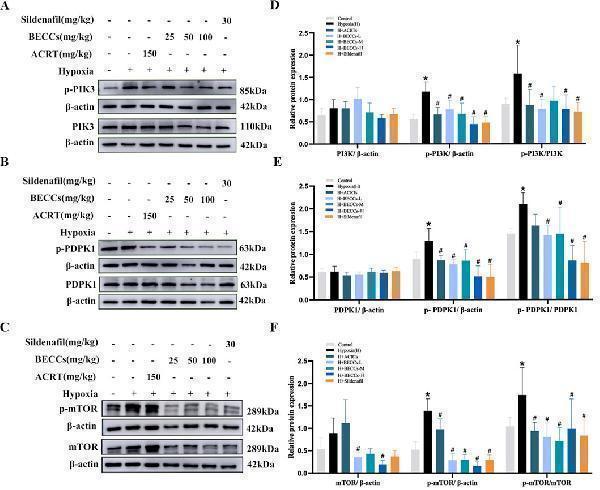
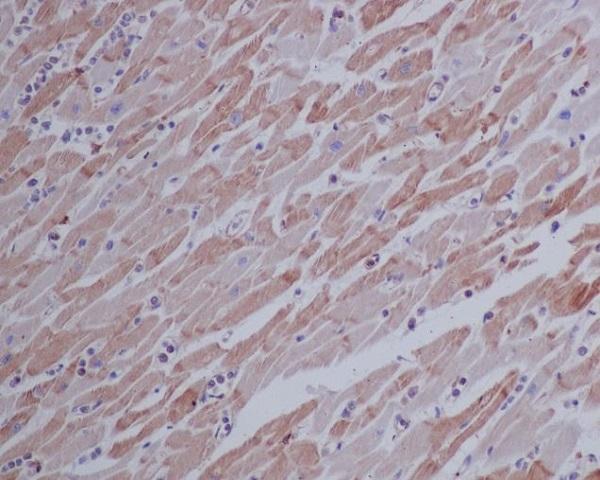
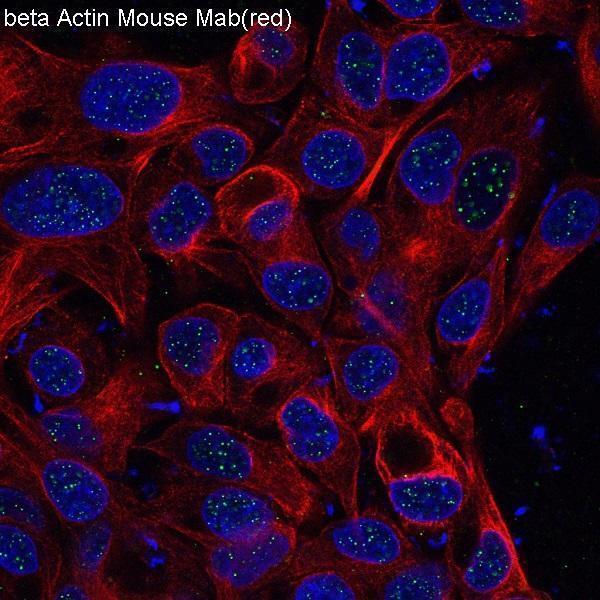
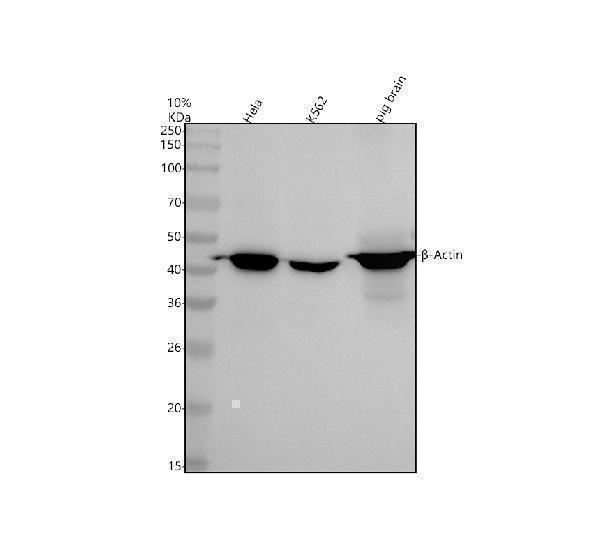
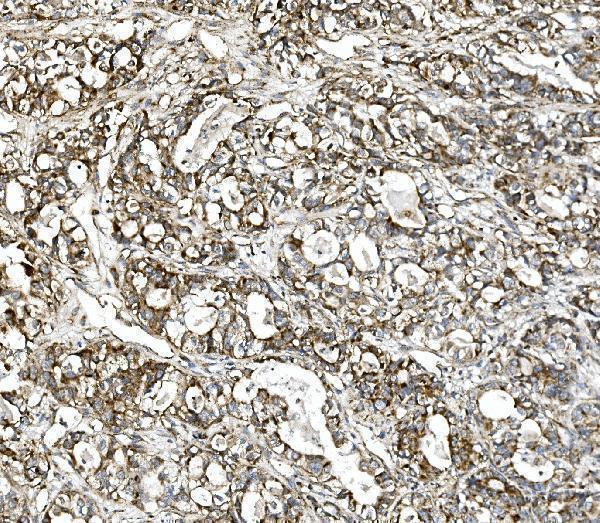
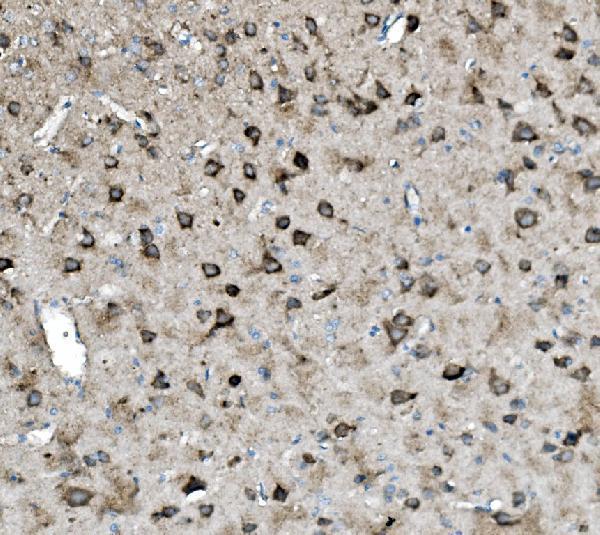
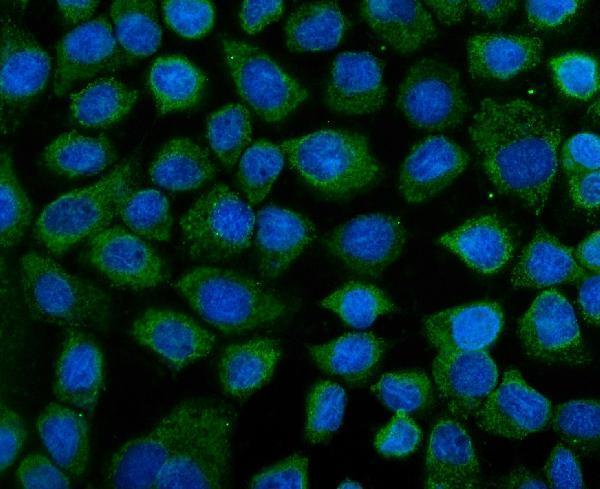
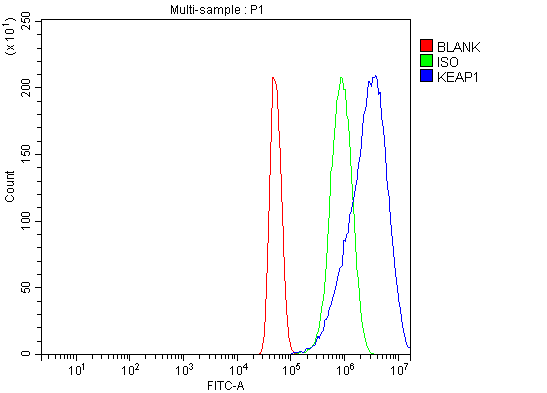
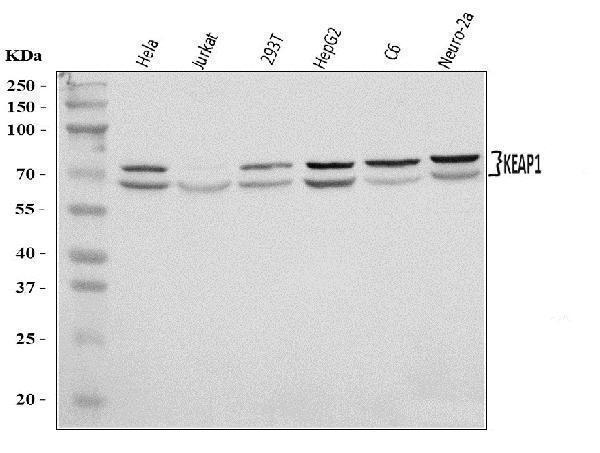
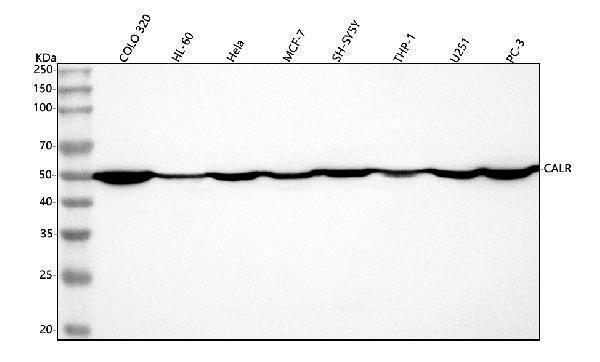
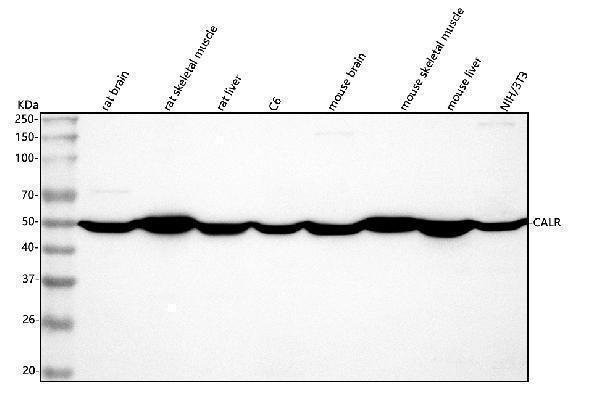
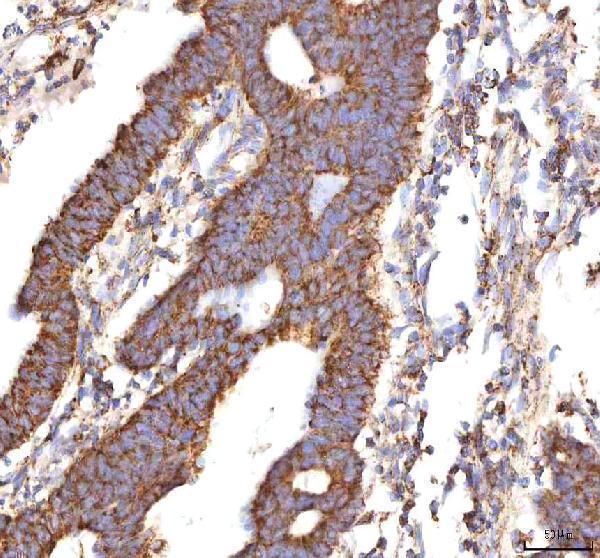
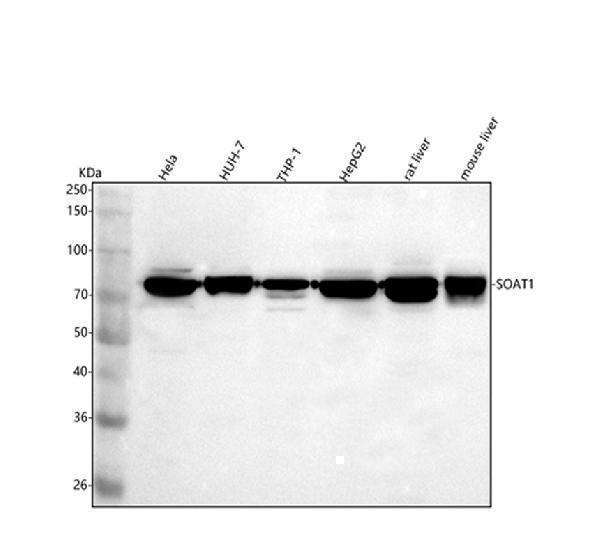
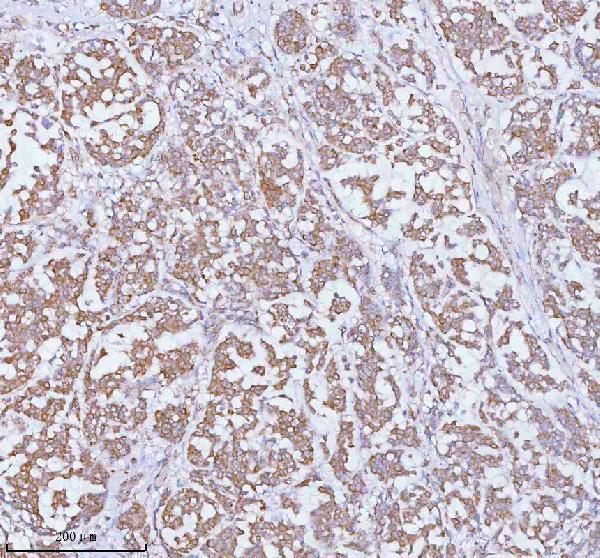
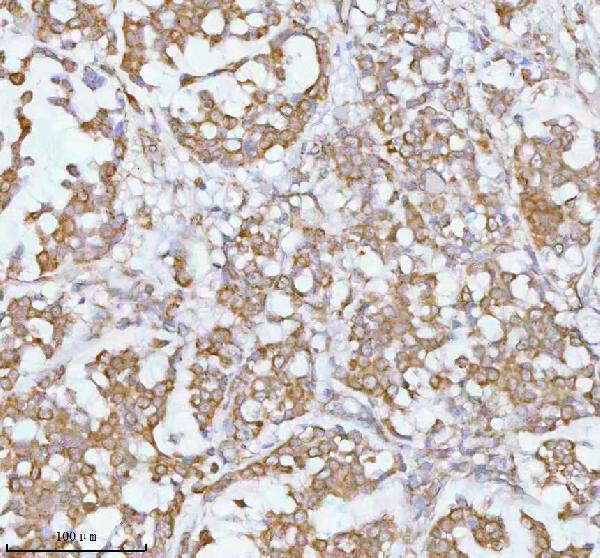
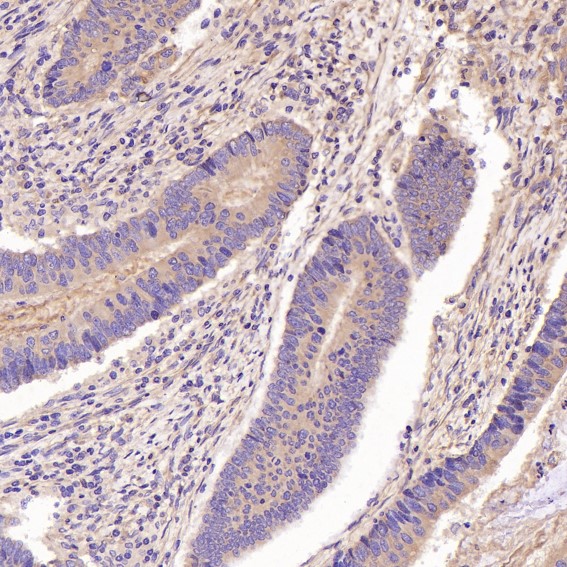
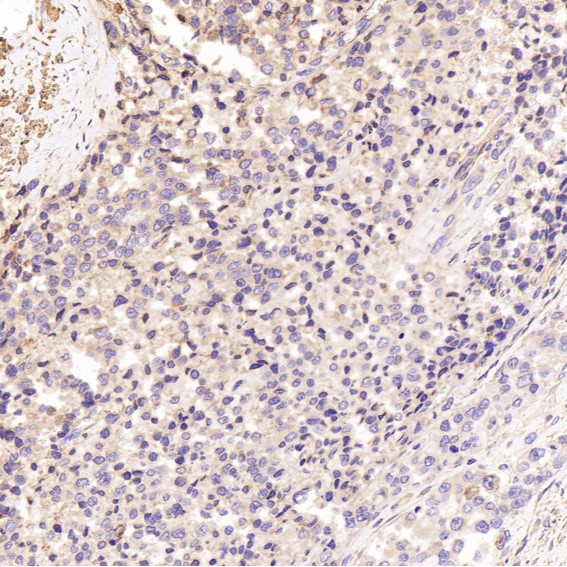
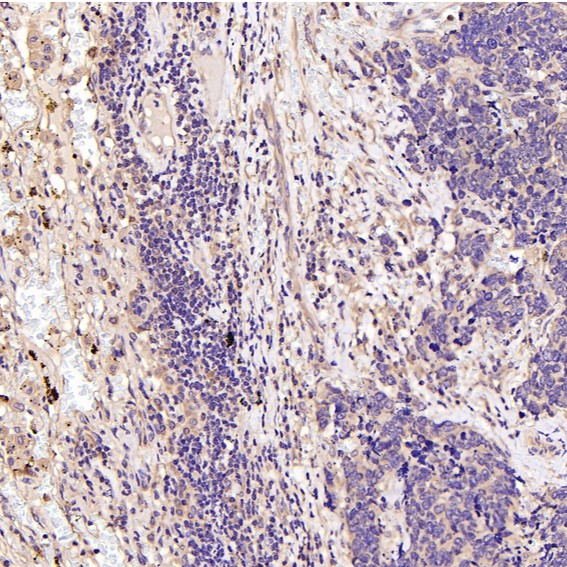
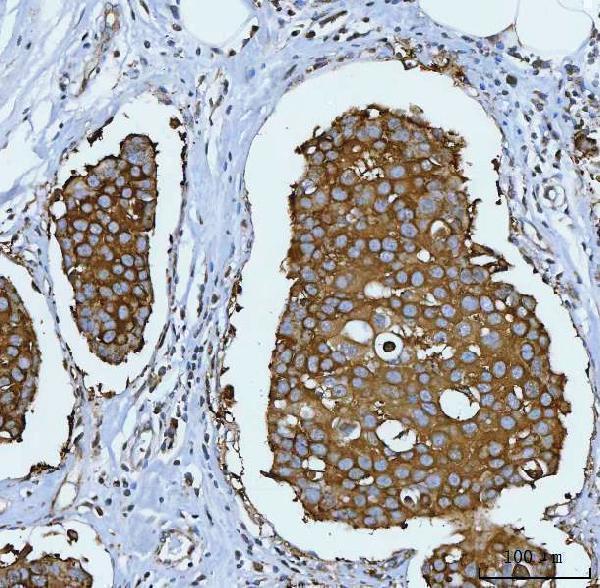
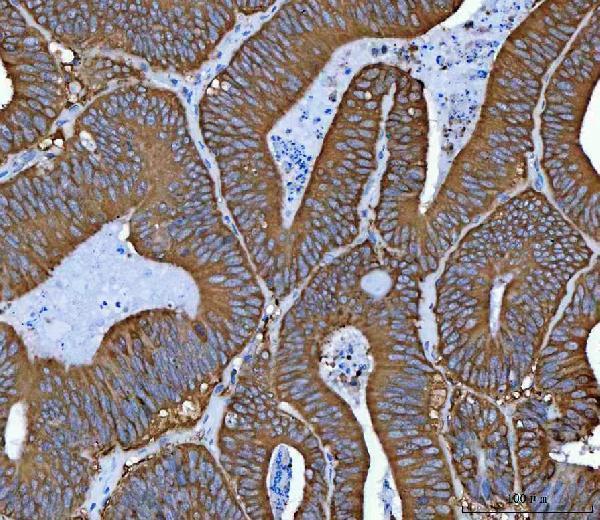
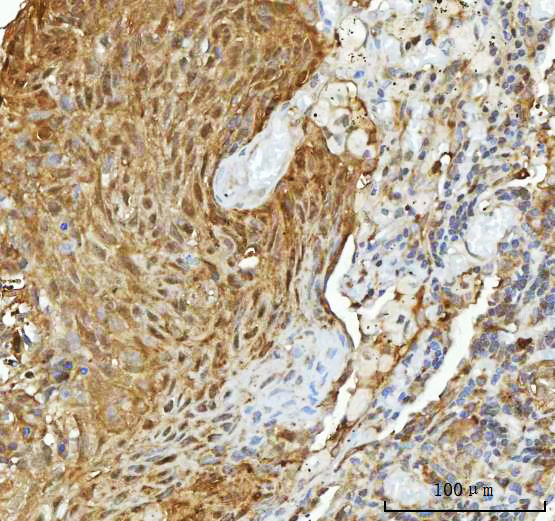
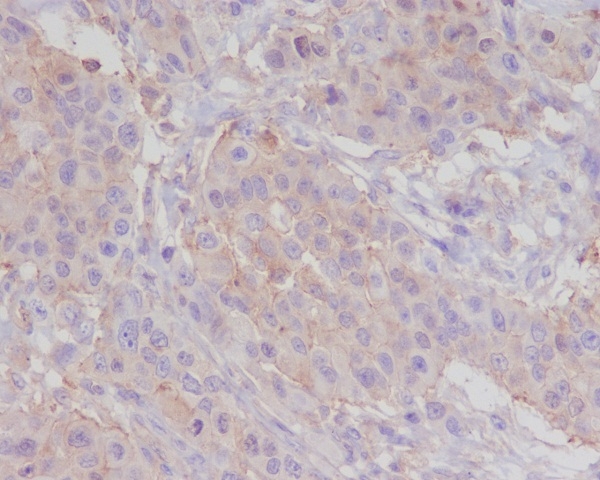
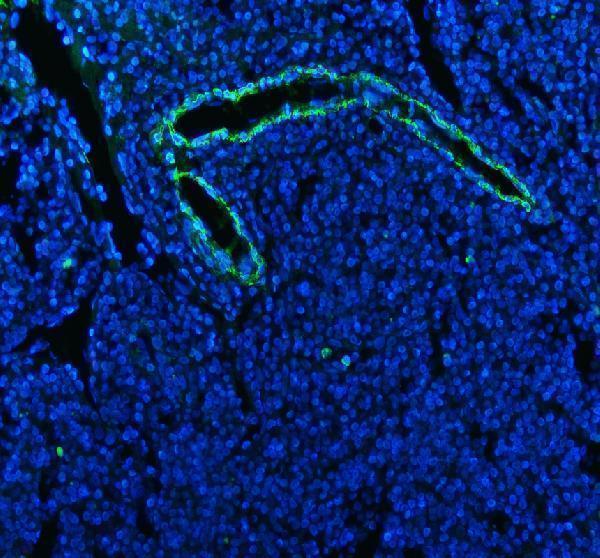
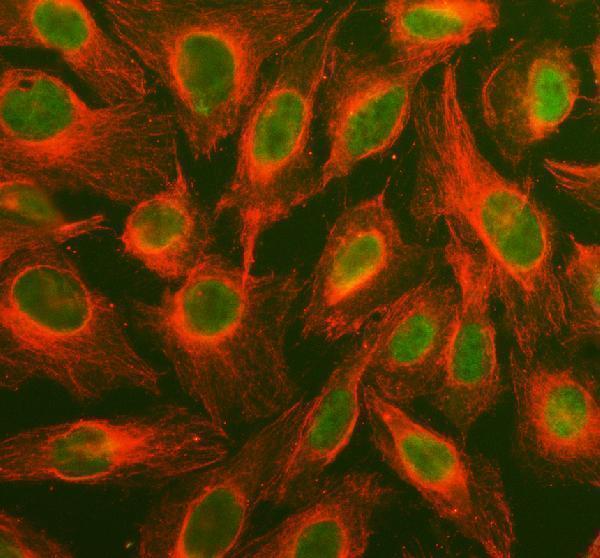
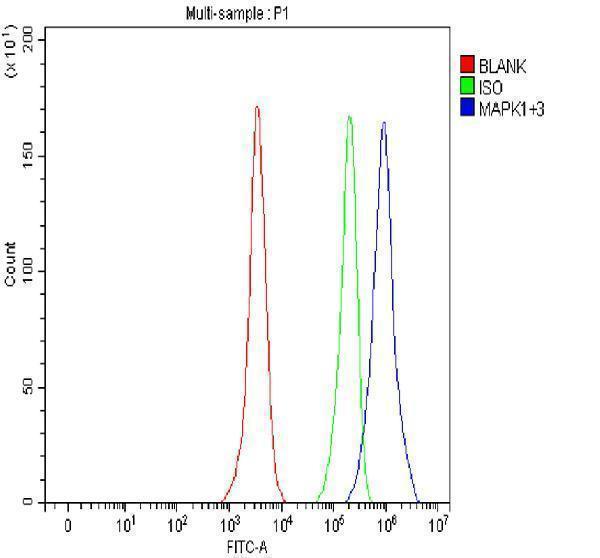
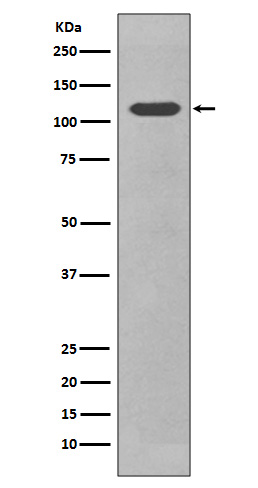
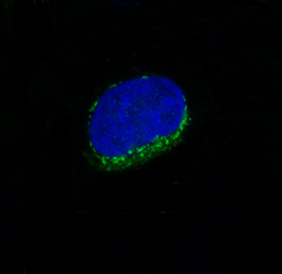
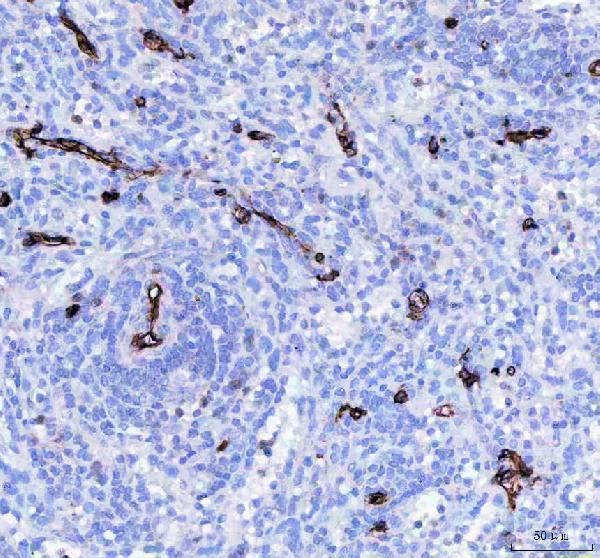
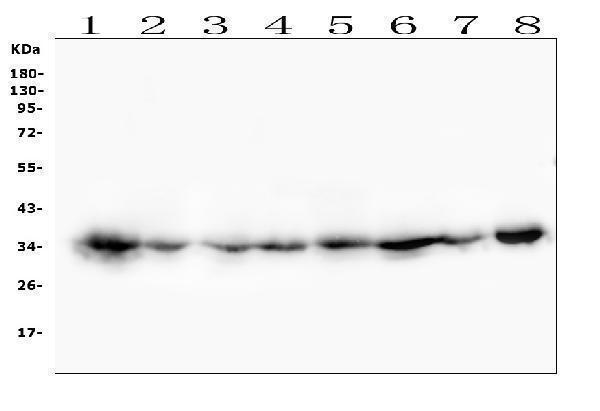
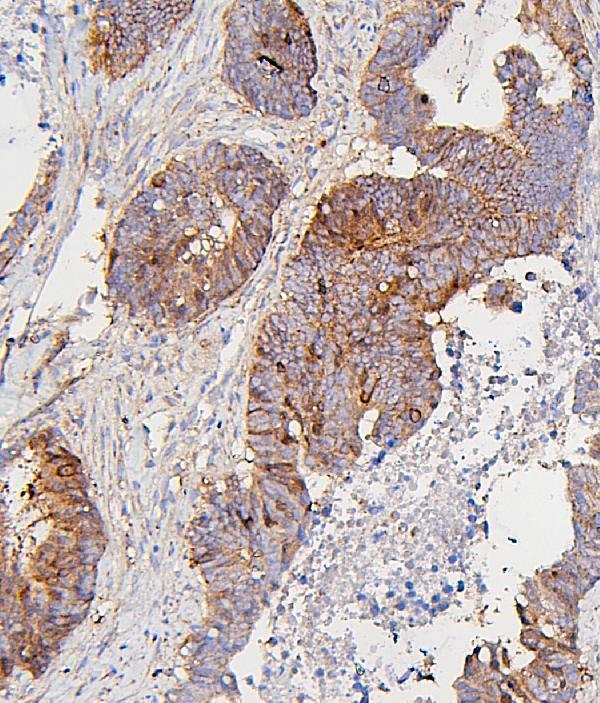
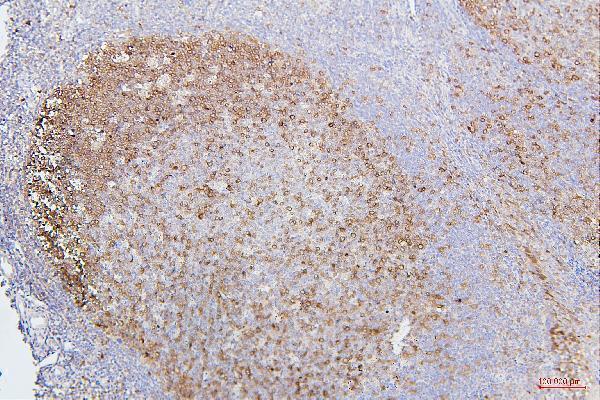
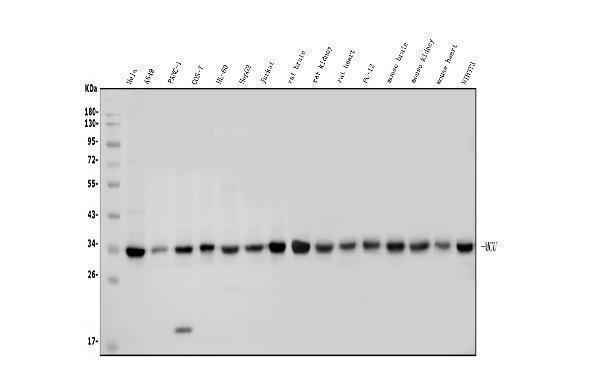
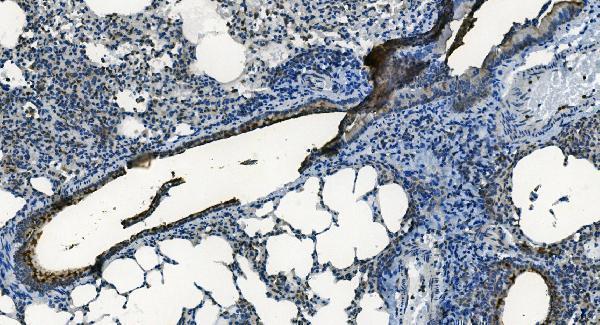
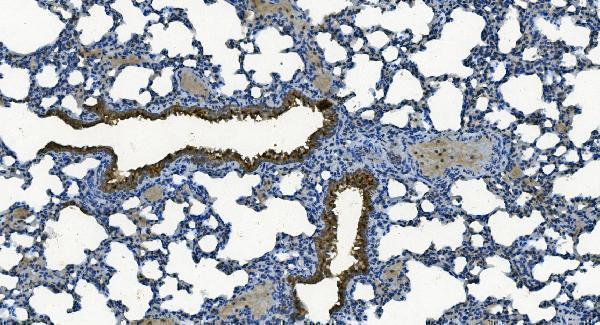
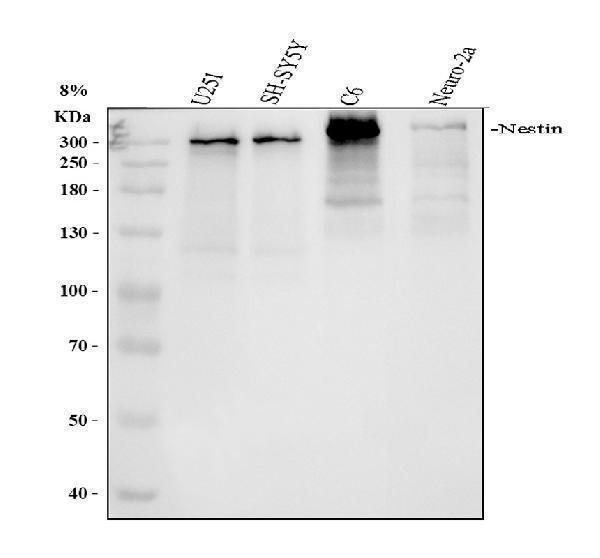
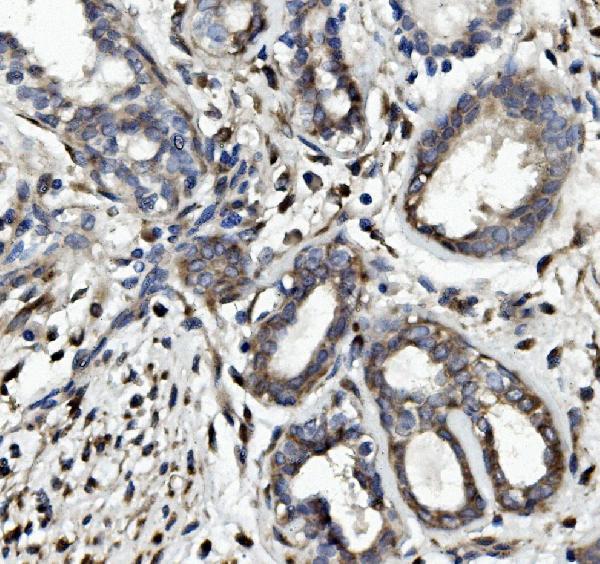
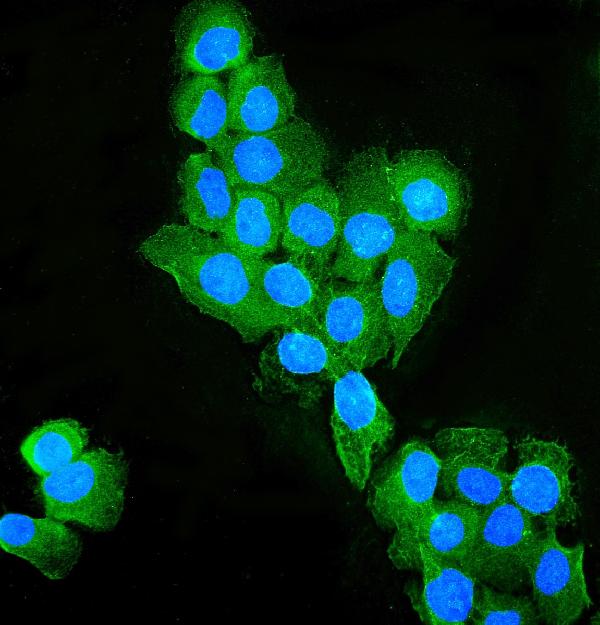
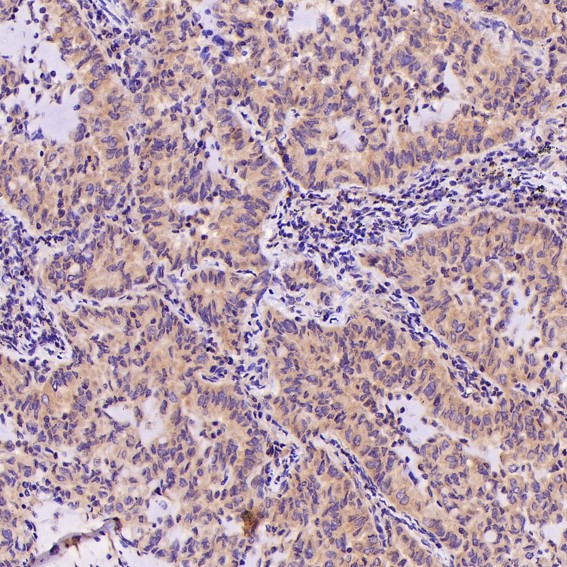
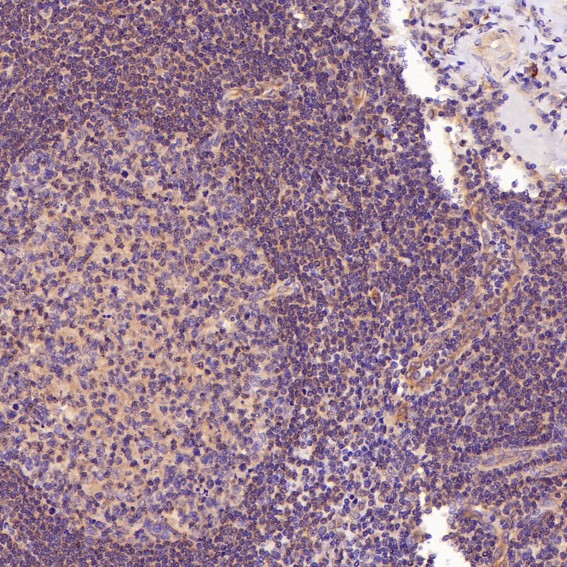
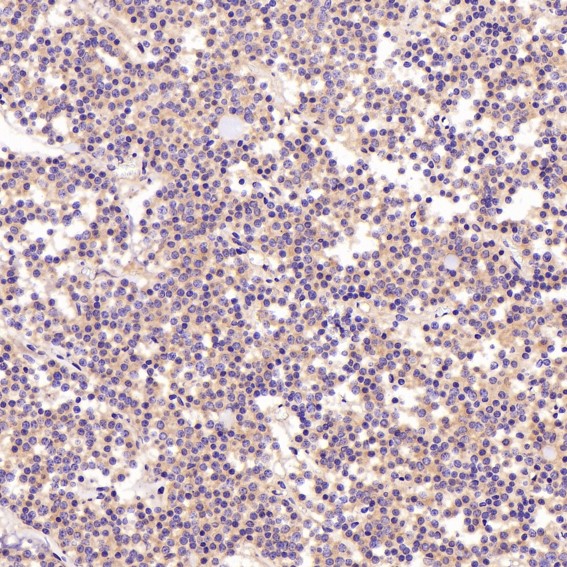
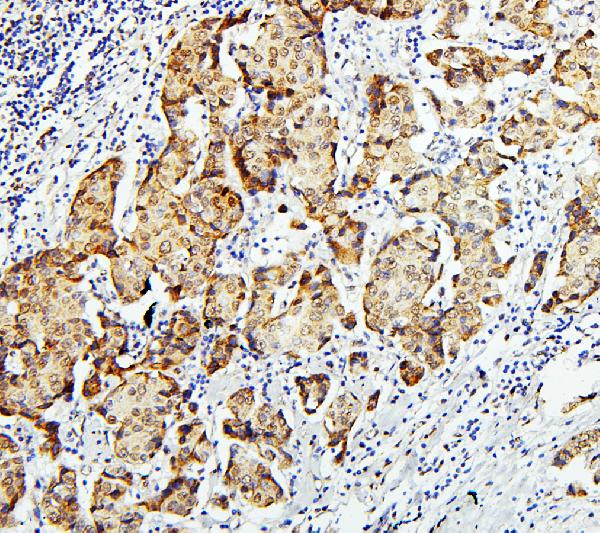
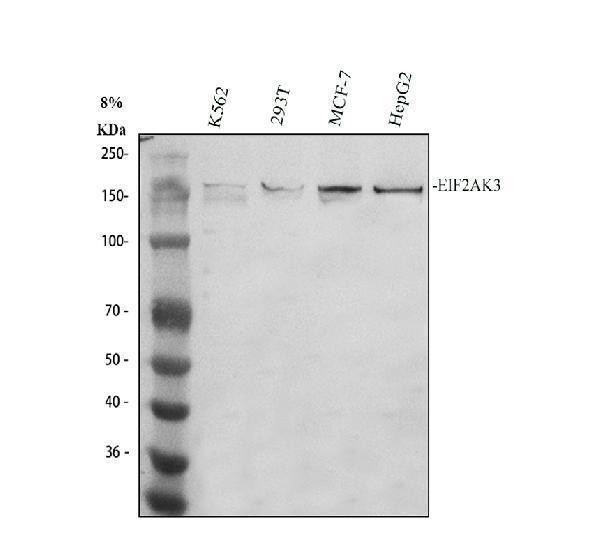
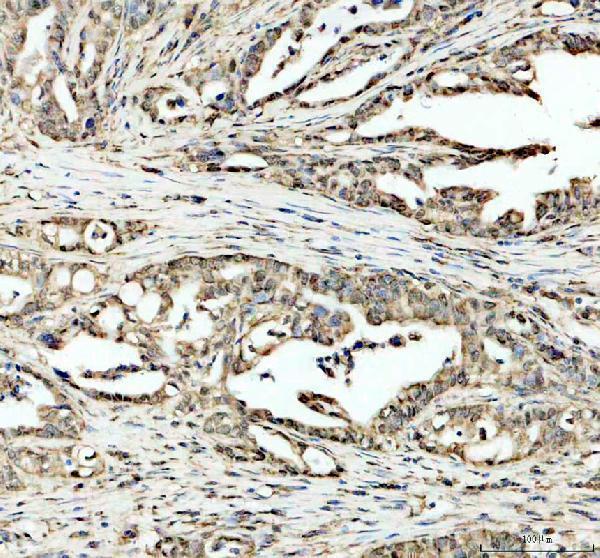
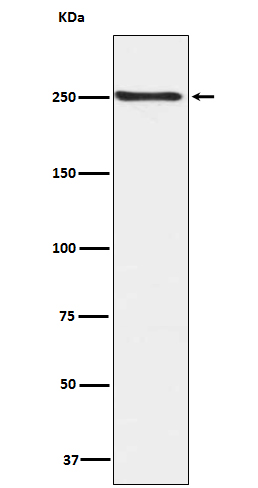
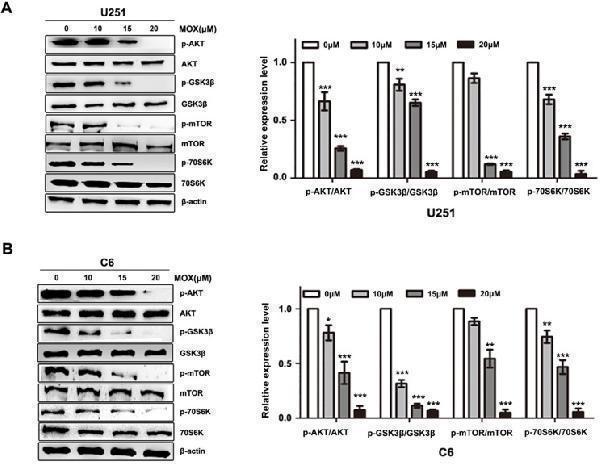
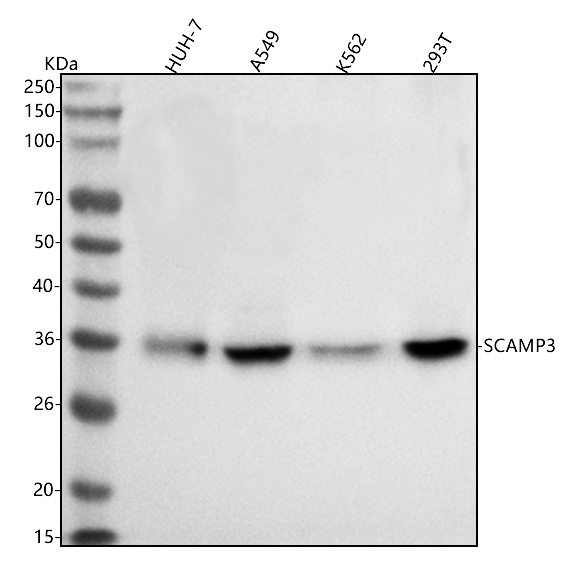
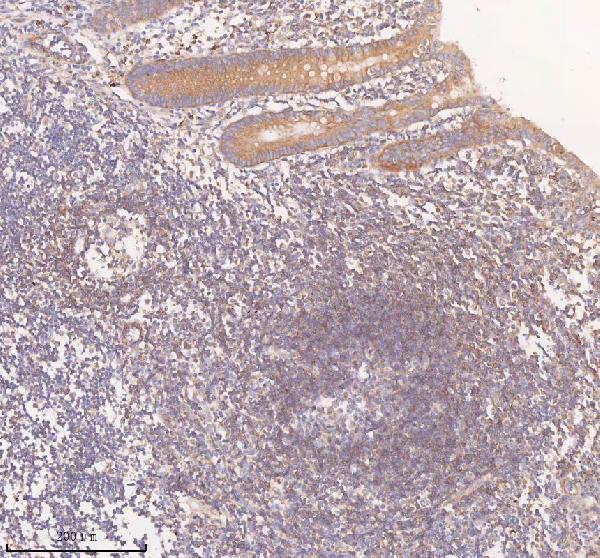
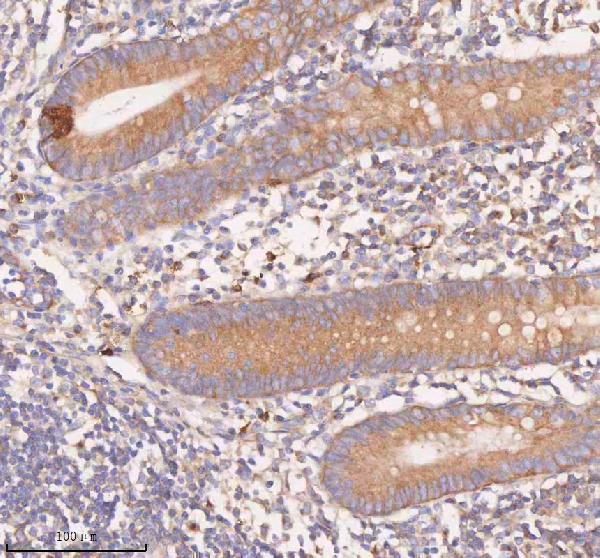
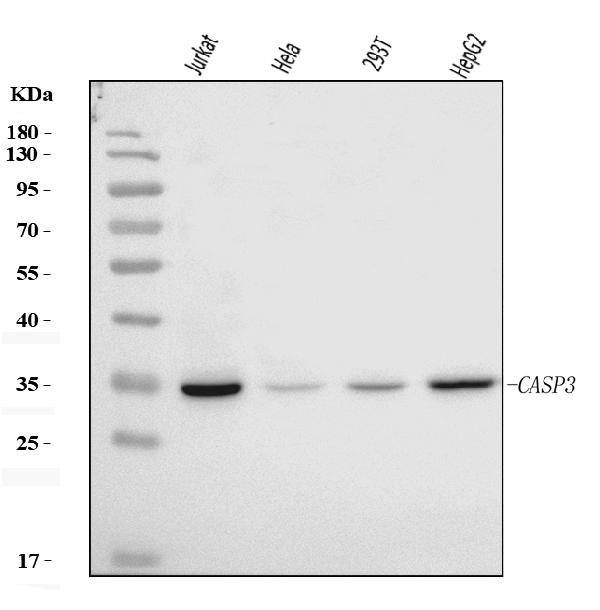
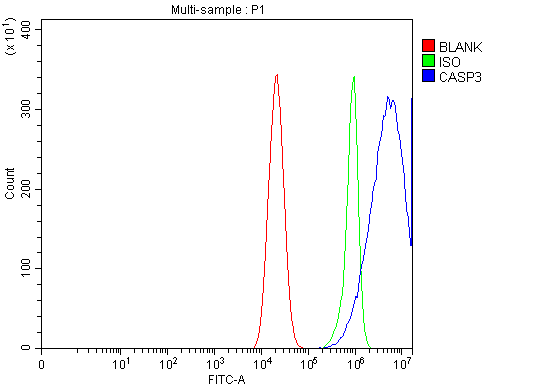
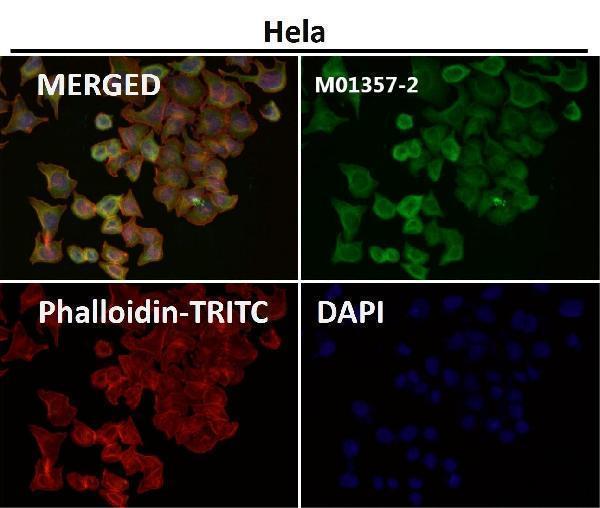
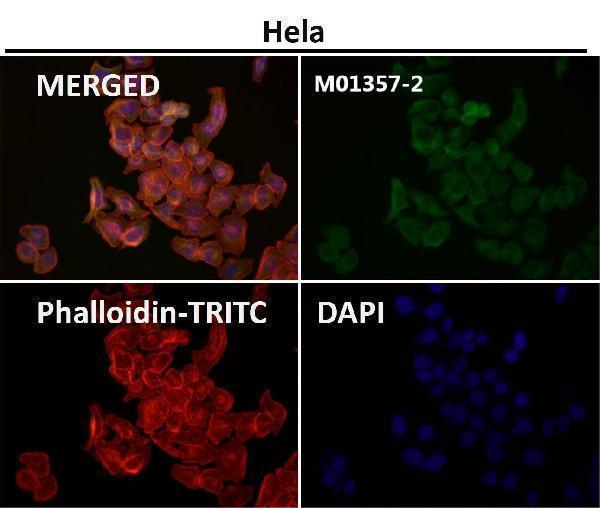
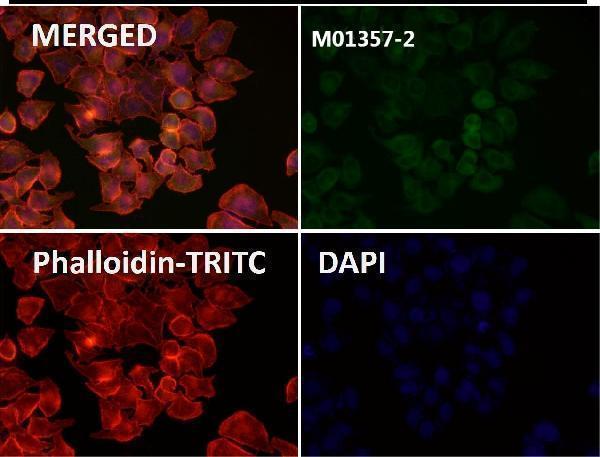
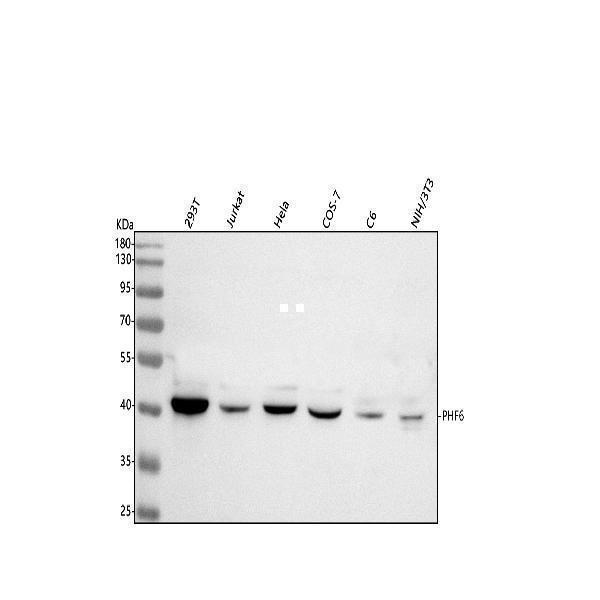
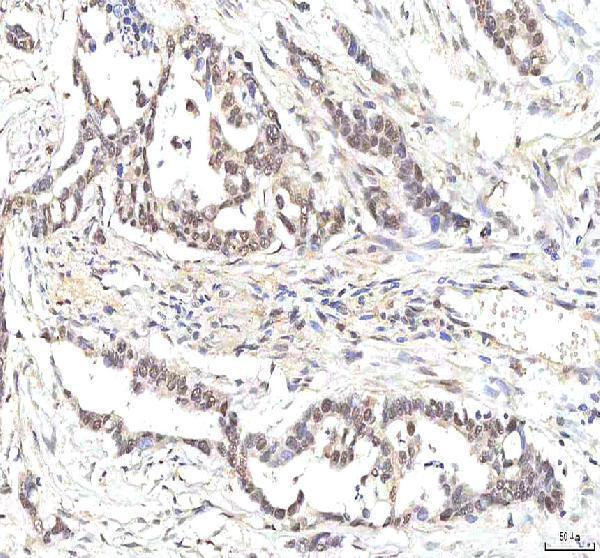
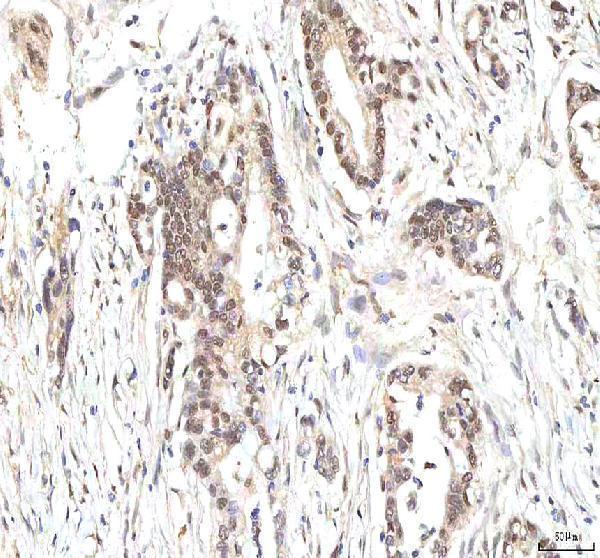
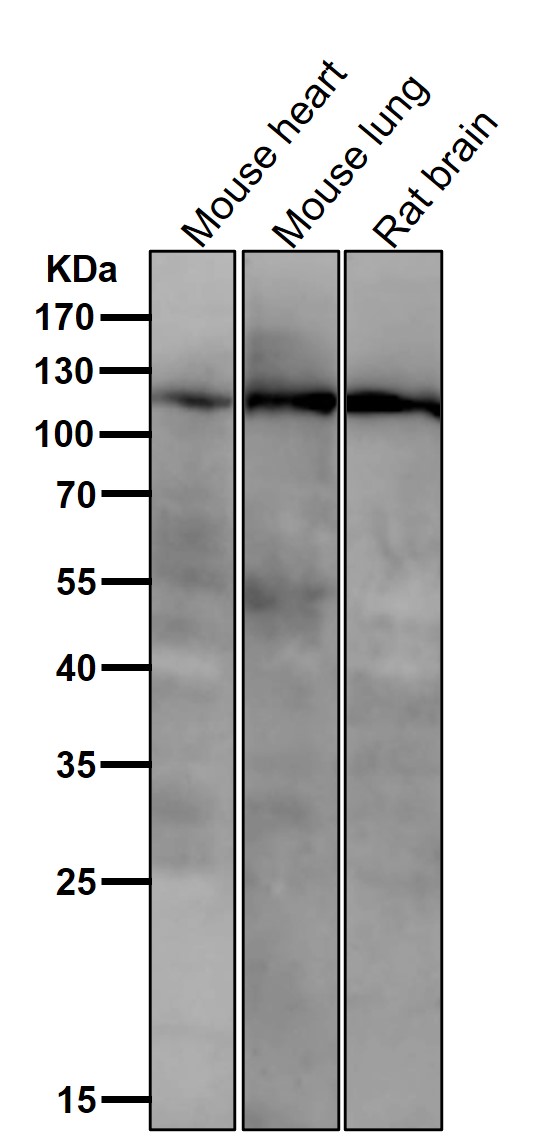
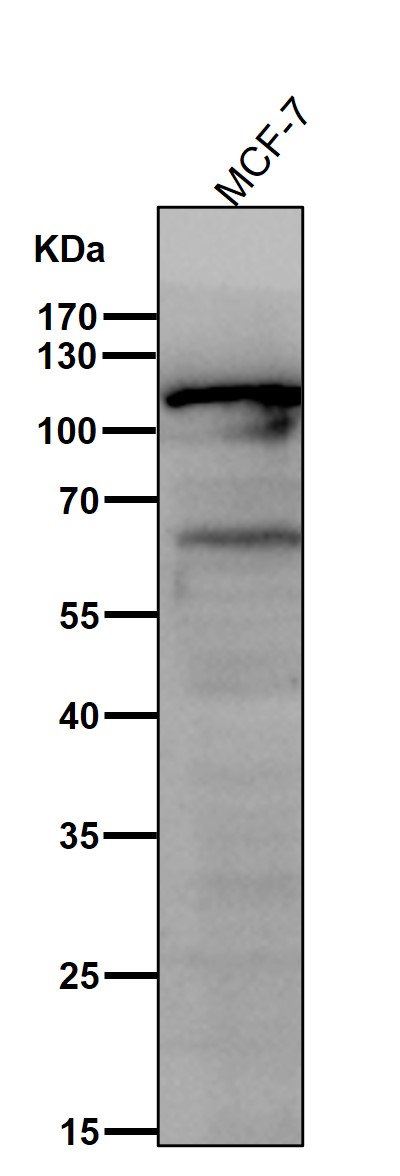
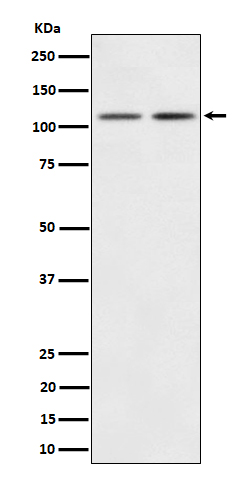
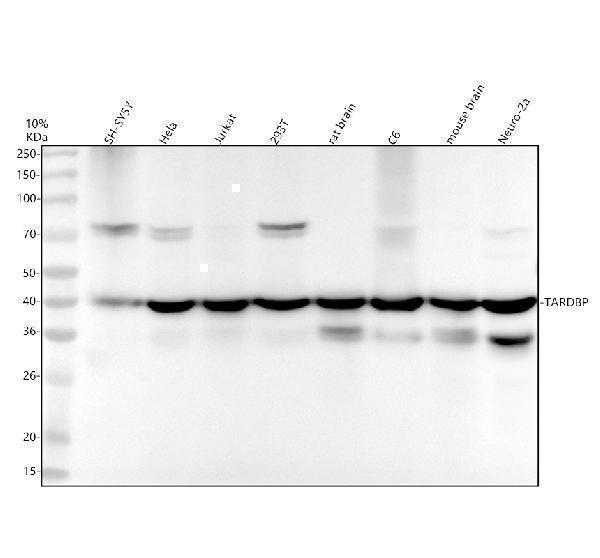
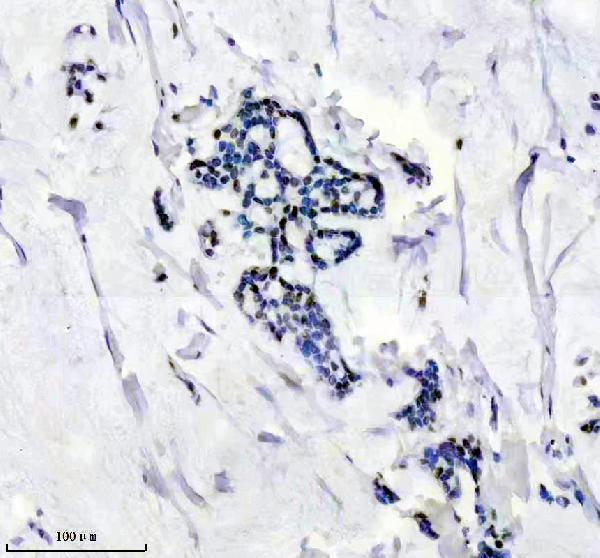
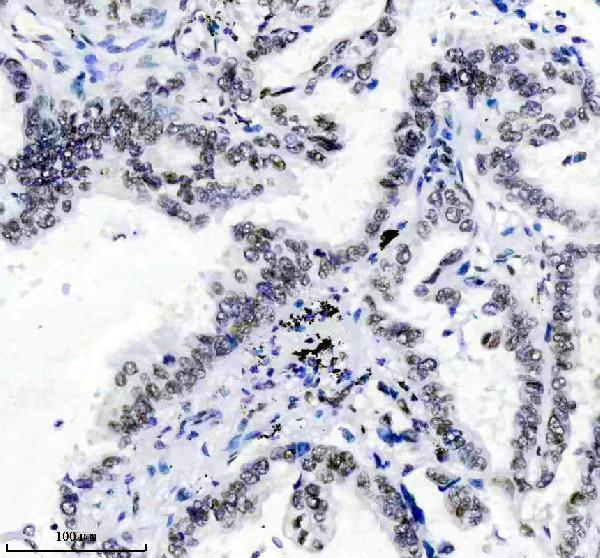
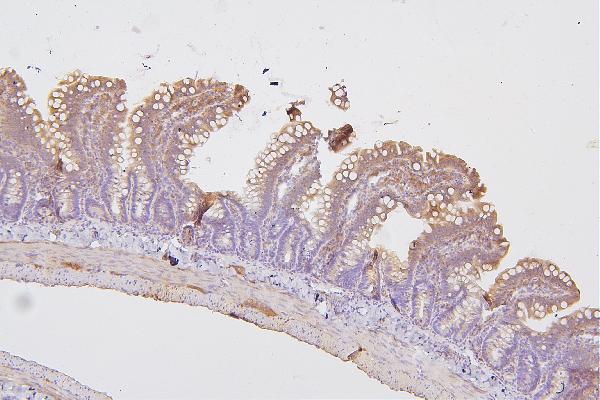
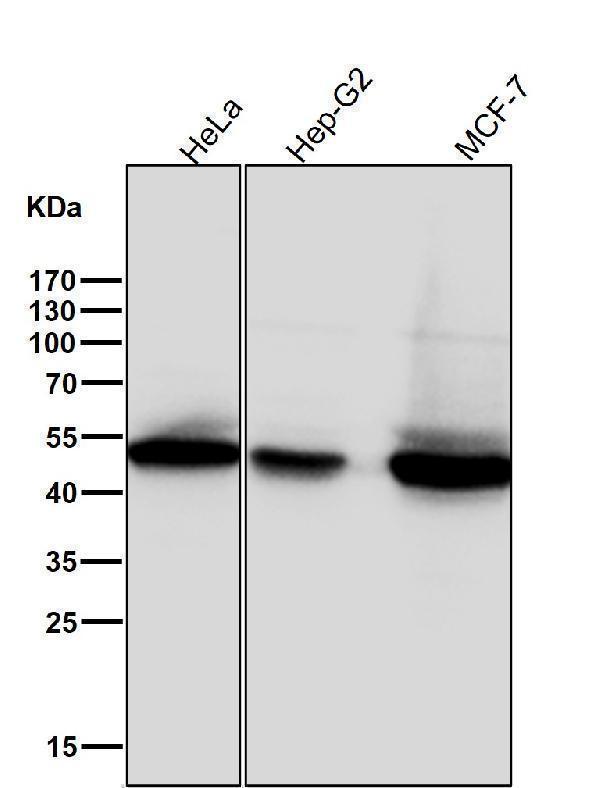
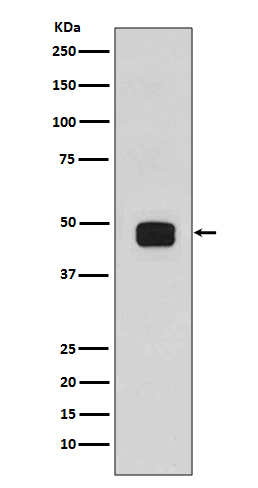
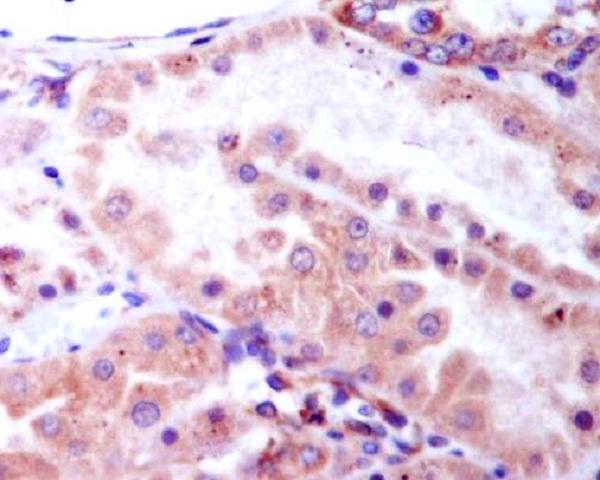
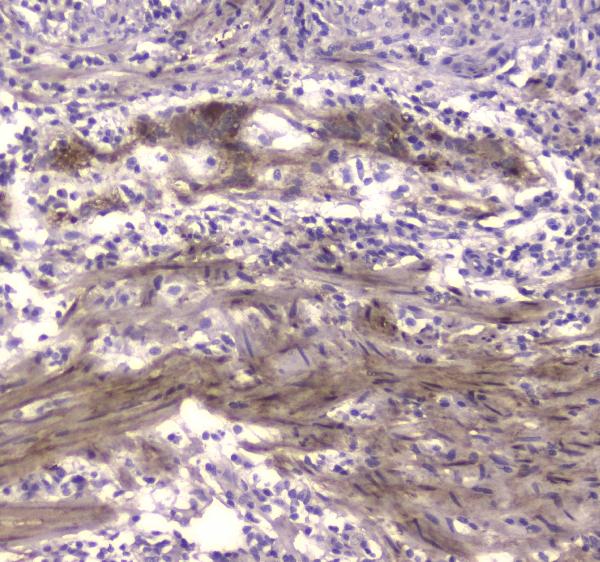
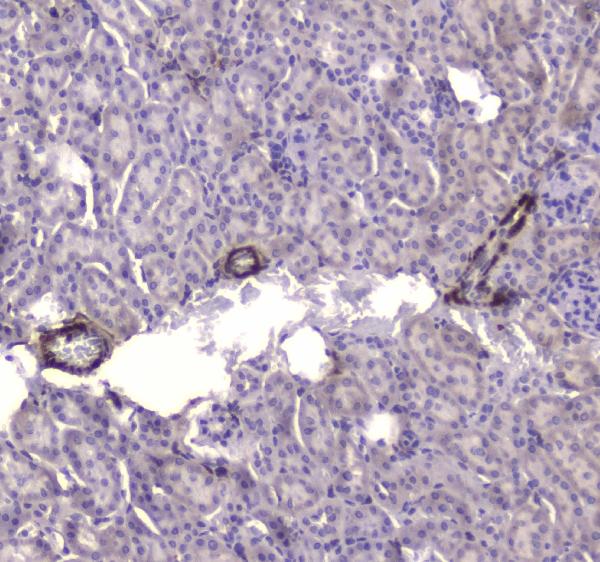
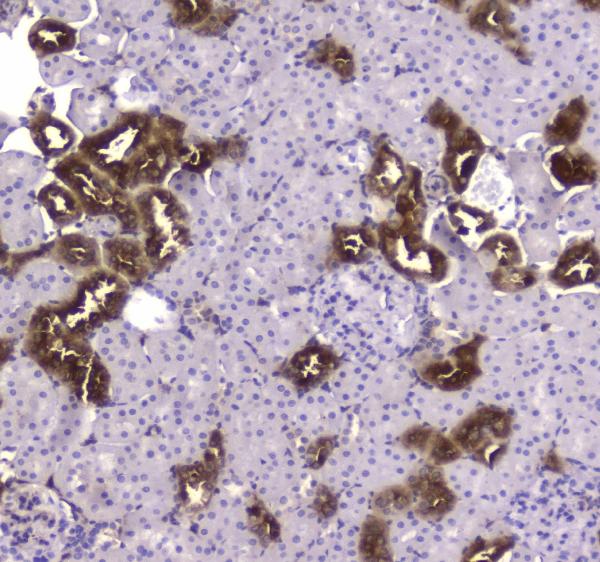
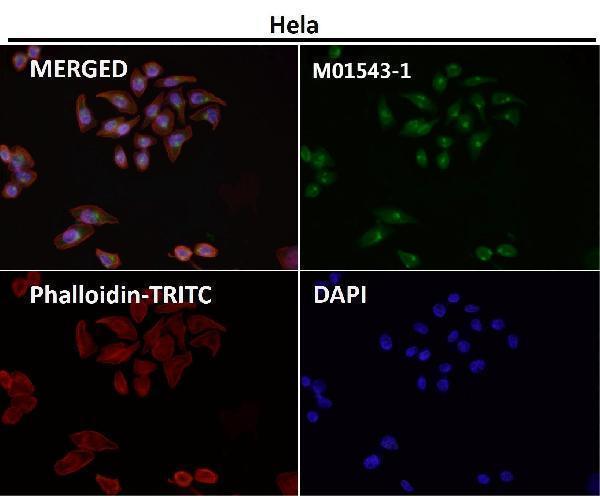
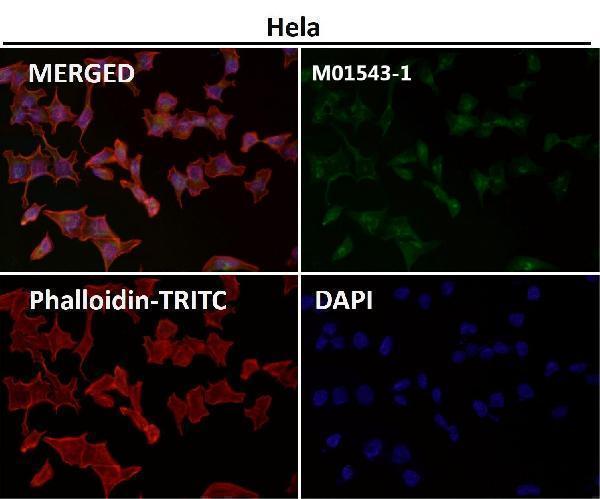
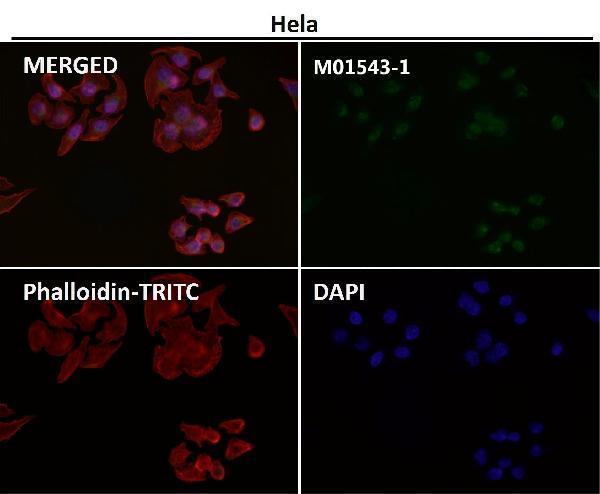
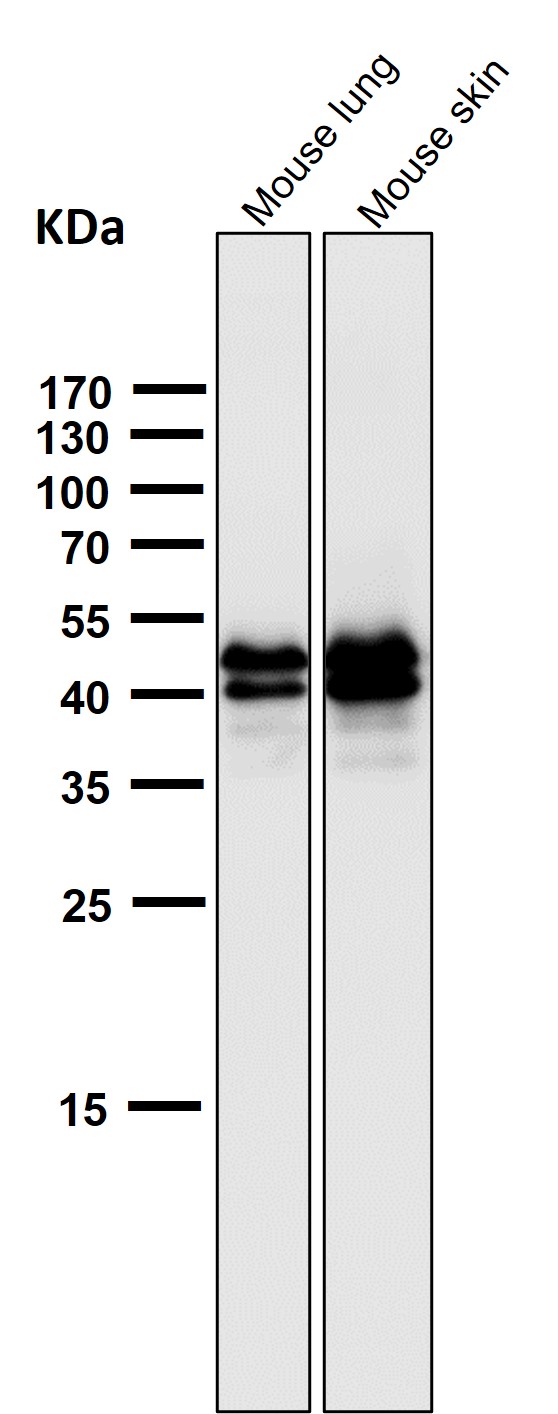
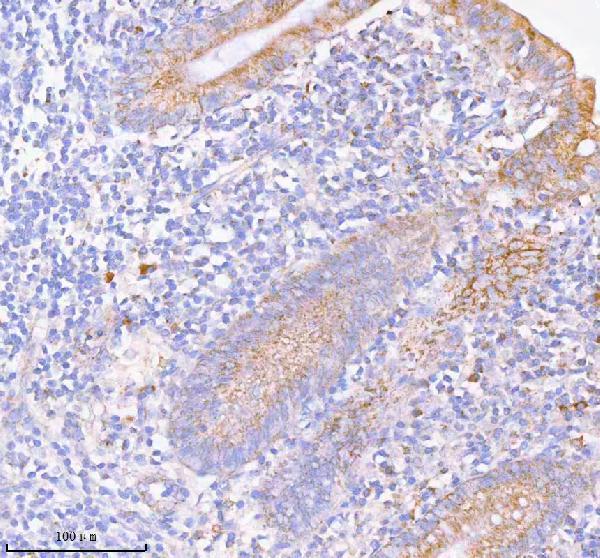
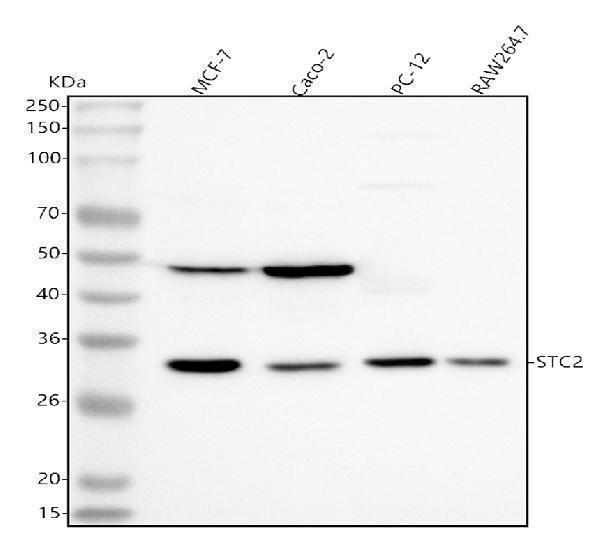
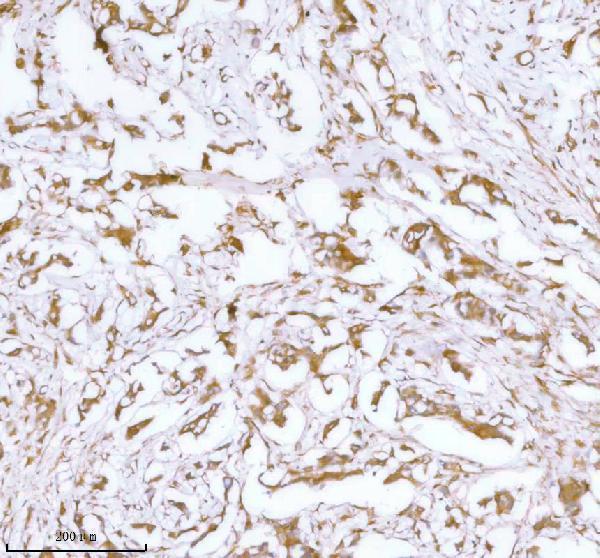
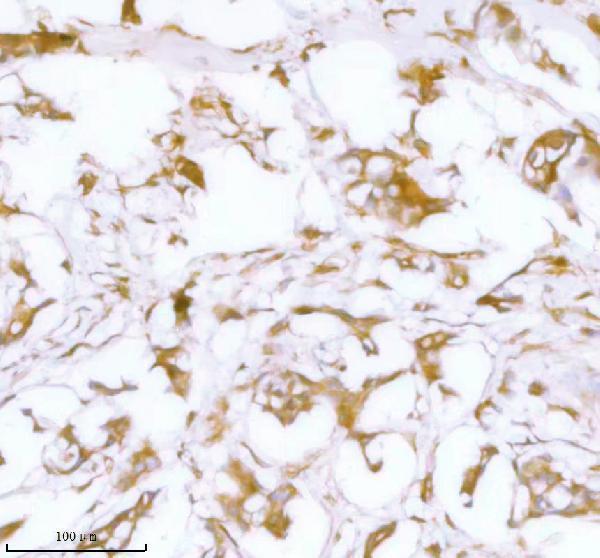
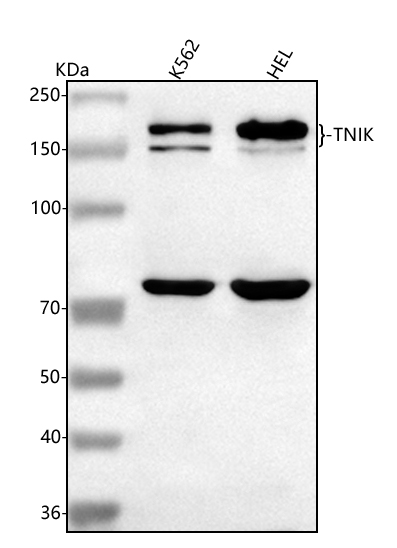
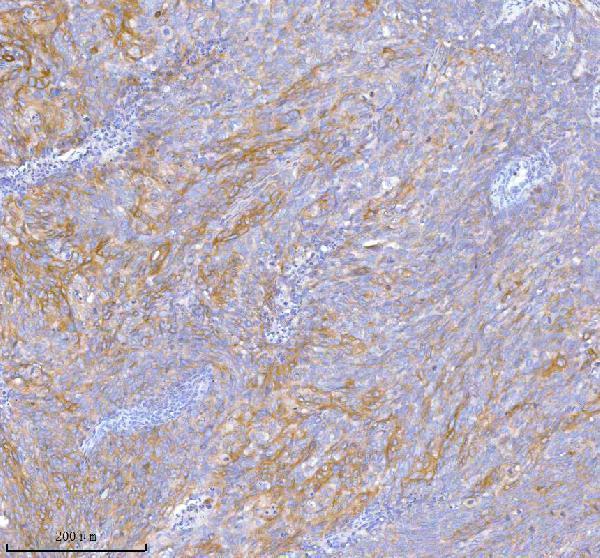
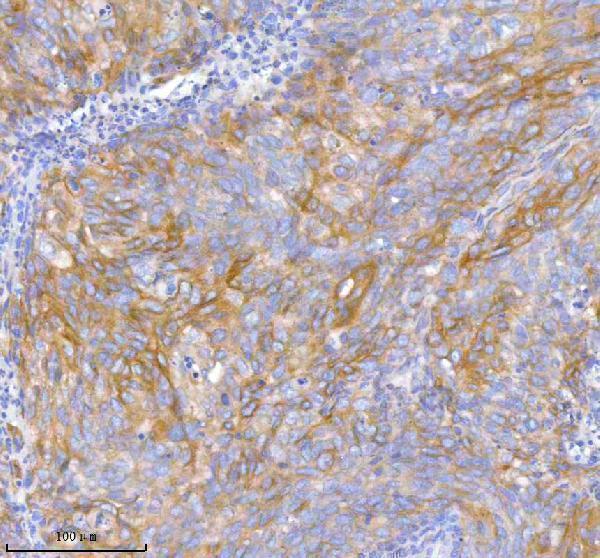
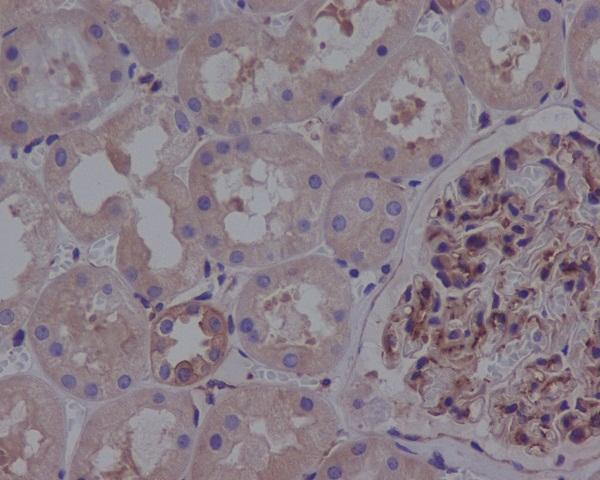
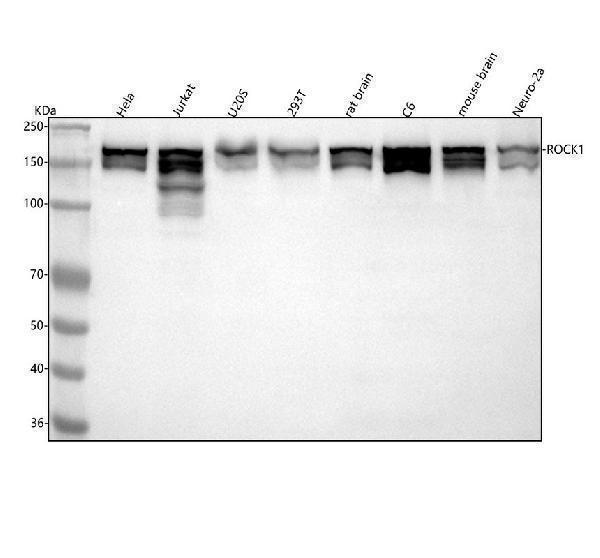
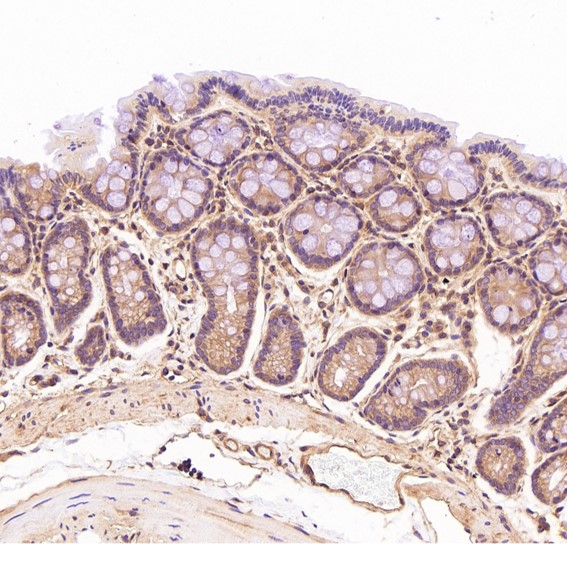
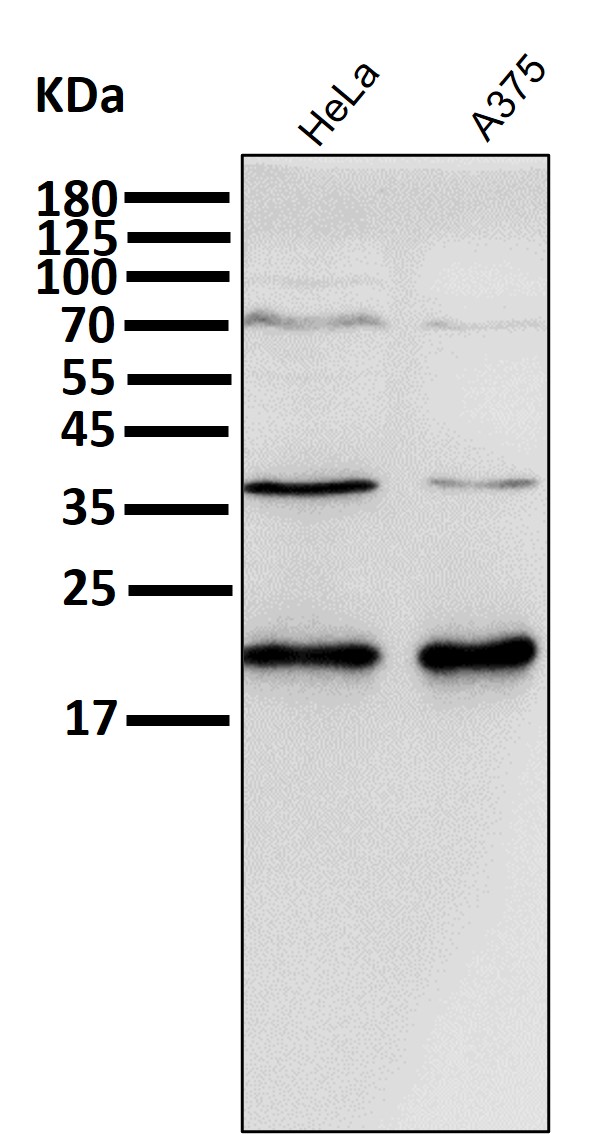
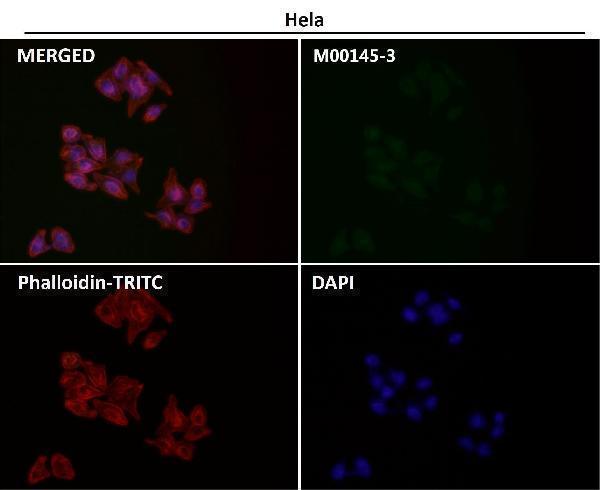
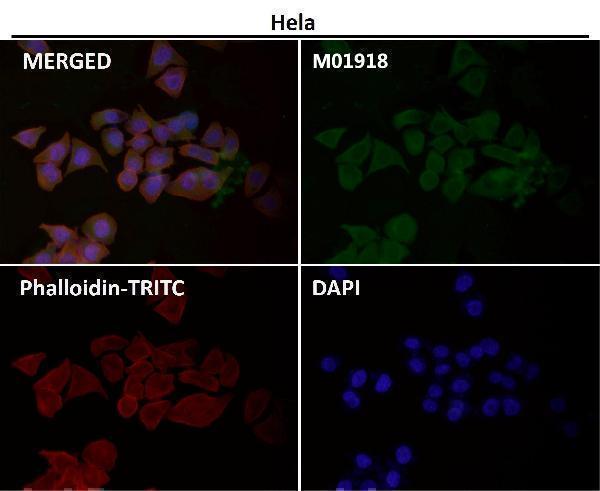
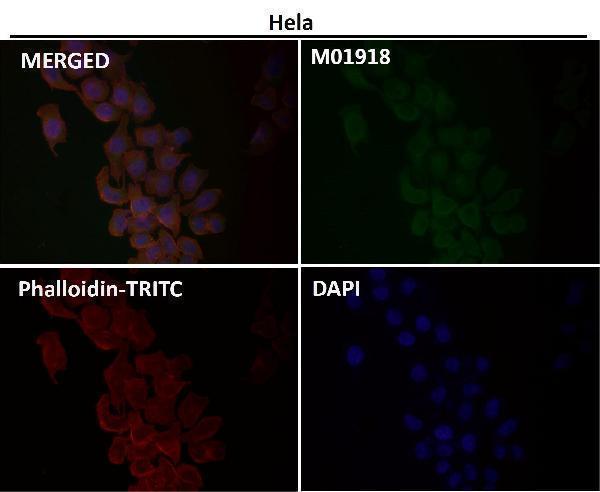
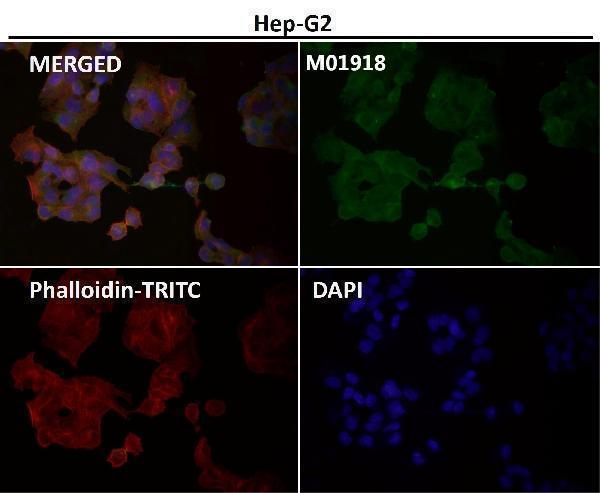
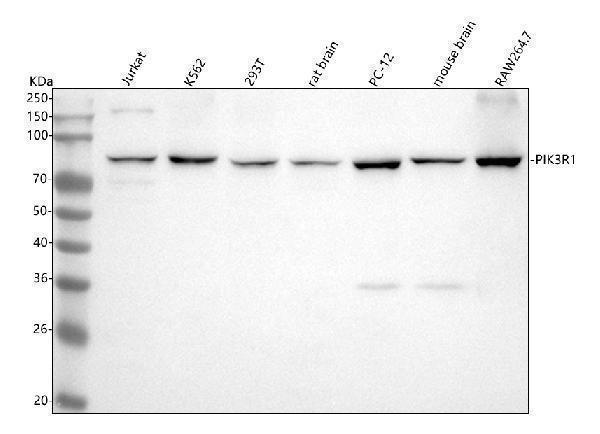
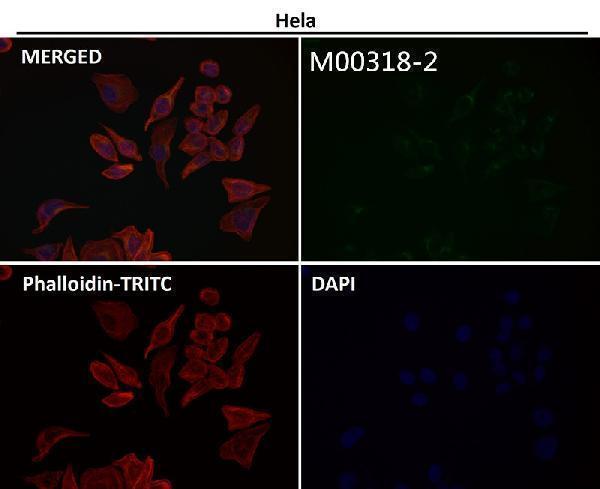
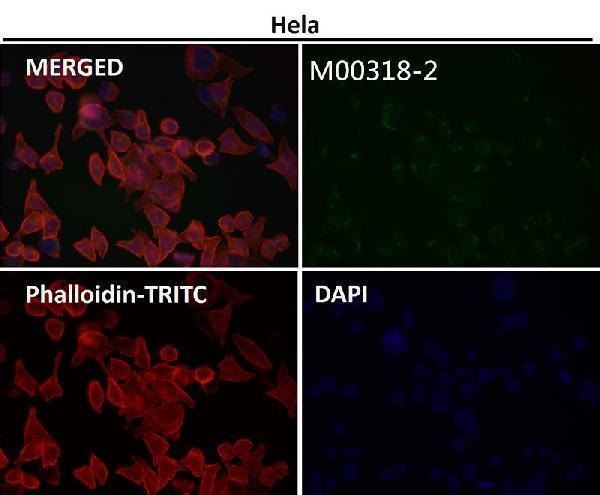
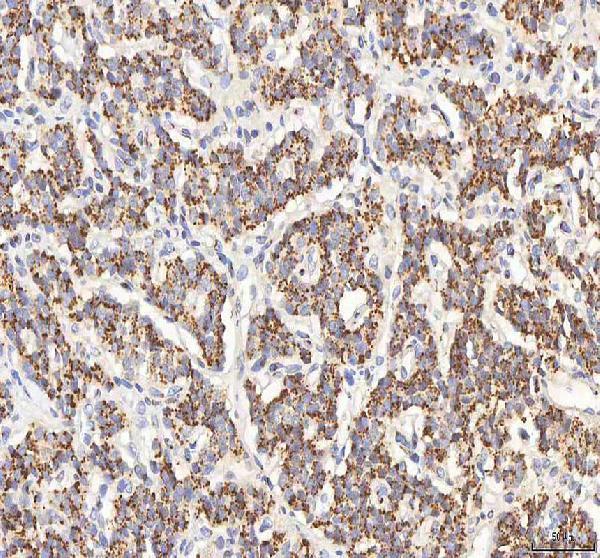
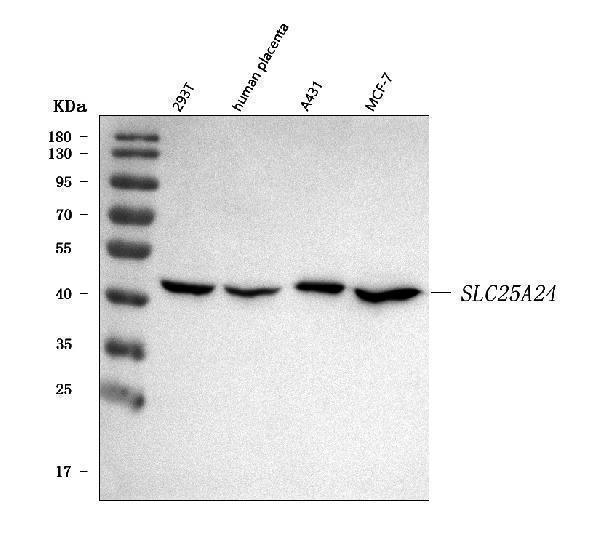
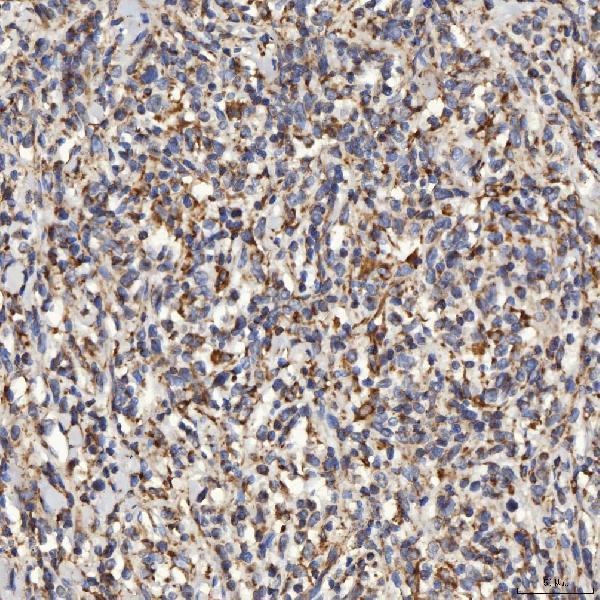
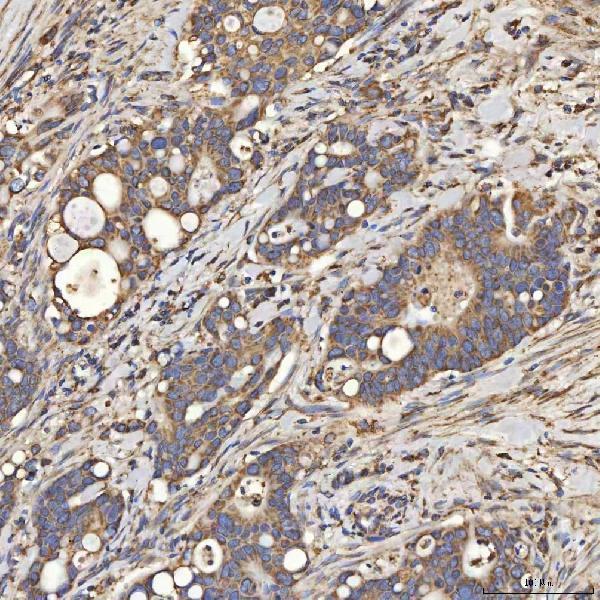
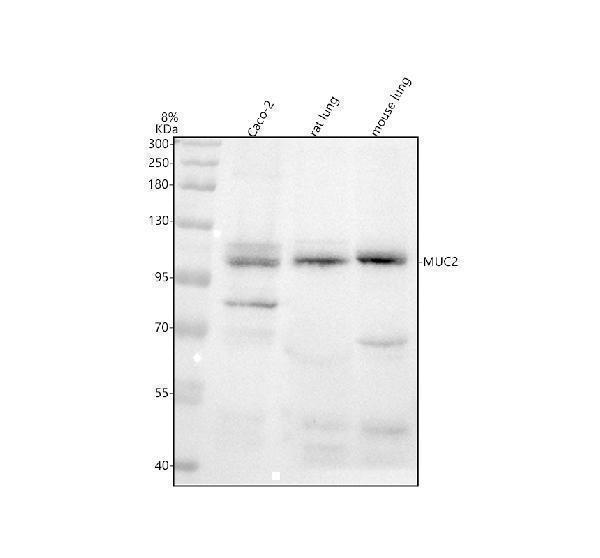
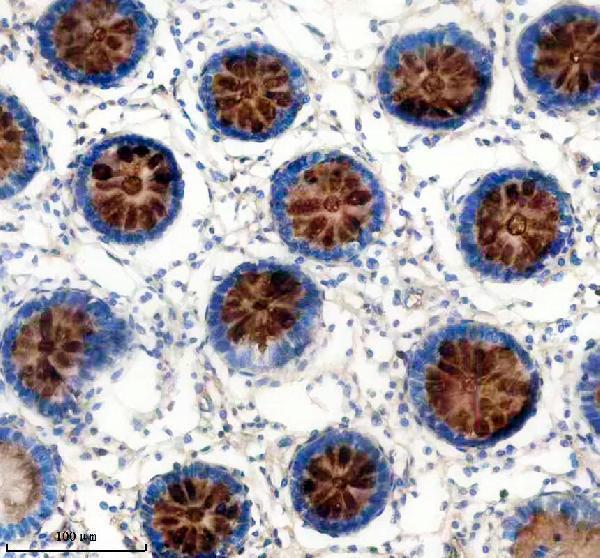
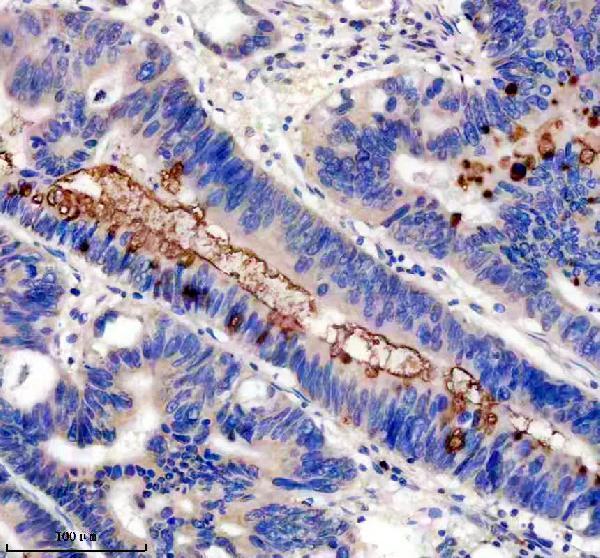
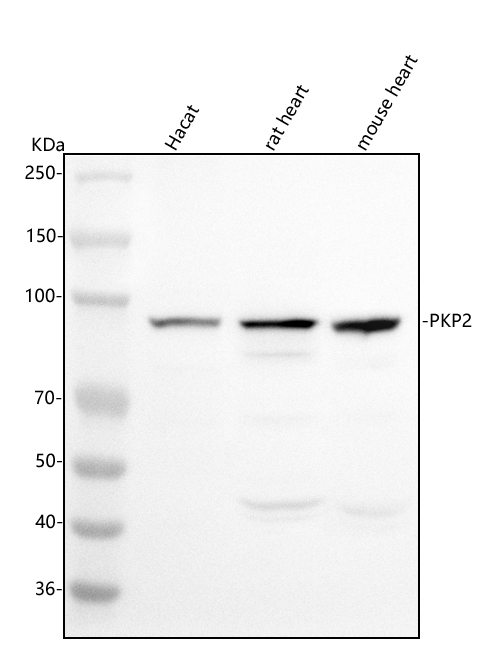
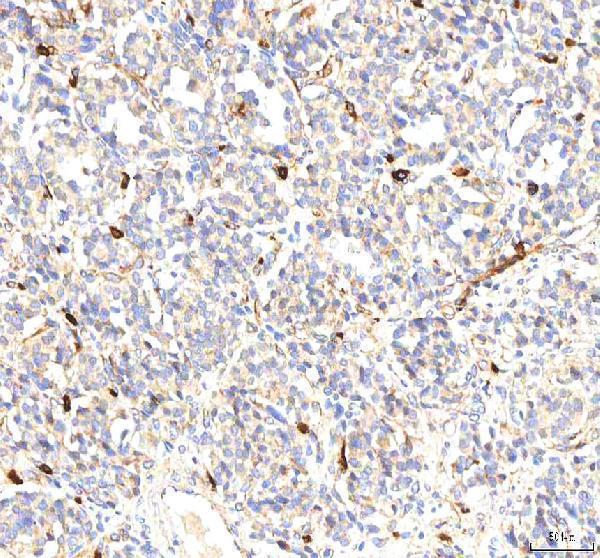
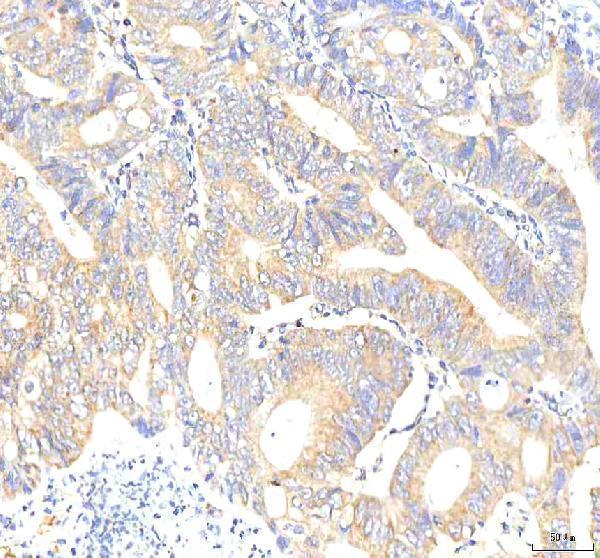
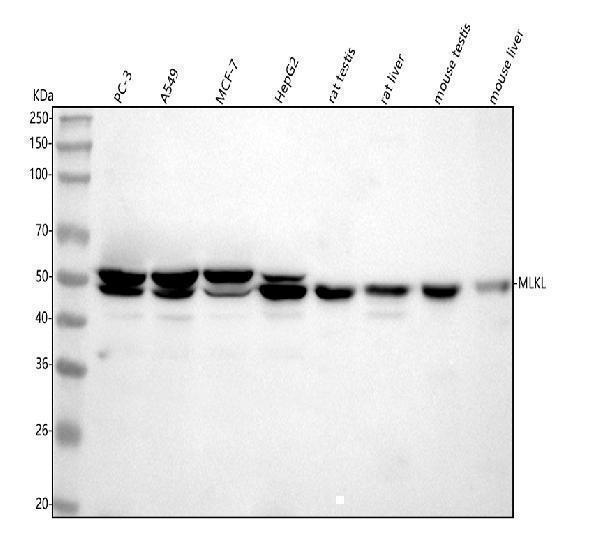
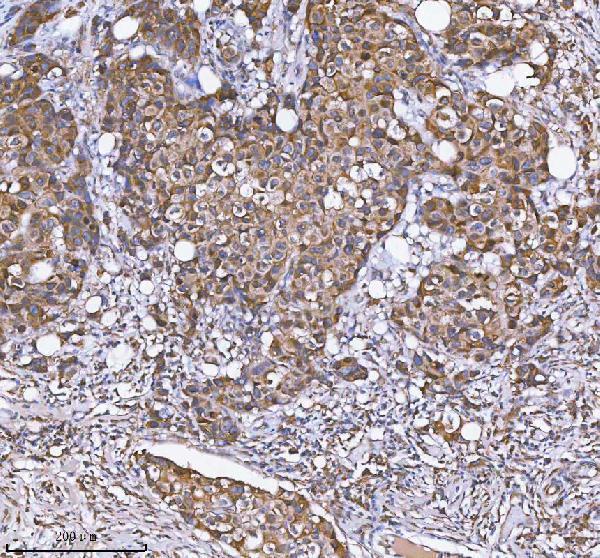
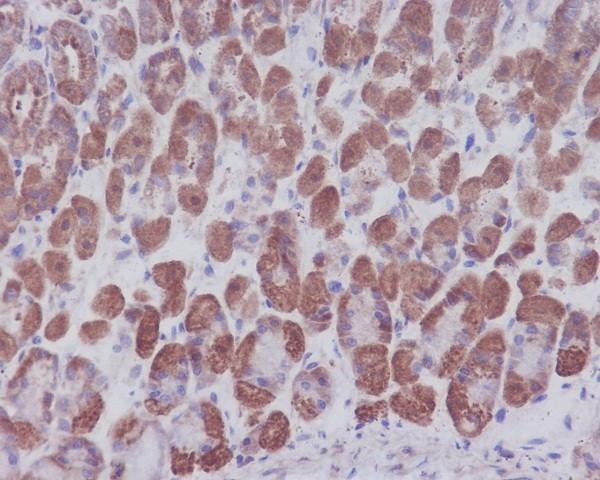
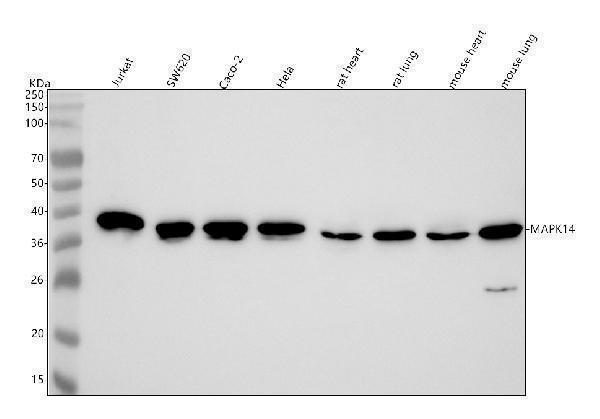
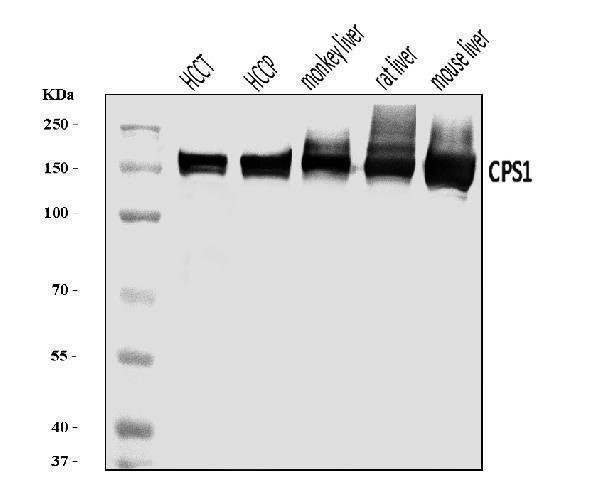
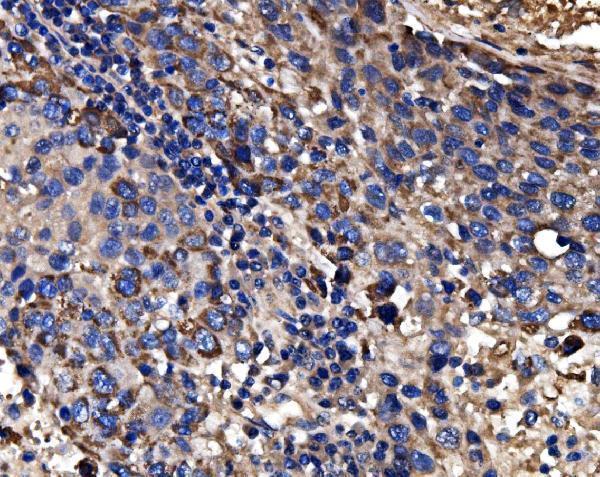
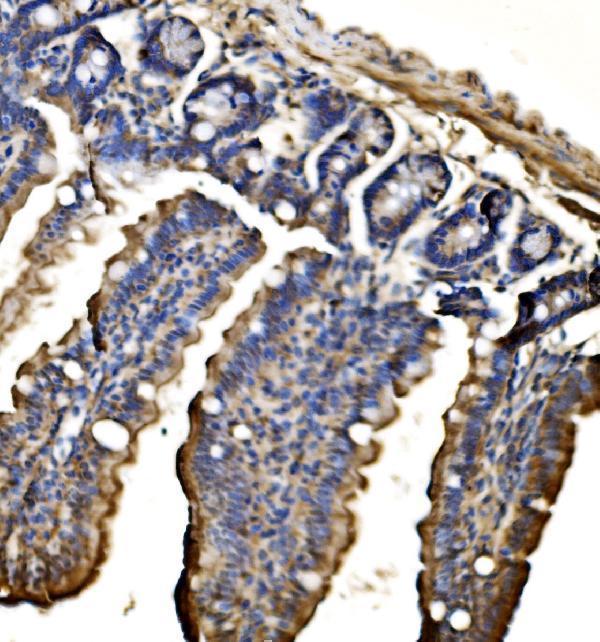
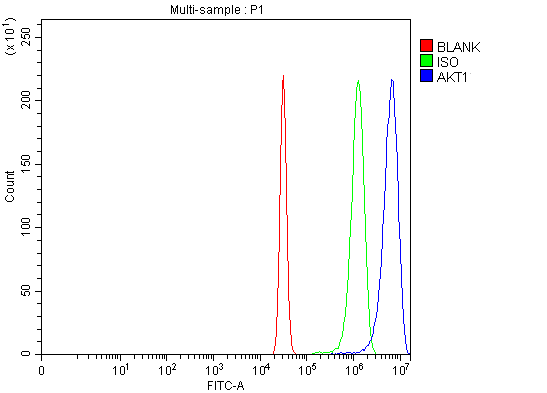
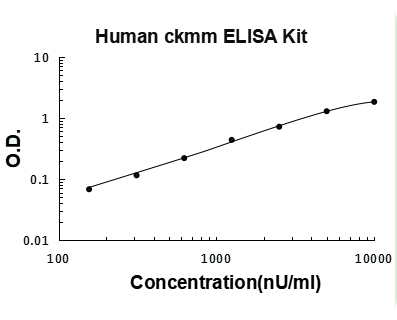
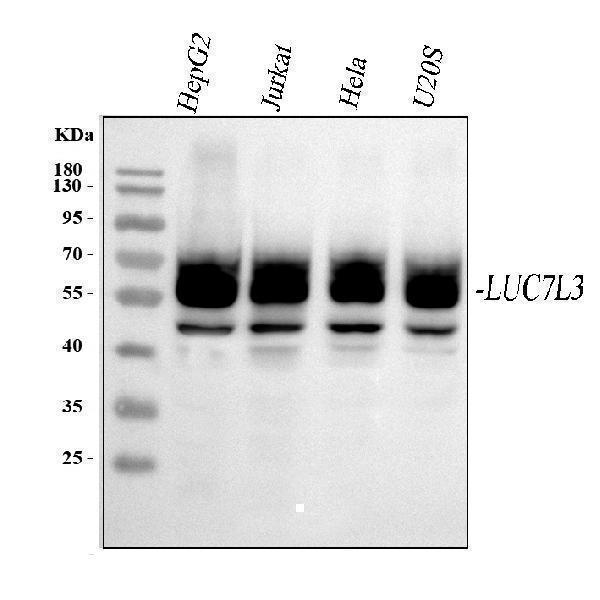
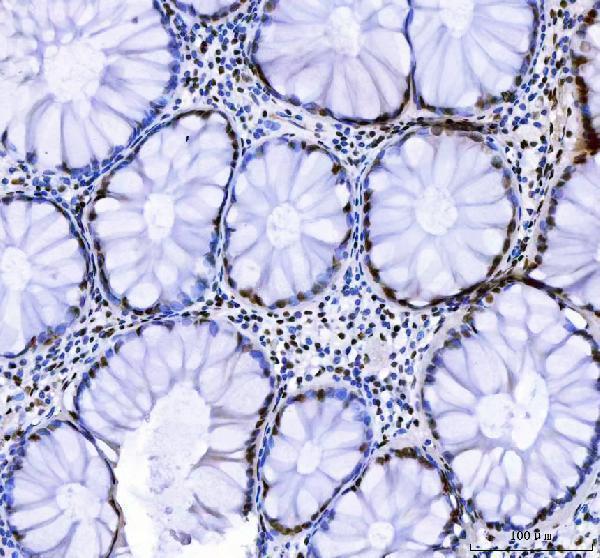
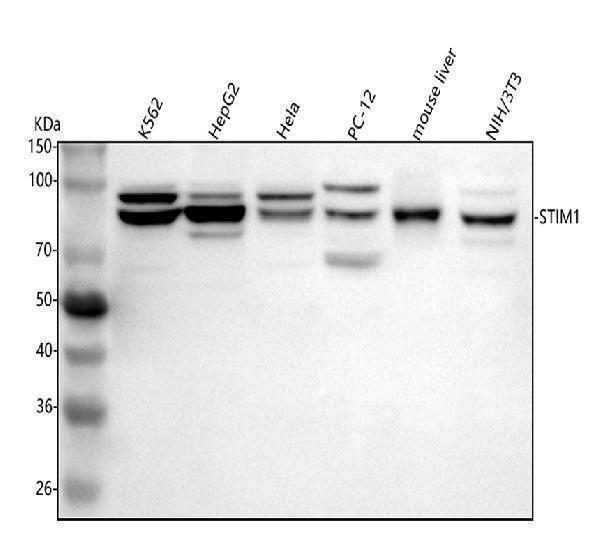
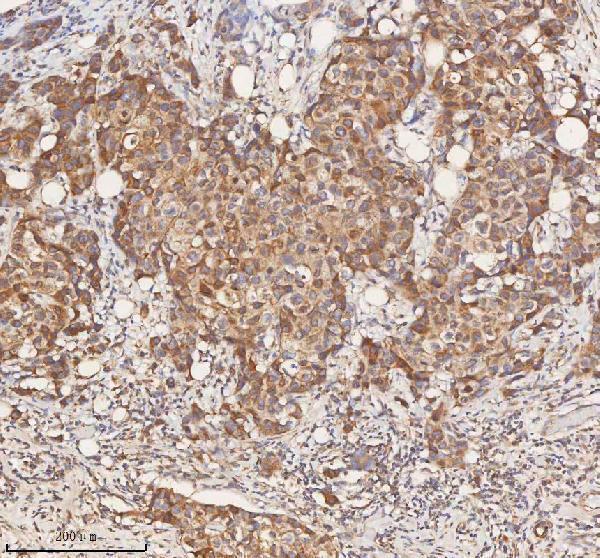
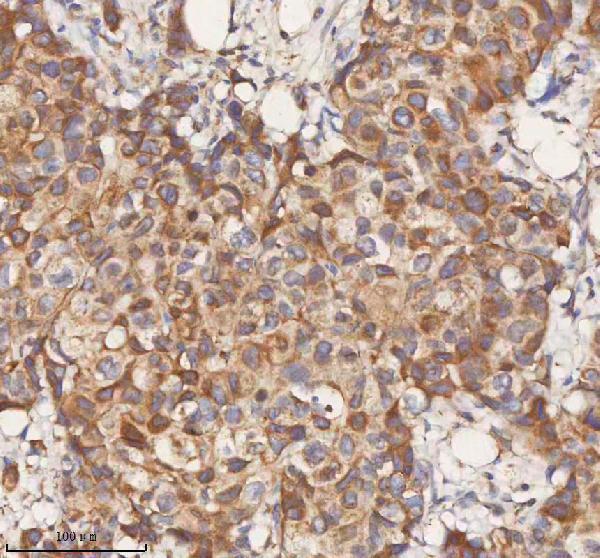
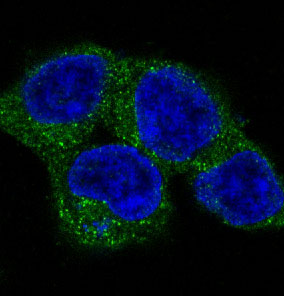
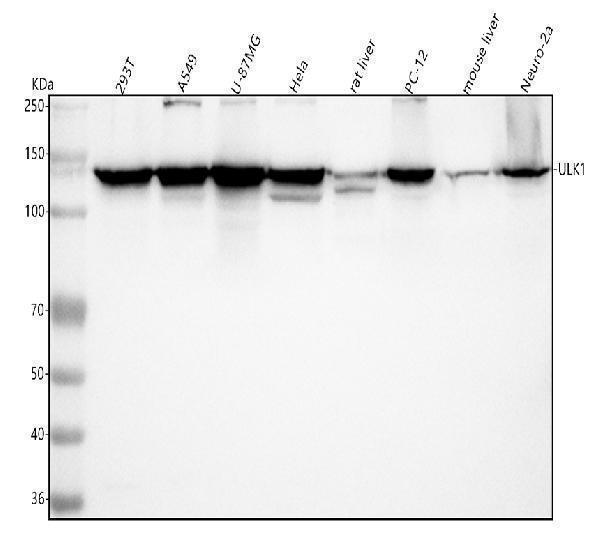
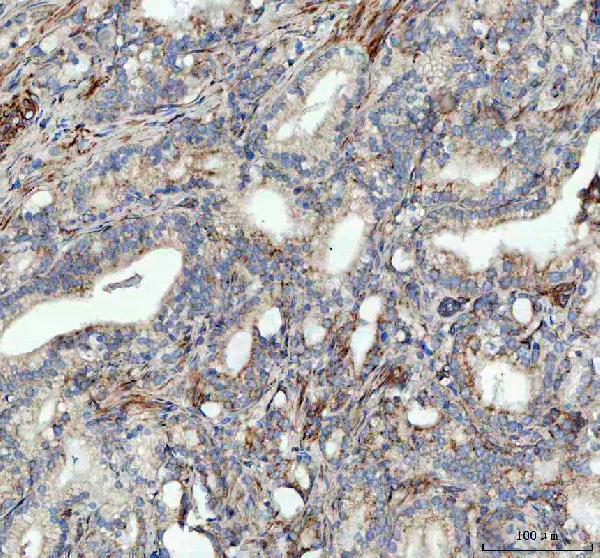
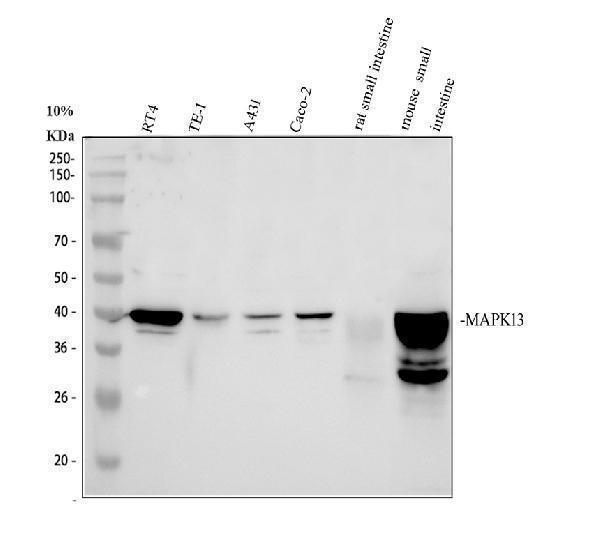
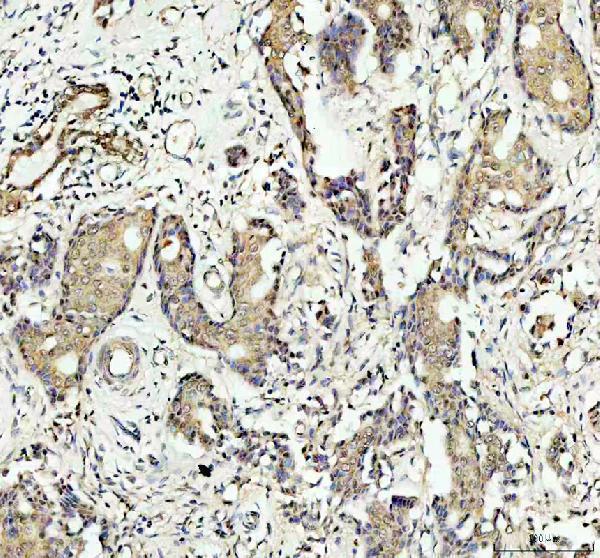
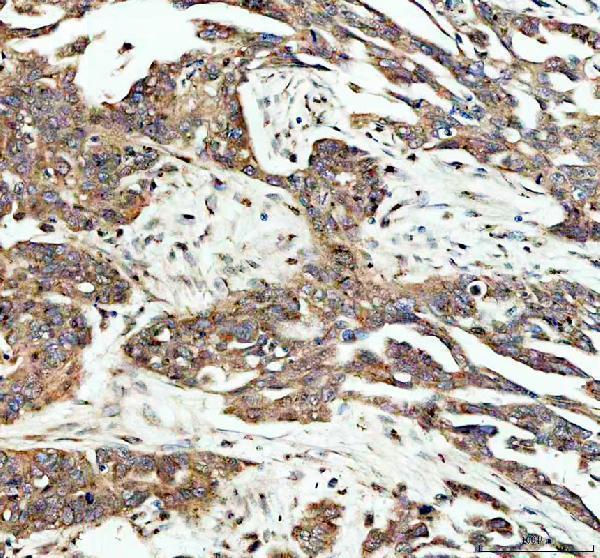
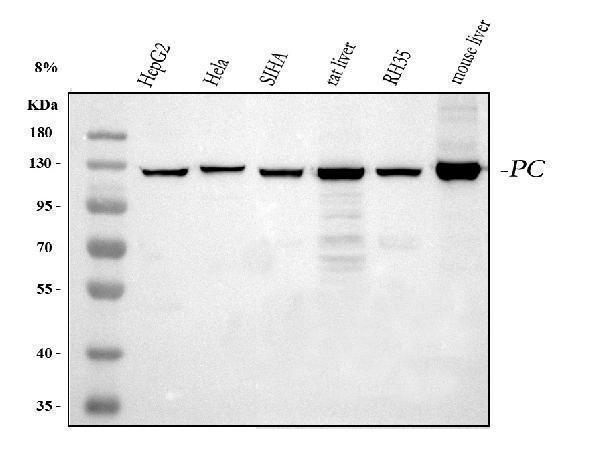
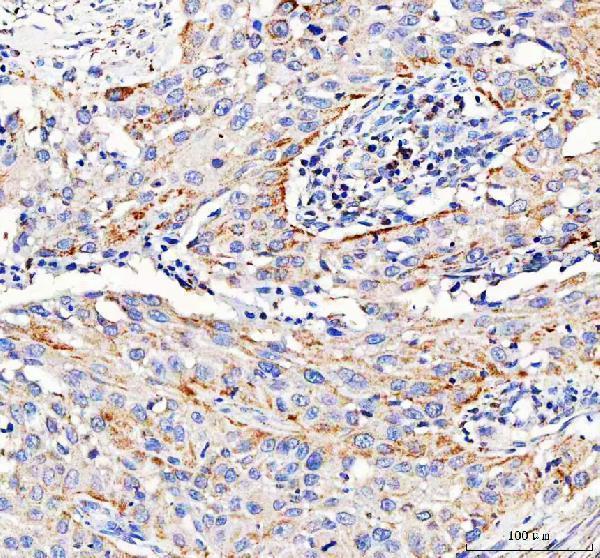
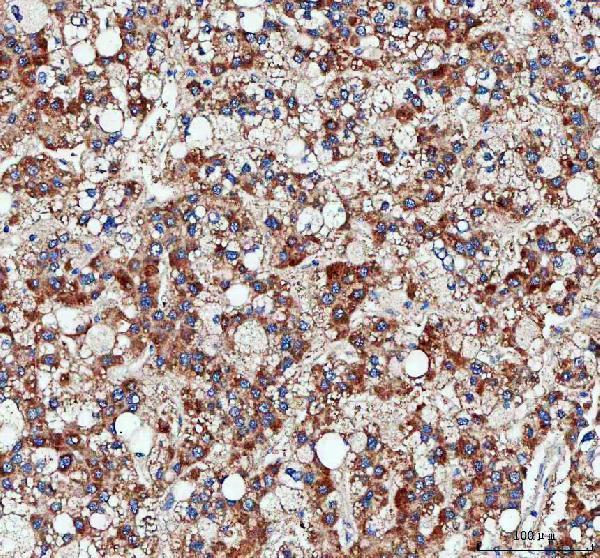
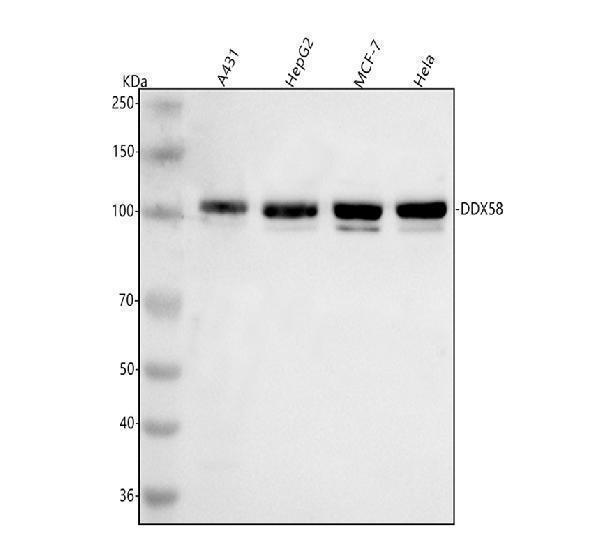
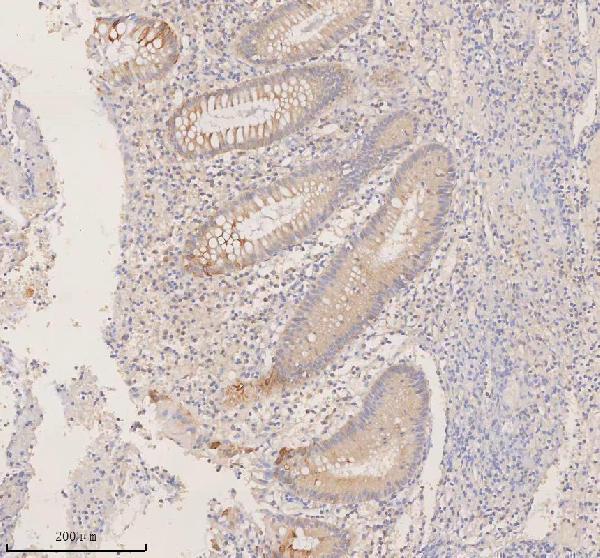
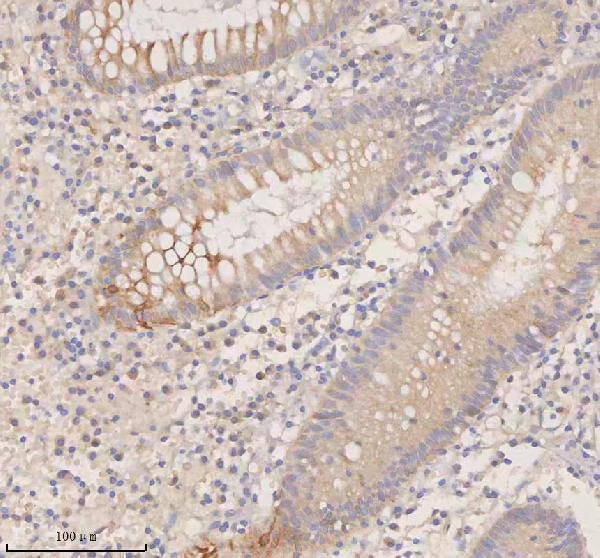
Many biological assays use antibodies to detect Kin, such as Western Blot (WB), ELISA, Flow Cytometry, Immunocytochemistry (IHC). These antibodies can be polyclonal or monoclonal, and react with Kin in Human, Mouse, Rat, and many other animal samples. Boster Bio use mainly mouse and rabbit to develop Kin antibodies...
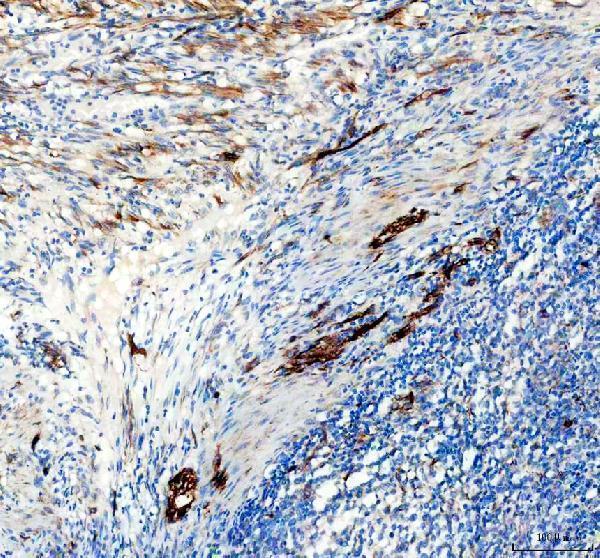
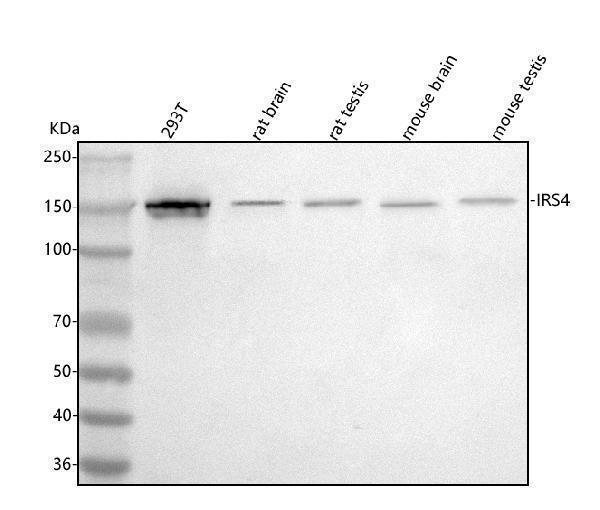
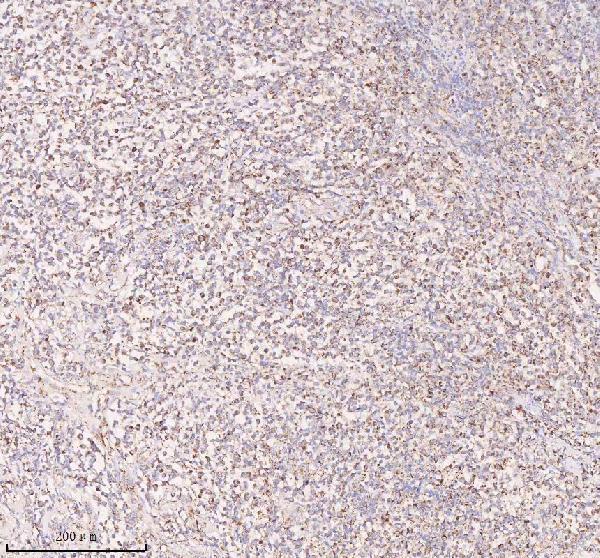
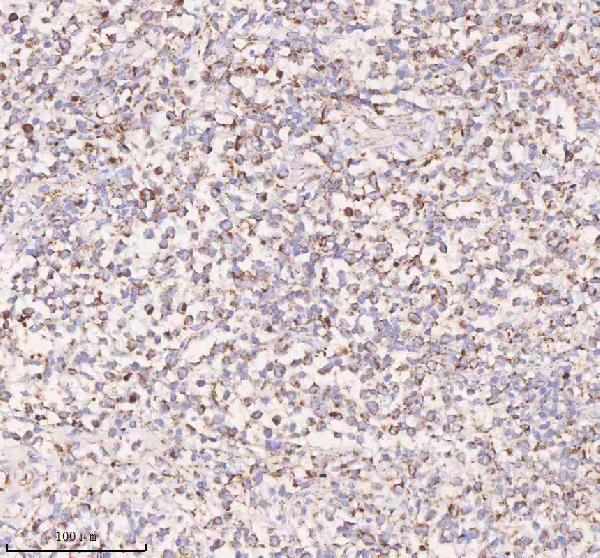
We validate the specificity of these antibodies to Kin by testing them on tissues known to express Kin positively and negatively. Browse below to find the Kin antibody that suites your experiment. We have 100 of these antibodies and many publications and validation images.
If you cannot find antibodies that fit your needs, contact us for making custom antibodies. We have a full suite of custom antibody services covering from research to diagnostic and therapeutic applications.
Designing a Western blot for Kin?
The guide has the expected band size, antibodies backed by real blot images, the controls to run alongside, and protocols taken from published papers.
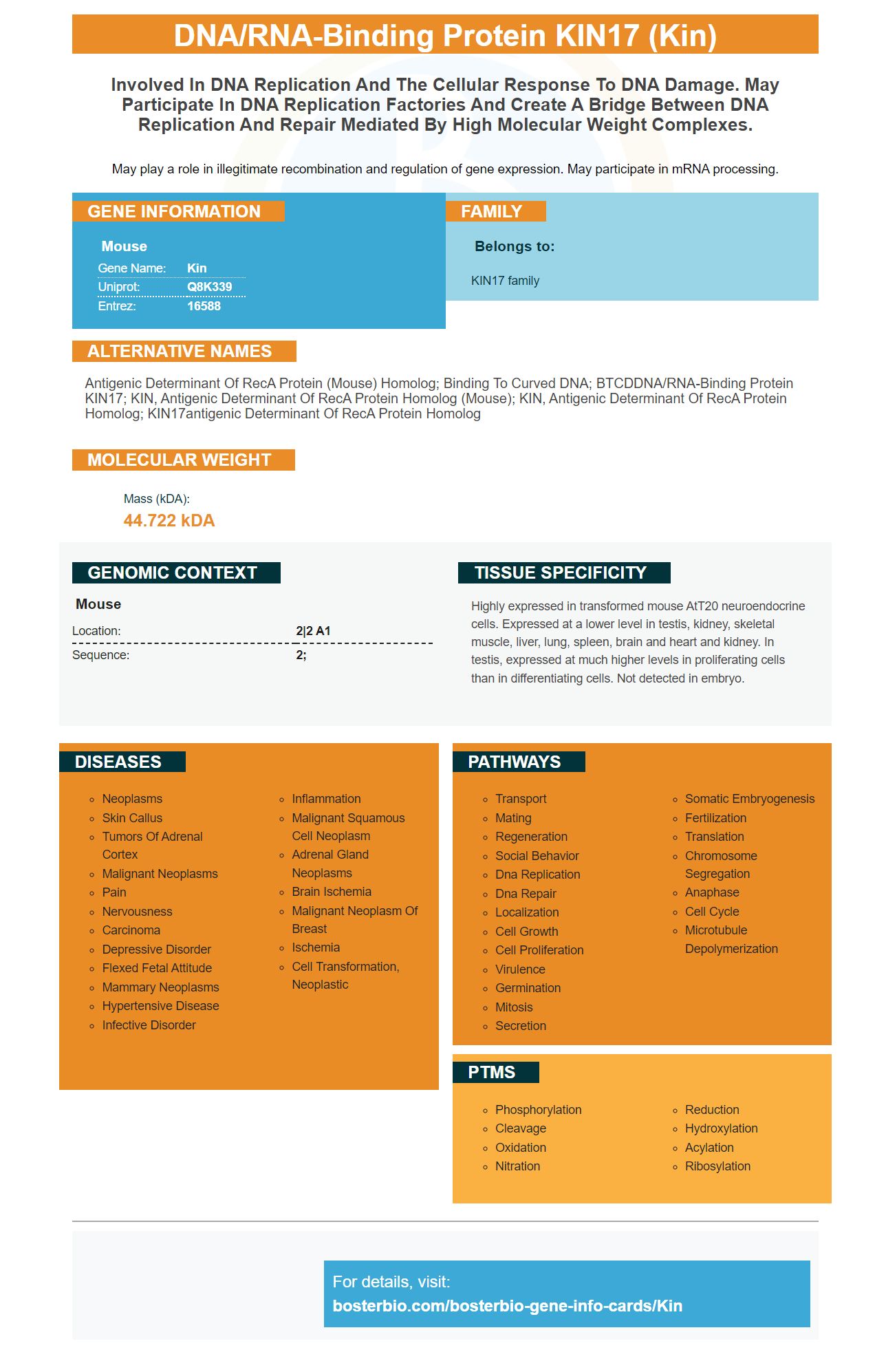
Involved in DNA replication and the cellular response to DNA damage. May participate in DNA replication factories and create a bridge between DNA replication and repair mediated by high molecular weight complexes.
May play a role in illegitimate recombination and regulation of gene expression. May participate in mRNA processing.
Gene Information
Mouse
Gene Name:
Kin
Uniprot:
Q8K339
Entrez:
16588
Family
Belongs to:
KIN17 family
Alternative Names
antigenic determinant of recA protein (mouse) homolog; Binding to curved DNA; BTCDDNA/RNA-binding protein KIN17; KIN, antigenic determinant of recA protein homolog (mouse); KIN, antigenic determinant of recA protein homolog; KIN17antigenic determinant of recA protein homolog
Molecular Weight
Mass (kDA): 44.722 kDA
Genomic Context
Mouse
Location:
2|2 A1
Sequence:
2;
Tissue Specificity
Highly expressed in transformed mouse AtT20 neuroendocrine cells. Expressed at a lower level in testis, kidney, skeletal muscle, liver, lung, spleen, brain and heart and kidney. In testis, expressed at much higher levels in proliferating cells than in differentiating cells. Not detected in embryo.
Diseases
Neoplasms
Skin Callus
Tumors Of Adrenal Cortex
Malignant Neoplasms
Pain
Nervousness
Carcinoma
Depressive Disorder
Flexed Fetal Attitude
Mammary Neoplasms
Hypertensive Disease
Infective Disorder
Inflammation
Malignant Squamous Cell Neoplasm
Adrenal Gland Neoplasms
Brain Ischemia
Malignant Neoplasm Of Breast
Ischemia
Cell Transformation, Neoplastic
Pathways
Transport
Mating
Regeneration
Social Behavior
Dna Replication
Dna Repair
Localization
Cell Growth
Cell Proliferation
Virulence
Germination
Mitosis
Secretion
Somatic Embryogenesis
Fertilization
Translation
Chromosome Segregation
Anaphase
Cell Cycle
Microtubule Depolymerization
PTMs
Phosphorylation
Cleavage
Oxidation
Nitration
Reduction
Hydroxylation
Acylation
Ribosylation
For details, visit: bosterbio.com/bosterbio-gene-info-cards/Kin
References
PMID: 1923796 by Angulo J.F., et al. Identification and expression of the cDNA of KIN17, a zinc-finger gene located on mouse chromosome 2, encoding a new DNA-binding protein.
PMID: 1715759 by Angulo J.F., et al. Identification of a mouse cDNA fragment whose expressed polypeptide reacts with anti-recA antibodies.
817 Publications of Boster Kin Antibodies & ELISA Kits
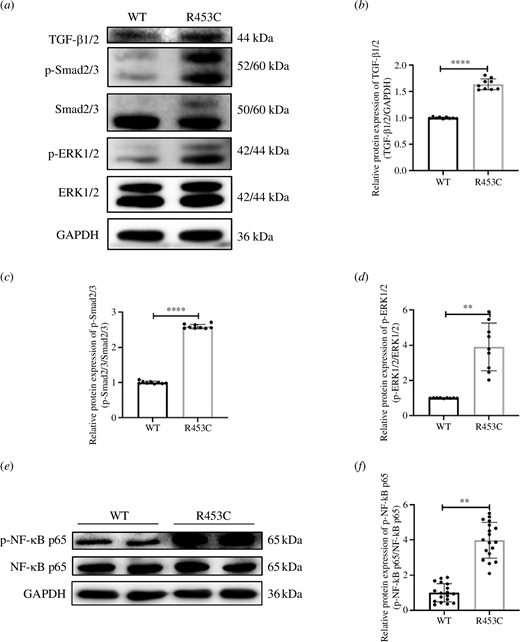
PubMed ID: 38819709, Wang Meng, Zhong Liang, Zhang Hongyan, Wan Peng, Chu Xuan, Shao Xin, Chen Shuyu,...
PubMed ID: PMID:28975979, GLI2 induces PDGFRB expression and modulates cancer stem cell properties of gast...
PubMed ID: PMID:28337257, Subcutaneous liraglutide ameliorates methylglyoxal-induced Alzheimer-like tau pa...